
A Quarantine Odyssey: My 14 Days in Sydney After Flying Home
My quarantine stretch began on November 2nd, the day I landed in Sydney. Just one day after Australia’s borders cracked open for fully vaccinated international arrivals into New South Wales and Victoria.
As a South Australian resident returning from overseas, I was required to complete a quarantine stint at the first pot of arrival. This had to done before catching a connecting flight home.
All my bookings for a direct flight to Adelaide got cancelled due to limit slots set the Australian Govt. What followed was a revealing and, at times, unexpectedly uplifting experience—one that tested my patience, resilience, and adaptability.
Australia’s Patchwork Pandemic Response
Western Australia and South Australia, in particular, enforced some of the toughest border controls. And their low death tolls reflected these efforts. Initially, the national strategy was to stamp out transmission aggressively.
The hope that a few months of sacrifice would return life to normal. But the virus, especially the Delta variant, had other plans.
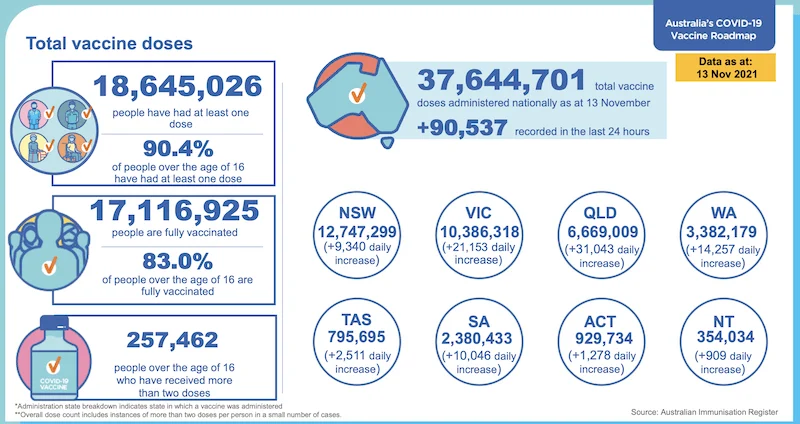
By late 2020, the arrival of vaccines offered a new path forward. The challenge became vaccinating as many people as possible, as quickly as possible, to justify lifting restrictions. The magic number was 80% of the eligible population. A target New South Wales and Victoria hit by October, with other states, including South Australia, close behind.
A Complicated Homecoming
Despite the new vaccination milestones, returning home wasn’t straightforward. As of November 2021, South Australia and other states still required vaccinated travelers from NSW or Victoria to quarantine before entry. Entry was tightly controlled through a patchwork of health exemptions, permits, and waivers, all dependent on your travel history.
I was fortunate: both NSW Health and NSW Police made an exception for me, allowing me to quarantine in Sydney. The process, however, was far from simple. My case needed to be escalated up the chain of command. I was not a resident of NSW as priority was for their residents. Acutely aware of the resources and time this consumed. I was grateful for their flexibility and understanding.
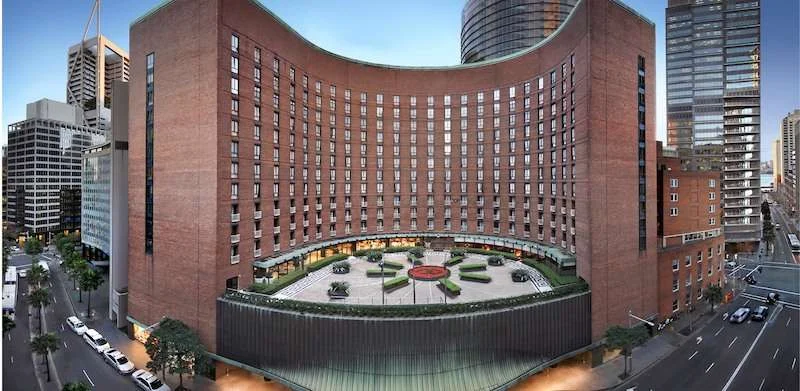
Arrival at the Sofitel Wentworth: The Quarantine Begins
After clearing airport formalities, I boarded a bus bound for the Sofitel Wentworth, my designated quarantine hotel in Sydney’s heart. On arrival, a NSW Police Sergeant boarded the bus to to brief us. For the next 14 days, our hotel rooms would be our entire world. The message was clear—no exceptions.
Australian Defence Force (ADF) personnel took charge of our baggage and guided us through a series of check-in stations. First, a nurse’s station screened for any symptoms or health issues. Next, hotel registration was swift, with staff recording passport details and checking for dietary requirements. Final station was the Police desk where you had to submit the completed arrival form.
Ms. McNeil from the Air Force shepherded me through the process from the start. Finally led me to the elevator and then to my room.
As she escorted me to my room, it dawned on me. She would be the last person I’d see face-to-face for two weeks with the exception of nurses.
Life in a Sealed Room
My room was on the 10th floor, its window sealed shut. For the next 14 days, this would be my universe. Security personnel monitored the corridors, ensuring no one left their rooms.
The hotel provided a comprehensive four-page guide. Everything from connecting to Netflix via Chromecast to ordering groceries and takeout from the city’s supermarkets and restaurants. DoorDash and Uber Eats would soon become my lifelines.
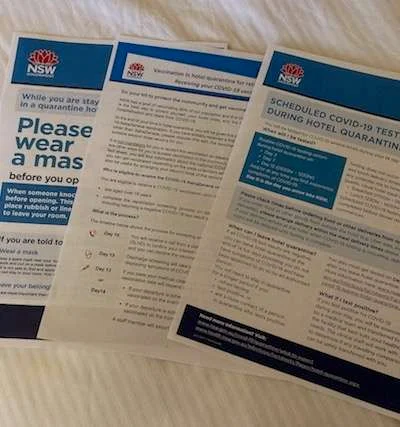
Alcohol was rationed—one bottle of wine or three beers per person per day. NSW Health’s instructions were clear and reassuring. Especially the protocol for meal delivery. To wait 30 seconds after a knock before opening the door. Always wear a mask, and never expect to see the person delivering your food. This was all about minimizing risk from lingering airborne droplets.
Testing, Nurses, and the Human Touch
The only people I saw during quarantine were the nurses conducting COVID-19 tests on days 2, 7, and 12. Clad in full PPE, they would ask me to stand with my back to the open door. Then the swabbing my mouth and nostrils—a procedure designed to keep everyone safe.
Nurses also called by phone regularly to check on my wellbeing, screen for symptoms, and offer support. These calls, though brief, were a welcome connection to the outside world.
The Ritual of Meals and Housekeeping
Three meals a day became the anchor points of my routine. Each delivery was a small event: the knock, the anticipation, the surprise of what cuisine awaited. The menu ranged from Western to Asian dishes, with only the occasional quiche failing to excite me. Everything—containers, cutlery, napkins—was disposable.
You could order meals from outside via Uber or DoorDash.
Refuse collection was scheduled twice daily. We were instructed to bag our waste in provided liners and leave it outside the door. Linen and towels were changed once a week. Fresh sets were left outside, and we swapped them ourselves, placing the used ones in the same bags.
Staying Sane: Entertainment and Connection
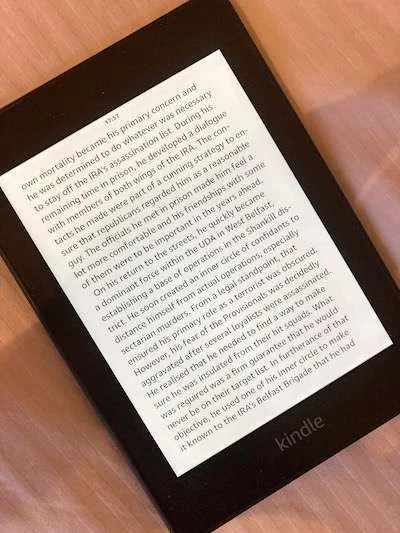
Entertainment was essential. I had TV, Netflix, my PC, and my trusty Kindle, for which I’d downloaded three books ahead of time.
Most days, I surfed the internet, kept up with emails, chatted with family and friends on WhatsApp. Even managed to get quotations from traders for some home improvements.
The hotel staff did their best to keep us engaged, organizing weekly Zoom bingo and trivia sessions. One afternoon, a live soul music concert was staged in the hotel’s courtyard. With rooms facing the semi-circular courtyard enjoying a front-row seat from their windows.
I’d saved the Netflix phenomenon “Squid Game” for this very expected qauarantine. Its suspenseful, genre-bending episodes helped the first week pass quickly.
I also took the opportunity to compare DoorDash and Uber Eats. Covering app navigation ease, delivery time etc. I ordered meals from various Sydney CBD restaurants—a culinary adventure I plan to write about separately.
The Final Stretch: Release and Reflection
On day 13, a doctor assessed me at the doorway and issued a health clearance certificate. I cleared my final PCR test.
A NSW Police Officer then provided an official clearance to confirm my quarantine completion. However, I couldn’t leave until 4 pm the following day. The last flight to Adelaide was too close for comfort.
NSW Health issued a special document allowing me to be released at 6:30 am on day 15, just in time to catch the first flight home. This was necessary to assure South Australian authorities that I was heading straight to the airport and not breaking quarantine.
A week after my release, I received an invoice from NSW Revenue Service. The $3,000 quarantine fee, which I promptly paid.
Looking Back: Lessons and Gratitude
Reflecting on my quarantine experience, I am deeply appreciative of the professionalism shown. The dedication shown by NSW authorities, the ADF, and the Sofitel staff in particular. The operation was run with military precision. Every detail—from health protocols to meal delivery—was designed to keep us safe and sane.
Isolation was tough, no doubt about it. The things that made it bearable were simple. A reliable internet, a steady supply of e-books, daily contact with loved ones, and the escapism of Netflix.
The routines—meals, calls from nurses, even the twice-daily refuse collection—became comforting rituals.
Quarantine forced me to slow down, reflect, and appreciate the small things. It was a test of patience. A reminder of the collective effort required to keep communities safe during a global crisis.
As I finally boarded my flight home to South Australia. I carried with me a renewed sense of gratitude—for health. For connection, and for the quiet resilience that got me through 14 days behind a sealed hotel door.