
Chinese EV revolution is not a mirage or a fleeting presence. It’s a revolution in motion.
China is now the world’s largest producer and exporter of electric cars. In 2025, Chinese EVs account for more than 70% of the world’s total output, with brands like BYD now outselling Tesla and others. Albeit their domestic market provides the big numbers. Expanding aggressively into Europe, Asia, Africa, and Latin America.
I doubt anyone would have considered China in the EV space and dominating to such an extent, 10 years ago. I was working in UK at the time, and the battle was with European, some Japanese automakers and Tesla in the US. China did have an EV industry but most of us took it as their domestic market play.
One surprise is Toyota. The company introduced the widely popular and groundbreaking Prius in 1997. By 2012, it had become a global phenomenon. A hybrid. That car quickly became the first calling card for green minded consumers and politicians. The natural assumption is that it would lead the World in EVs. It was not to be.
Why this post?
The idea for the post came about in late November 2025 one day after I returned from Uzbekistan. The last of 7 trips to the Central Asia and South Caucasus region.
Those trips that began in April 2025 was to discover the land, the culture and people of a region that was below my mind’s parapet until late in my career. Amends had to be made.

One interesting observation during my trips were the type of cars and transport systems in play. There was a marked differences to other cities around the world. I kept seeing Chinese EVs over the months including Chinese EV taxis during my travels in the region.
All other cities across the World that I have been to with the exception of India had multiple brands and models from manufacturers from Europe, Japan, US and Korea. The vast majority, traditional internal combustion engines (ICE). People bought what they could afford. And the EVs were just emerging and mainly Tesla, European and Japanese EVs. .
In Central Asia and South Caucasus, the countries post-independence opened their markets. In came the Japanese with Toyota in the lead and followed by the Koreans in recent years. The most numerous car brand in the region by far is General Motor’s Chevrolets. They were everywhere. Unusually small for an American car and I could not work out why. I found my answer at my last destination, Tashkent, Uzbekistan. That picture has changed quite a bit. First a bit more on the early years.
Uzbekistan car industry
Uzbekistan entered into a partnership with South Korea’s Daewoo to build cars at their assembly line in Asaka and in 1996 the first cars rolled out. The country implemented high import vehicle tariffs to protect their fledgling card industry.
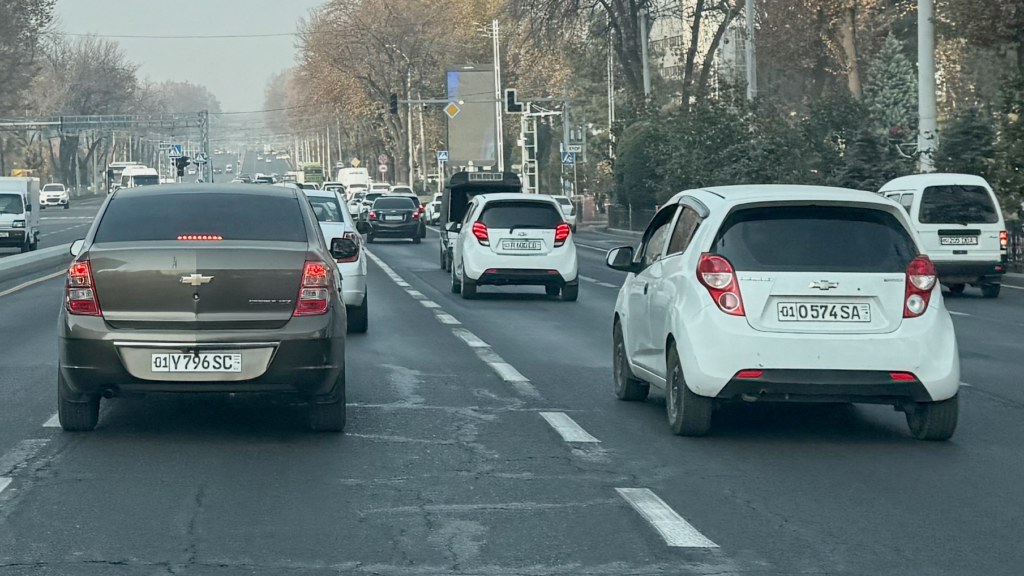
In 2008, General Motors took over as the Korean partnership faltered. The same assembly line built for the smaller Korean models continued, now re-badged as Chevrolet. Hence the small cars which are in fact Daewoo models. This led to the largest car monopoly of any country in the World with 90% of cars being Chevrolets. These cars were also exported to the Central Asian region.
The Government have since bought over GM’s stake. The new strategy is export focused while they lowered the vehicle import tax to allow more foreign models to enter the once closed market.
EVs move in
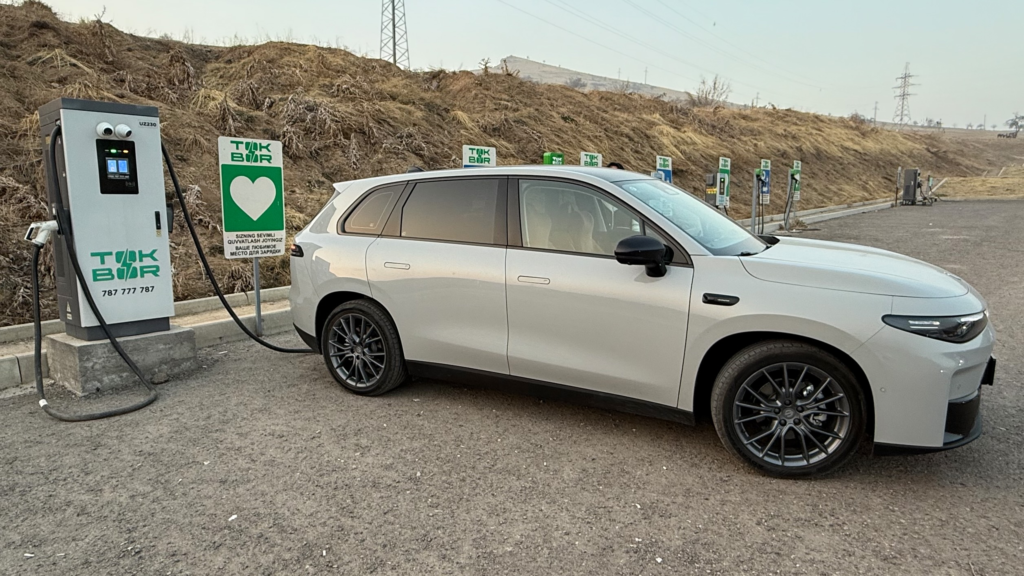
Locally assembled Chevrolets still dominate but newer Chinese EVs of models are now everywhere. BYD however seems to be the main Chinese EV. I saw Toyota, Nissan and BMW dealerships in the city but did not see a single vehicle of these brands on the roads during my short stay.
I also realised that Yandex rides in other cities of the region such as Almaty involved Chinese EVs. The rides were comfortable with lots of features.
I took a 88km ride in a Chinese EV from Tashkent to their new ski resort Amirsoy. The car was a Leap Motors C10a, a Chinese brand I never heard of before. It looked great and the ride too was comfortable.

I also saw multiple charging stations at the base of the resort and in the resort itself. 85% of resort visitors that parked overnight had Chinese EVs. The country is clearly ready for EVs.
The penny dropped when I found out that Uzbekistan in a joint venture with BYD built an assembly line in the country in 2023 and the first production cars which are hybrids (PHEVs) rolled out in mid 2024. It also led to importing BYD BEVs versions.
Chevrolet models will continue to dominate due to incumbency and costs but their market share which has been falling will continue the downward trend. The open market will see newer models entering the country and the region.
Bear in mind Tashkent is more affluent which means I would see more foreign models.
How did Chinese EVs come to dominate?
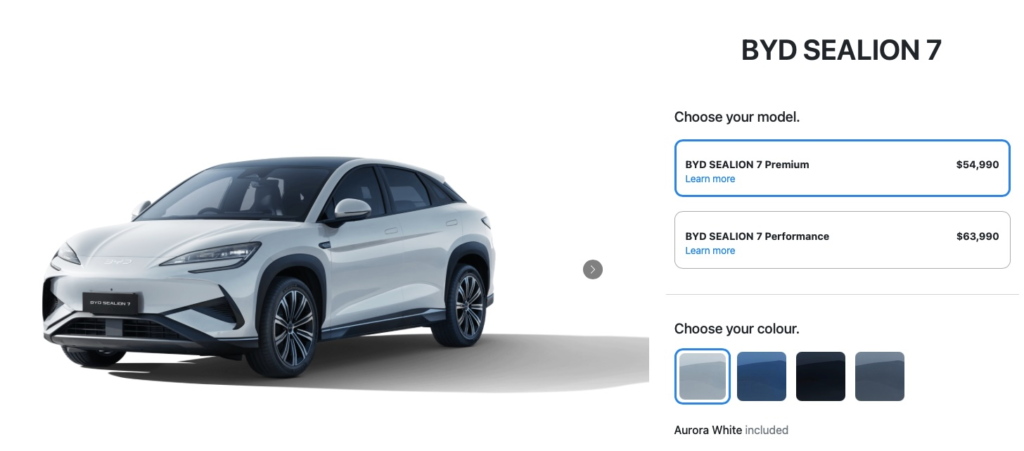
A year back in Australia, I was surfing the net for EVs and came across BYD’s site. I was impressed with the intuitive website and realized you made appointments for a test drive and also had to place orders online.
No showroom or salespersons. Confidence came by the number of service locations and their tie-up with electricity providers to carry out certified installation of chargers at your home
China has a number of factors helping them in their journey towards dominance.
First, is the low cost of labour and the huge domestic market giving it scale. This allows for cheaper per unit build. Remember how Adelaide, once the centre of the Australian car industry collapsed due to rising wage cost.
Secondly, the Chinese had a fully integrated battery production and supply chain for local as well as foreign automakers. And we know the importance of batteries in an EV. BYD for instance began life as a battery production factory for Western automakers rather than an automaker.
Then comes the vertical integration of all manner of automakers’ needs from lithium mining, electronics to software. all within the country. No need to go outside China for its manufacturing needs.
The recruitment of Italian car designers to work on Chinese EVs. This last attribute helped push the journey along further. The impact has been obvious. BYD growth rate in foreign markets has been impressive in the last 2 years. This year they overtook Tesla in European BEV sales.
Manual dexterity, craftsmanship to codes
When Toyota launched its highly automated robotic assembly line in 1993, the writing was on the wall. There was no need for thousands of highly skilled technicians, trained artisans or skilled craftsmen in an automobile factory or assembly line. All it needed were programming codes in software to drive automation. Codes created by engineers that can be replicated with tweaks here and there to handle variations in design and manufacturing.
The Chinese leapfrogged from reverse engineering Japanese and European models to adopting and writing codes to automate car manufacturing. There was no need to transfer manual skills but deploy codes as technology is highly transferable.
The Chinese EV future outlook
They are already the World’s largest exporter and the focus on the international market will remain as it would their next big frontier. The momentum will continue.
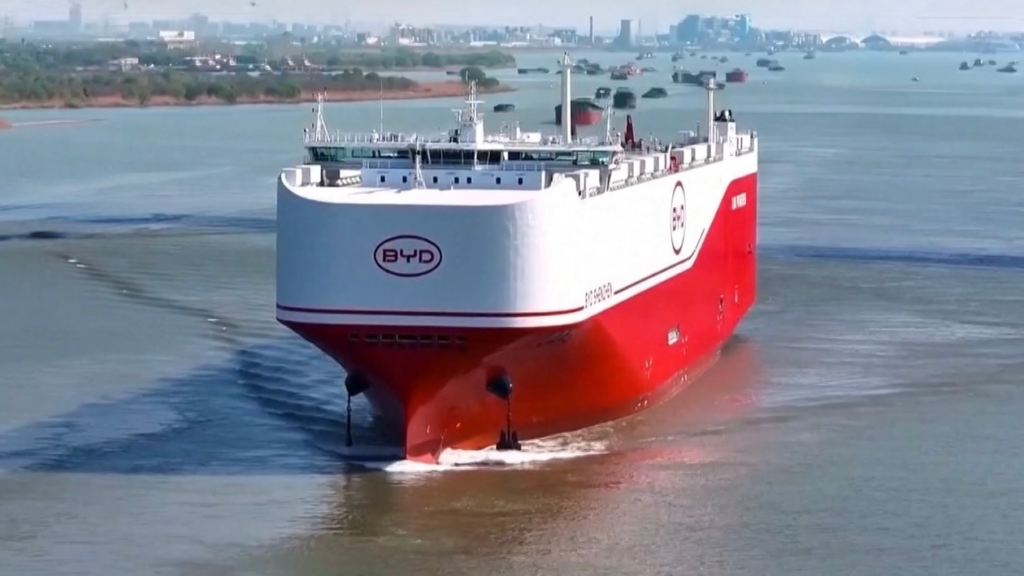
Securing the international supply chain to meet demands faster has been on-going. BYD is leading the way by deciding in 2022, to cut out the dependence on 3rd party shippers by having their own fleet.
In January 2024, the first of 8 BYD ships went into service, and the 7th entered service in July 2025. These are behemoths with the largest having a capacity for 9,000 vehicles. SAIC is following suit.
Building factories in key market locations has began. 7 Chinese EV automakers have built factories and assembly lines in 14 countries to date. More are planned. BYD has factories operational in Thailand, Uzbekistan and Hungary with plans for Indonesia, Brazil and Turkey. Uzbekistan has the largest EV plant with a capacity of 300,000 cars a year, double that of Thailand.
They will move away from brick-and-mortar showrooms and focus on online sales as they do in Australia. Not only is their production cost low, so will be their distribution cost.
I have no doubt many countries will be awash with Chinese EVs within a decade.