
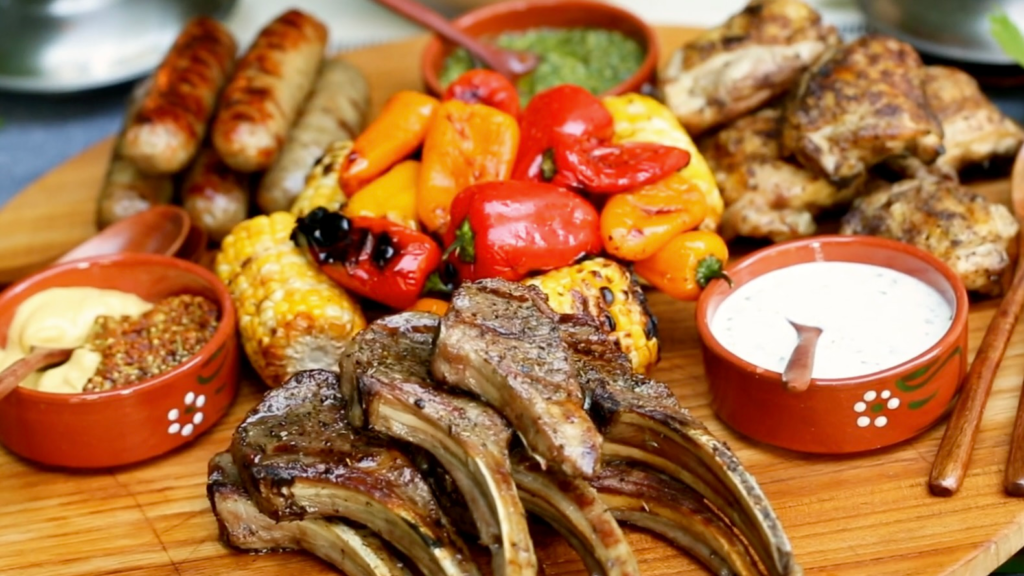
World’s 4 favorite meats are very clear by consumptions levels. One wonders how these 4 meat types came to dominate. You eventually realize meat consumption by types are strongly tied to geography, culture and religion.
Meat remains a part of society’s daily diet right across income bands. By the 21st century, meat is no longer a luxury item it was once was. Let takes a lighthearted look at meat types around the World
Why meat?
Let’s be honest — humans love meat. From the sizzling barbecues of Argentina to the steaming hotpots of China, meat has been at the heart of our meals, our cultures, and our celebrations for thousands of years. But not every country reaches for the same protein. Lets take a tasty trip around the world to explore the most popular types of meat on the planet — and why each one has earned its devoted fanbase.
Pork leads but is it slipping?
If there’s one meat that truly rules the world, it’s pork. Globally, pork accounts for roughly 36% of all meat consumed, making it the single most popular meat on Earth. That’s a lot of bacon.

From crispy roast pork in a Hong Kong diner to slow-braised pulled pork in the American South, this remarkably versatile animal has worked its way into almost every cuisine imaginable.
China alone consumes more pork than the next four countries combined — it’s central to dishes like char siu (barbecue pork), red-braised pork belly, and dumplings stuffed with minced pork. In Europe, pork takes on another life entirely: think Italian prosciutto, English back bacon, Spanish jamón ibérico, or German bratwurst sizzling at a Christmas market.

The secret to pork’s global domination? Pigs are cheap and efficient to raise, they eat almost anything, and virtually every part of the animal can be used. Nothing goes to waste, and the flavor is hard to argue with. But will it continue to dominate? There is one other animal that has reached close to parity and growth rate alone says that it will eventually lead.
Chicken: The unifier and gains ground
While pork wins on total volume, chicken is arguably the world’s most universally beloved meat — and it’s growing fast. Global chicken consumption has more than doubled in the past 30 years, and it’s now the top meat choice in countries like the United States, Australia, Brazil, and across much of Southeast Asia.

Why is chicken so popular? It’s lean, affordable, quick to cook, and plays nicely with almost every spice and flavour profile on Earth. It’s the blank canvas of the meat world. Whether it’s butter chicken in India, jerk chicken in Jamaica, karaage in Japan, or a simple rotisserie bird from a French market, chicken adapts effortlessly to its surroundings.

There’s also the religious factor — unlike pork or beef, chicken carries no major dietary restrictions across most of the world’s religions, making it the safe, crowd-pleasing choice at any dinner table. If the world had to agree on one meat (and goodness knows we don’t agree on much), chicken would probably be it. Lastly and most important, Chicken health-wise is streets ahead of other meats.
Beef: Carries status in the culinary World
Beef may not top the global charts in volume, but it holds a special place in the world’s culinary imagination. There’s a reason a fancy dinner almost always involves a steak. Beef carries a certain gravitas — it’s celebratory, indulgent, and deeply tied to cultural identity in many parts of the world.

Argentina and Uruguay take beef very seriously indeed. So do South Africa and Botswana especially among the elite. In Argentina, annual beef consumption per person hovers around 50 kilograms — that’s nearly a kilogram a week. The asado (barbecue) isn’t just a cooking method; it’s a social institution. In the United States, beef is woven into the national identity through burgers, steakhouses, and tailgate cookouts. In Japan, Wagyu beef has become an almost spiritual experience, with single cuts selling for hundreds of dollars.
Beef does face growing scrutiny for its environmental footprint — cattle farming is a significant contributor to greenhouse gas emissions — but that hasn’t stopped the world from loving a good steak. Global beef consumption continues to rise, particularly in developing economies where a well-marbled cut has long been a symbol of prosperity.
Lamb and Mutton: The underdog with a devoted following
Lamb doesn’t get nearly enough credit in the global conversation, but in certain parts of the world, it reigns supreme. Across the Middle East, Central Asia, North Africa, and the Indian subcontinent, lamb and mutton are the meats of choice — and have been for millennia.

In countries like Kazakhstan, Uzbekistan, and Mongolia, lamb is practically a cultural cornerstone. A whole roasted lamb is the ultimate gesture of hospitality. In Morocco, slow-cooked lamb tagine with preserved lemon and olives is the stuff of legend.
In Greece and Turkey, lamb is inseparable from celebrations — Easter, weddings, and family gatherings all call for it. And in Australia (hello, home turf!), a lamb roast on a Sunday is practically a national ritual, with the lamb industry proudly marketing it as “the meat of mates.”
Globally, lamb accounts for a smaller share of total meat consumption than pork, chicken, or beef — but its passionate devotees make up for it in enthusiasm.
Honourable Mentions:
No meat roundup would be complete without a nod to seafood, which straddles the line between “fish” and “meat” depending on who you ask. Japan, South Korea, Portugal, and coastal nations across Southeast Asia consume seafood in staggering quantities, with fish often outranking land animals entirely.

Beyond the big four, there are fascinating regional stars: goat is the most widely eaten meat in the world when you look at the number of countries that consume it (popular across Africa, the Caribbean, and South Asia), while rabbit, duck, and horse meat each have their loyal followings in France, China, and parts of Central Asia respectively.
One World, Many Tables
What’s wonderful about the world’s relationship with meat is that it tells a story — about geography, religion, climate, history, and culture. The cuts we reach for, the way we season them, and who we share them with says something profound about who we are.
There is also the fast-food sector which has single handedly fuelled the consumption of meat since the 1950s. From MacDonald’s to KFC.
There is also the growing factor on meat consumption with two separate agendas. One against the consumption of meat altogether and second to address the overconsumption of meat for health and environmental reasons. Let’s see if these movements have an impact on meat consumption. We already know that plant-based meat has established a foothold as a sector within the industry. Veganism continues to gain ground among the younger generation.
So next time you’re tucking into a Sunday roast, a big Mac, a chicken stir-fry, or a perfectly grilled steak, remember: you’re part of a global tradition that stretches back to the very beginning of human civilization. And that, if nothing else, is a very good reason to enjoy every bite.