
Uber’s airport rank and pin in Australia. What a marvelous next step of the wonderful ride-hailing journey. As a frequent traveler, it was plus for me.
I was aware Uber introduced the PIN as a safety feature in 2019, so the passenger gets into the right car. First rolled out in the US and Canada then by some countries.
Australia Uber do use the PIN technology but for whole different reason and in recent times. In this case, managing consistent high demand volume for Uber rides. Melbourne Airport first used it in 2021 followed by Sydney Airport in 2024.
Other major international airports are also using it for the same reason. After I first tried it recently, I realized how easily it brought certainty, order and convenience for the passenger as well as the driver.
Back story on using ride-hailing at Adelaide Airport
2023 was probably the last time I took a cab from Adelaide Airport to home. The cab rank already had a lineup so a quick jump and we were away. The cost came to AUD 42.
At that time, none of the rideshare companies had a dedicated pick-up point at the Airport. In many parts of the World it was the same. In some countries, ride-hailing vehicles were prohibited from even entering the Airport precinct.
Since the last cab ride, the switch to ride-hailing became permanent. The ride-hailing always was cheaper, sometime up to 30% from AUD 42. And always more than 20%. Pricing tends to differ from location to location and country to country.
The service was also much better. There was no need to provide any direction to the driver. I suppose the post ride feedback and tipping in the App also helped with service. I did wonder what would come of the conventional taxi industry.
Uber has its own cab rank
It’s now 2025, dedicated ride-hailing pick-up point rank with clear signages at Adelaide Airport is in. A move now seen in many airports that I read about. Once the dominos began to fall, it did fall slowly and surely.
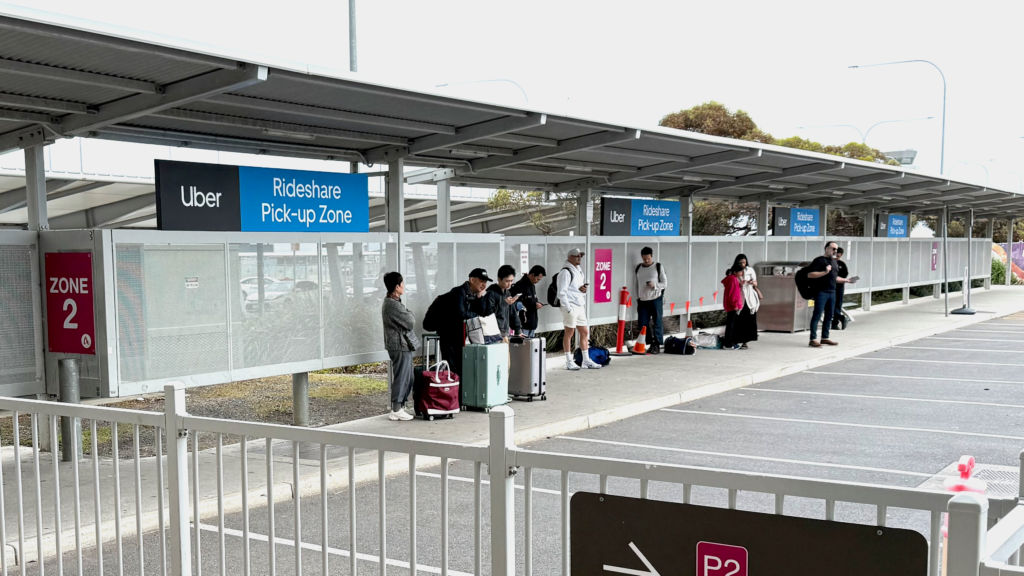
I wondered which part of the pick-up point would be designated for Uber. It was slightly further out about 30 metres away from the usual pick-up stretch for the public. To the left as you exit arrivals, and next to the carpark building that was in front.
It is now September 2025. I cross over to the dedicated ride-hailing pick-up point and there are 3 bays, A to C. Easily takes in 10 Uber cars at any one time.
Entry to the dedicated pick-up point for Uber vehicles was by a barrier entry, allowing only rideshare vehicles with a pass. Stopping other users from using the bays. Clearly it was well planned. I was impressed.
My Uber driver was prompt, backs up his car and the bags are loaded into the trunk. Once again thre cost is significantly cheaper than the usual cab ride.
More importantly I don’t have to tell the driver the destination or the route to take. At times with taxis, I had to provide route guidance. Not anymore. Technology takes care of everything. I am aware that Taxis do have GPS, but they still find it difficult without me giving some directions.
The trip to Melbourne and the PIN
Though I have gone through Melbourne Airport, too many times to remember, to catch an international flight or returning from an international flight. I had not stepped into Melbourne city for some years.
As I was preparing for the trip to Melbourne city, I began by saving the intended address in Melbourne in thenUber app. Followed by finding the best spot for the Uber pick-up at the Airport by surfing the net. I realised they had an Uber rank similar to a taxi rank. A quick read told me to use the PIN. I was intrigued.
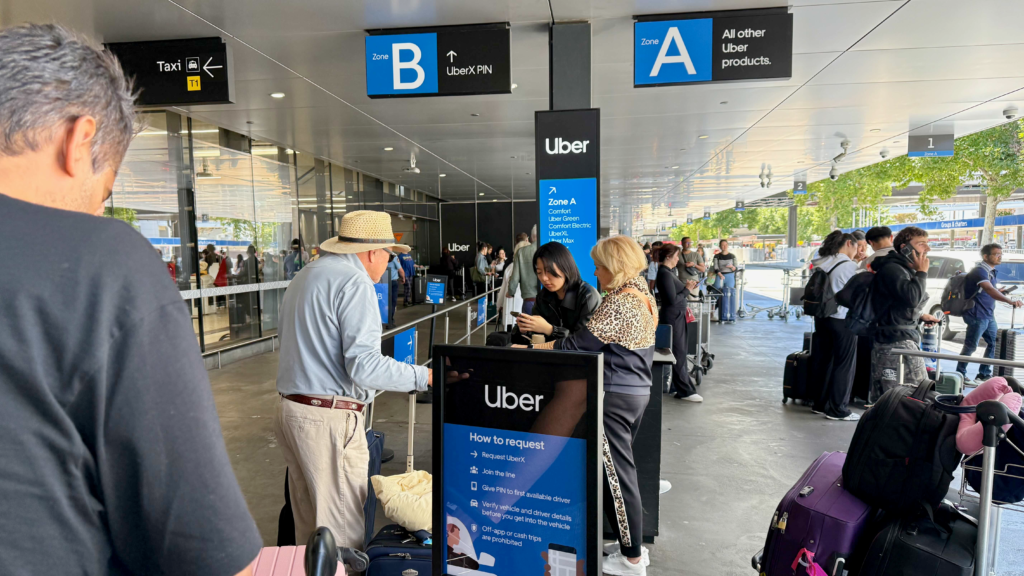
The rank was in front of Terminal 2, Zone B at the international terminal. Zone A is for all other Uber categories or if you are not using the PIN. There was another rank for Uber at Terminal 4 which was a little further. It however does not use the PIN.
I read more how it operates as I wanted to use the PIN and get it right. I wasn’t sure if I had to book as I was leaving the arrival lobby or do so at the rank.
Receiving and using the PIN
Took a late-night Virgin flight, arrived at Terminal 3, walked a short distance to Terminal 2. The Uber rank with 10 bays was there. You cannot miss it. There was also a manned info booth. I was told to book to get the PIN.
As I joined the moving queue, I received the 6-digit pin immediately. No vehicle assigned. 2 marshals directed incoming Uber cars as well as asking passengers to go to an available bay for the next incoming vehicle. There was a constant flow of incoming Uber vehicle.
I got into the first arriving Uber vehicle. I gave the driver my PIN which he entered in his App and saw my destination. He confirmed with me that it was the destination and away we went. Got my ride within a minute of entering the rank. I could see that PIN rank was much faster as you jumped on the first available Uber ride that reached your assigned bay.
The value of the PIN
It was such a positive experience. I did not have to wait nor keep a constant lookout for my ride. The entire value of the PIN was clear to see. It is a brilliant idea. The PIN application in a high demand location leads to quick and orderly pick-up. The PIN serves all parties well.
For Airport authorities it means better traffic flow within the Airport precinct as well as better customer rating for airport experience. Airline passengers leaving the airport and staff working at the airport head to a single designated location for the next available ride. Convenient as it saves time and effort.
For the Uber drivers, there is no need to cruise, waste petrol, park or block a lane while waiting for passengers who are late or unable to locate the pick-up point. A common occurrence.
By the way, I tried the Uber Rank at Terminal 4 at Melbourne Airport on a later flight. This Uber rank does not need a PIN. I booked the ride and I was asked to head to a numbered bay. Rather than I looking out for the car make, colour and number plate and waving at it, the designated driver came to my bay. He asked for my name as confirmation. Another good idea.
The legacy taxi system
Conventional taxi no matter wherever in the World, always operated within a fixed mould. At airports, many countries regulators allow for a surcharge so it is attractive and worthwhile for taxi drivers to come into airport from the city. And convenient for arriving passengers to get into a taxi quickly.
But in the those years and decades, nothing else changed. Not from regulators, fleet owners, their lobby or the drivers. It took total strangers with no experience in the industry to bring in change to an industry that benefits all of society.
The exceptions
There are two countries that deserve a special when it comes to the conventional taxi industry. They are the exceptions and deserve a shout-out.
They are Singapore and the UAE. The taxi industry in both these countries are affordable, reliable and well regulated. And the service standards are high. No whiff of a scam or sharp practices.
There is no need to book a rideshare like Uber, Grab or Carrem in these locations. The taxis for arriving passengers are easily available, affordable and the ranks are well marshalled.
For uncommon destinations the driver either keys in the address that you provide or passes his phone for you to type in the address. Some of the other Gulf countries also operate a similar model.For Bahrain however, best to take Careem which is a subsidiary of Uber. Their taxis do have issues which I covered in my post on Bahrain.
It is no surprise that both Singapore and the Dubai are two of the most important aviation transport hubs and they know very well the importance of good taxi regulations to keep their place and reputation intact.
What next?
In the ever evolving ride hailing industry no seems to known what next. Until it drops on you. So far I am not complaining.