
The Rise of ChatGPT: How OpenAI’s Chatbot Changed Everything
A Quiet Launch, a Thunderous Impact
On November 30, 2022, OpenAI, a little-known startup at the time, quietly released a prototype that would soon send shockwaves through the tech world: ChatGPT. There were no flashy press releases or grand unveilings, but within days, the industry was buzzing.
I decided to try it out a week after launch, entering a few queries with tempered expectations. The results, however, were nothing short of astonishing—clear, relevant, and surprisingly comprehensive responses that felt almost conversational.
It was immediately apparent that this was a watershed moment in technology. ChatGPT wasn’t just another chatbot; it was a leap forward in how we interact with information.
I wasn’t alone in my awe. Word spread quickly, and within five days, ChatGPT had attracted one million users. By January, that number had skyrocketed to 100 million—a meteoric rise unmatched by any other digital product in recent memory
What Exactly Is ChatGPT?
OpenAI, the research lab behind ChatGPT, was founded eight years prior with a mission to benefit society. Backed by a roster of respected individuals and significant funding, the team spent years developing artificial intelligence tools with powerful ambitions.
ChatGPT is the culmination of this effort: a chatbot powered by advanced AI and natural language processing (NLP) that feels intuitive and easy to use, even if your questions are vague, incomplete, or riddled with errors.
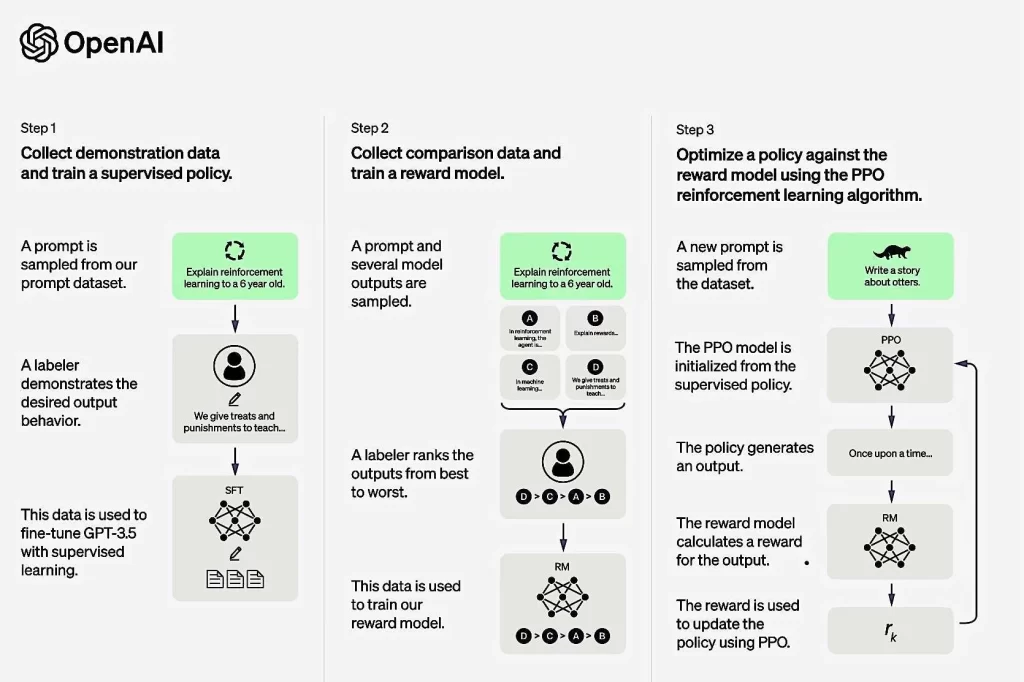
The system has been trained on vast datasets by both machines and human trainers, enabling it to understand and respond to a wide array of queries. While some deliberately ambiguous questions might stump it, most users are amazed by its ability to “get” what they’re after—often in a single step.
A New Era for Information Search
After just a few minutes with ChatGPT, it became clear that traditional search engines like Google suddenly felt outdated. Where Google requires multiple searches and sifting through pages of results, ChatGPT offers direct, conversational answers. This isn’t just a search engine; it’s a query response engine, a conversational partner, and a writing assistant all rolled into one.
To illustrate its power, I typed “Write an article on Bali Tourism.” In seconds, ChatGPT generated a polished, 565-word essay, complete with subheadings and well-structured paragraphs.
The writing was accurate, engaging, and ready for publication—no editing required. It was a glimpse into a future where content creation is effortless and accessible to all.
Getting Started and Early Limitations
To use ChatGPT, you need to register and log in. While the basic version is free, OpenAI has introduced a premium service—ChatGPT Plus—currently available in the US for $20 per month. With millions flocking to the platform, the company faces the challenge of scaling up infrastructure and maintaining performance.
Despite its strengths, ChatGPT isn’t perfect. Occasionally, it produces “nonsensical” answers delivered with unwarranted confidence, which can be misleading if you lack background knowledge on the topic.
For example, a query about a well-known international figure produced a mix of facts and fiction. This early criticism, echoed in the media, highlighted the need for users to approach AI-generated content with a critical eye.
Another limitation: ChatGPT initially couldn’t generate images, graphics, or maps. It was strictly text-based, focusing on language rather than multimedia.
A Lesson in Social Responsibility
One of the most striking features of ChatGPT is its commitment to social responsibility. It refuses to answer inappropriate or potentially harmful queries, such as those that could promote hate or deception.
When I asked, “Which country has the most beautiful women?” ChatGPT responded with a thoughtful, politically correct explanation about the subjectivity of beauty and the importance of celebrating diversity. It felt like a gentle scolding from a wise parent—a reminder that AI can be programmed to uphold ethical standards.
This approach extends to controversial topics, where ChatGPT offers balanced, inclusive responses, even if that means avoiding subjective or unscientific claims. It’s a refreshing change in an online world often plagued by misinformation and bias.
Putting ChatGPT to the Test
To see how ChatGPT handled more nuanced queries, I asked about Penny Wong, Australia’s Federal Minister for Foreign Affairs. My simple four-word prompt—“who is Penny Wong”—yielded a detailed and accurate summary of her background, education, and political career.
The only omission was her current cabinet position, a reminder that the free version’s knowledge cutoff was 2021. Nevertheless, the response was impressive for its depth and clarity.
ChatGPT vs. Wikipedia: A Comparison
While ChatGPT excels at providing quick, conversational answers, Wikipedia remains the gold standard for comprehensive, up-to-date information.
Wikipedia’s human editors ensure accuracy and provide extensive references, while its uniform summaries make it easy to find key facts at a glance. For now, Wikipedia retains its authority, but ChatGPT’s convenience and conversational style offer a compelling alternative for everyday queries.
Unexpected Consequences and New Frontiers
ChatGPT’s capabilities quickly sparked concerns about academic integrity. It passed graduate exams at the University of Minnesota and the Wharton School with respectable grades, prompting fears of cheating. In response, the New York City Department of Education blocked access to ChatGPT, and similar bans followed elsewhere.
This new reality inspired Princeton senior Edward Tian to create an app that detects AI-generated text. Within ten days, his tool had 80,000 users, and Turnitin—the leading plagiarism detection service—came knocking.
Meanwhile, hundreds of books credited to ChatGPT appeared on Amazon, and a wave of apps leveraging ChatGPT’s capabilities began flooding the market, targeting content creators and making some existing software obsolete.
Perhaps most impressively, ChatGPT can write and debug code. In tests, its code-writing ability surpassed many first-year computer science students, raising the bar for what AI can achieve in technical fields.
The Competitive Landscape: Bard, Bing, and Beyond
ChatGPT’s success didn’t go unnoticed. Google quickly announced Bard, its own AI chatbot, while Microsoft integrated OpenAI’s technology into its Bing search engine. Each company is taking a slightly different approach, from data selection to training methods, ensuring that users will have a variety of AI-powered tools to choose from in the near future
The arrival of these competitors is already reshaping the digital landscape. New apps are emerging that harness ChatGPT’s power for everything from writing assistance to customer service, and the impact on industries like search engine optimization (SEO) could be profound. Traditional SEO relies on search engines and their algorithms, but if users shift to AI chatbots for answers, the rules of online visibility may change dramatically.
A Paradigm Shift in Information Access
In summary, ChatGPT is more than just a chatbot—it’s a revolutionary tool that answers queries, writes essays, and even codes, all in a human-like, coherent manner. While it has limitations, such as occasional inaccuracies and a lack of up-to-date information in the free version, these can often be mitigated by savvy users.
OpenAI has built in safeguards to prevent misuse, but questions remain about the adequacy of these controls, especially as concerns grow about the potential societal impact of AI-generated content
Even respected media outlets like The Guardian have called for government regulation, underscoring the magnitude of this technological shift. With Google handling 89 billion visits per month and 8.5 billion searches per day, the potential for AI chatbots to disrupt the status quo is enormous.
The Latest Developments: Bard and Bing AI
As of March 21, 2023, Google’s Bard became available to select users in the US and UK, labeled as an “experiment” and accompanied by warnings about possible misinformation or “hallucination.” Microsoft’s Bing, now enhanced by OpenAI’s technology, launched its own AI-powered search features in February 2023
Looking Ahead
Despite its rough edges, ChatGPT represents a paradigm shift in how we access and interact with information. It’s a tool with the potential to democratize knowledge, streamline content creation, and redefine the boundaries of human-computer interaction.
As AI chatbots continue to evolve and competitors enter the field, one thing is clear: the way we search, learn, and create will never be the same.