
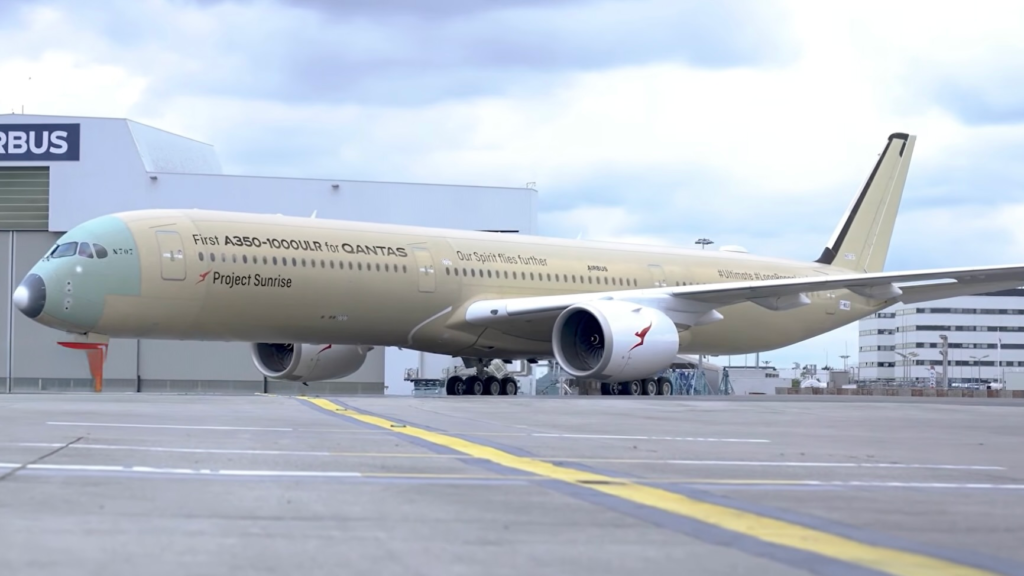
Qantas 22-hr ultra-long haul, the longest non-stop commercial scheduled flights will commence in October 2027. It will be the final frontier for Qantas and Australia. Flying from Sydney to London covering 17,015 km (10,573 miles) with a duration of between 19 to 22 hrs. Depending on wind and routing. It will set a new World record.
Project Sunrise, began 10 years long, with plans laid down in 2017. In May 2022, Qantas placed orders for 12 specially modified Airbus A350-1000ULR. New specification and configurations including increased fuel capacity are in. Qantas current longest non-stop flight is between Perth and London, an achievement by itself. 17.5-hour, 14,500km.
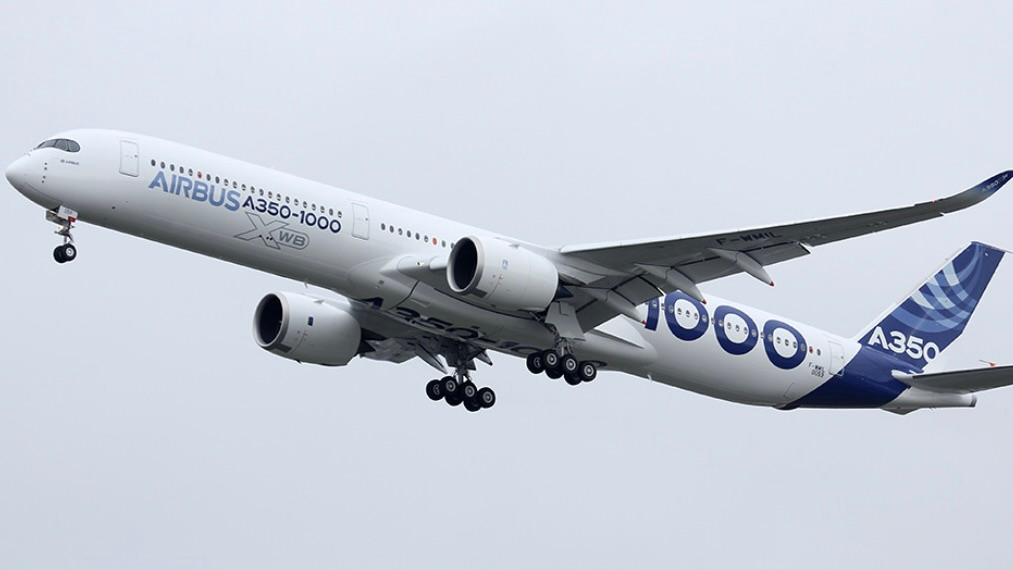
By aviation protocol, any flight over 12 hrs. falls under ultra-long haul but there are hundreds of these flights, but they are seldom referred to as such.
Singapore Airlines pioneers long distance non-stop flights
The airline that pioneered and established regular long distance non-stop travel is Singapore Airlines. With its first flight from Singapore to Newark in the US. 17,000km with a time of 18-hrs. It commenced in 2004, temporarily ceased in 2013 due to high fuel cost. It resumed in 2015 with the Airbus A350 900-ULR aircraft with better fuel consumption. This ended in March 2020 as a result of Covid. However relaunched in November 2020 and switched destination from Newark to JFK in New York.
Many airlines across the World have begun using aircraft such as A350-900, A350-1000, Boeing 777 and 787 Dreamliner with flying hours from 15 to 17 hrs., long past the usual high-water 14 hr. mark. And these are to major hubs such as Chicago, Los Angeles, San Francisco and Dallas.
The need for long distance flights
As an Australian, I routinely do 2 leg trips usually to London or New York with stopovers in Singapore or Dubai. And the long leg will be 13 to 14 hrs. If I took a flight from London to Melbourne, the shortest duration is 21 hrs covering both legs, but typically 24 hrs. Then the layover in Melbourne before catching a domestic flight to Adelaide, my home city. With layover and flight time, that easily adds another 5 hours. So, from point to points, it about 30 hrs. This was routine for years.
There are thousands of Australians that do it Each year because where our country is located. No surprise that Qantas has met the demand by starting the Perth to London ultra-long haul scheduled flights in March 2018. And now the plan to do Sydney to London and setting a new record..
My two trips on an ultra-long haul flights
In 2008, I decided to take Singapore Airlines’ SQ 21 from Singapore to Newark for company work. The return SQ22 a week later would be from Newark to Singapore. At that time, I was based in Singapore.
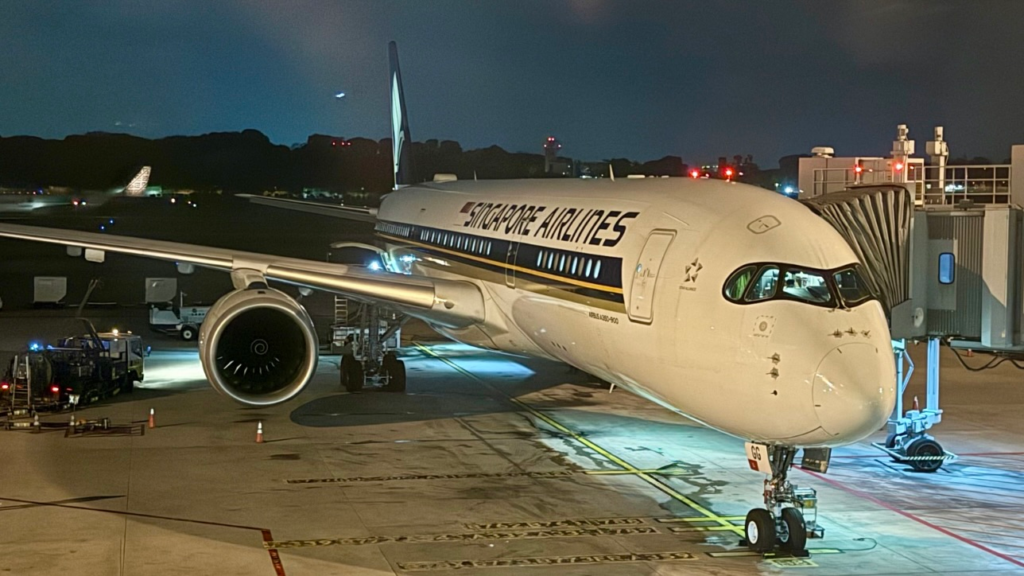
I was excited. My first ultra-long haul non-stop flight on an Airline that pioneered it and was and is holding the World record. It was also the Airline with longest and best track record for exemplary cabin service. I have taken their business class many times and knew firsthand their service standards.
The aircraft was an A340-500. The distance was 15,344 km. It was exclusively business class – 100 seats. The crew complement was 13 cabin crew members and 4 flight deck officers (pilots). Because of the 18+ hour flight duration, the crew operated in rotating shifts. I was in safe pair of hands.
It was however my first and last flights on ultra-long haul non-stop. So, you know where this is going
My experience on the onward and return legs
The flight and cabin service were excellent and on par with SIA’s legendary status. The plane was had everything going for business class passengers. The only issue was their Newark lounge which was small and poor.
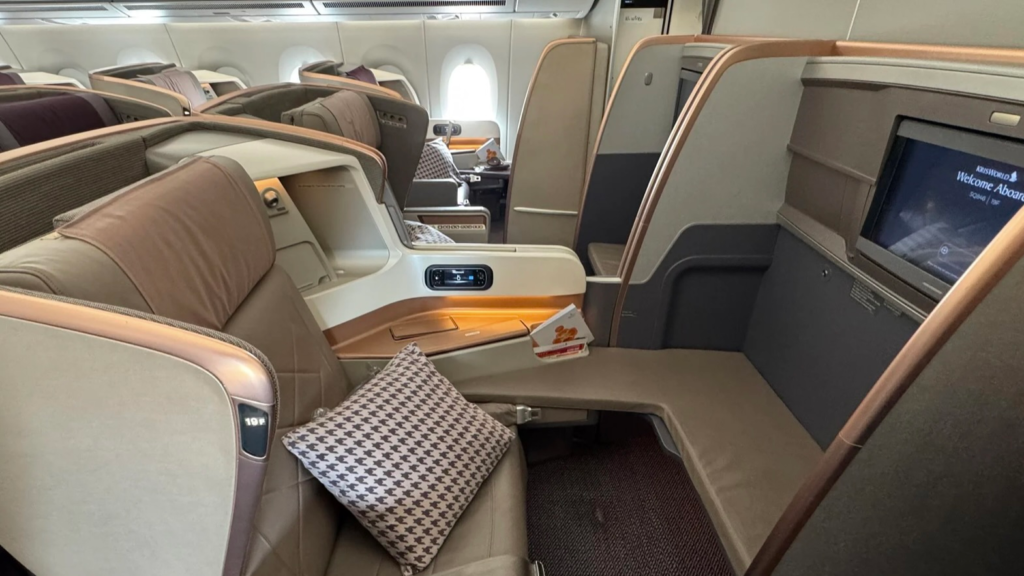
I was sadly mistaken thinking my years of doing 13 to 14 hours on one leg would have helped. I was also prepared as I brought along a thick chess book to keep me company plus the on-board entertainment.
By the time I did my return leg, I was physically and mentally spent. It drained me. So what went wrong?
I have no idea why it drained me
I really have no idea, just that it was not for me. One thing I did realise was the huge difference between cabin air and normal air at ground level including in a building. I did not realise that before.
Secondly the anticipation of landing about 2 hrs before a 14 hr flight usually brightens me. I noticed the same among the other passengers as they become talkative and more active. Not for these non-stop flights.
These passengers were very businesslike and serious. No families that I could make out. They were a different crowd. They were asleep most of the time or reading. The cabin remained dark most of the time. I read that some take sleep medication to get thru it. One lady worked non-stop on her laptop except for meals. Her seat light at times was the only light in this part of the cabin.
The minutiae of stop-overs and layovers
After these two non-stop flights, I did appreciate the stopovers and layovers. From stretching your legs to business class lounge access during these stops is now seen in better light. I realised I was more productive, clearing emails and completing work related task. I even enjoyed the meals at various airport outlets which offered variety and options.
Lastly at least for me these two non-stop flights were not saving me quality and productive time. It however is important for corporate executives and government officials who have back-to-back meetings and a heavy calendar. However, I have no idea the value it brings to someone on holiday who intends to relax. Maybe to be part of record setting trip and get that experience at least once.
The future
Qantas and Airbus have been working for years on both the plane and seat configuration. One obvious move was reducing the number of seats significantly, higher ceilings and larger windows. Changes to cabin pressure and airflow systems are in. Nutrition rich and hydration focus meals with more ergonomic seats with higher pitch. Qantas roped in University of Sydney to study passenger health and jet lag mitigation. Monash University was tasked with crew alertness, safety and fatigue.
The fact that Singapore Airlines have been doing ultra-long haul flights over 20 years speaks to demand and the chosen destinations make it clear. So it is not just another destination. It is now a necessity.
With aircraft manufacturers re-designing their planes with specification to meet this segment of the market more airlines are expected to move to the next level.
FAQs
17,016 km / 10,573 miles, 19 to 22 hrs.
4 hours flight time saved.
238 seats compared to the usual 350+
It will premium pricing expected to be 20% of more.
6 first class, 52 business class, 40 premium economy and 140 economy.
14 cabin crew and 4 pilots on rotation with 9 hidden crew beds.