

Menulog announced on 11th Nov 2025 that it will cease operations on 26th Nov 2025. The third closure of a major online food delivery platform, following the Australian demise of Deliveroo in 2022 and Foodora in 2018.
Menulog exit should not be a surprise as it ceased operations in New Zealand a year back in May 2024, giving indication that all is not well.
Menulog was founded in Sydney in 2006. Deliveroo, a UK company and Foodora, a German company both entered Australia in 2015. Uber Eats entered Australia in 2016 and DoorDash in 2019. So how did the last two entrants end up with 1st and 3rd positions in terms of market share and still going strong?
Why did Menulog with 23% market share fold?
Closing a business with 23% market share is something someone steeped in business would struggle with. It begs the question if another set of hands could have made it viable. Or why not sell the business?
Menulog is actually the second largest player in Australia with Uber Eats at 53% and DoorDash at 14%. The three of them control 90% of Australia’s online food delivery market.
Menulog’s market share was at 80% in 2014, prior to its sale to the Dutch MNC, Just Eat by its Australian founders Dan Katz, Leon Kamenev and Kevin Sherman.
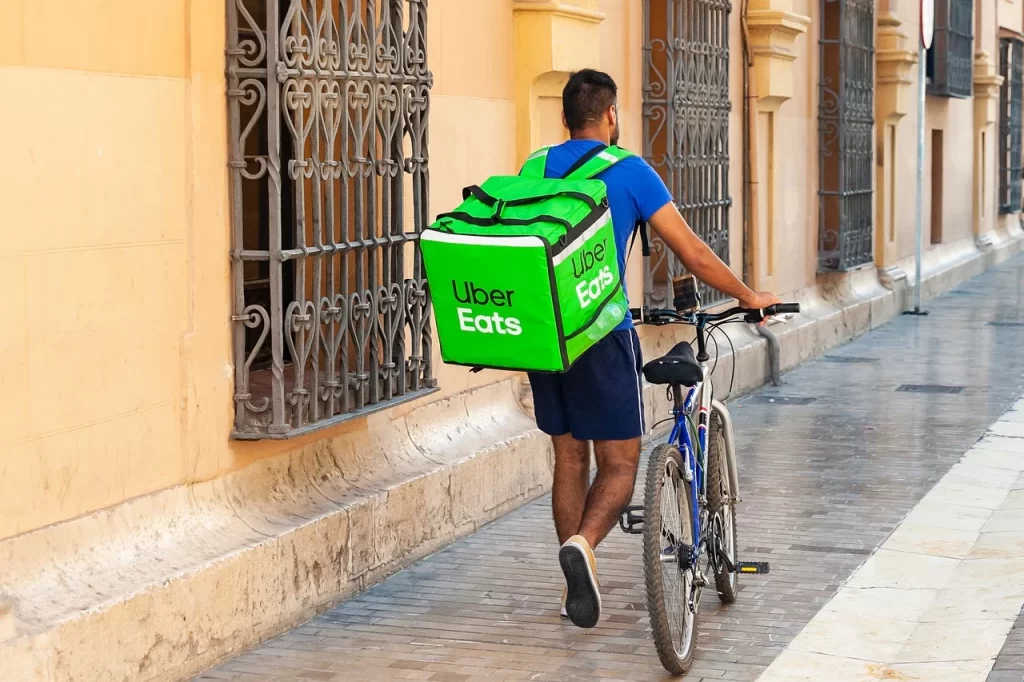
When Deliveroo exited Australia in 2022, it had a credible 11% of the market. Foodora had a decent share with 5% at time of exit in 2018.
The reasons cited by all 3 parent companies point to focus on better markets. Their research on Australian competitors might have shown the gap widening to the point of no return. In essence they could have realised they were unable to compete with Uber Eats and DoorDash for a variety of reasons.
For Menulog, their Dutch parent company Just Eat Takeaway.com operates in 16 other countries with 360,000 partners and mostly in Europe. In February 2025, the parent company was acquired by Prosus, a Dutch investment company, majority owned by South African interest.
It has investments in 70 over countries. With such a large portfolio, the Australian numbers and distance probably did not warrant much attention. And I won’t be surprised this might have been the main influencing factor.
It is important to acknowledge that the online food delivery platform business is known for thin margins in markets with multiple players and why consolidations are frequent.
Online food delivery market competition in Australia
With Menulog’s exit, Australia moves to a clear duopoly. Both UberEATS and DoorDash already hold 67% of market share.
Menulog in line with its closure announcement on 11 Nov 2025, did state that all online traffic to Menulog will divert to Uber Eats. Which likely means both parties had come to a commercial agreement. One can reasonably assume that Uber Eats market share will move considerably from its current leadership position of 53%.
It is an interesting commercial arrangement and I wonder if the Australian Competition and Consumer Commission (ACCC) has something to say about it? It should be noted that unlike Deliveroo Australia and Foodora, Menulog did not go into voluntary administration.
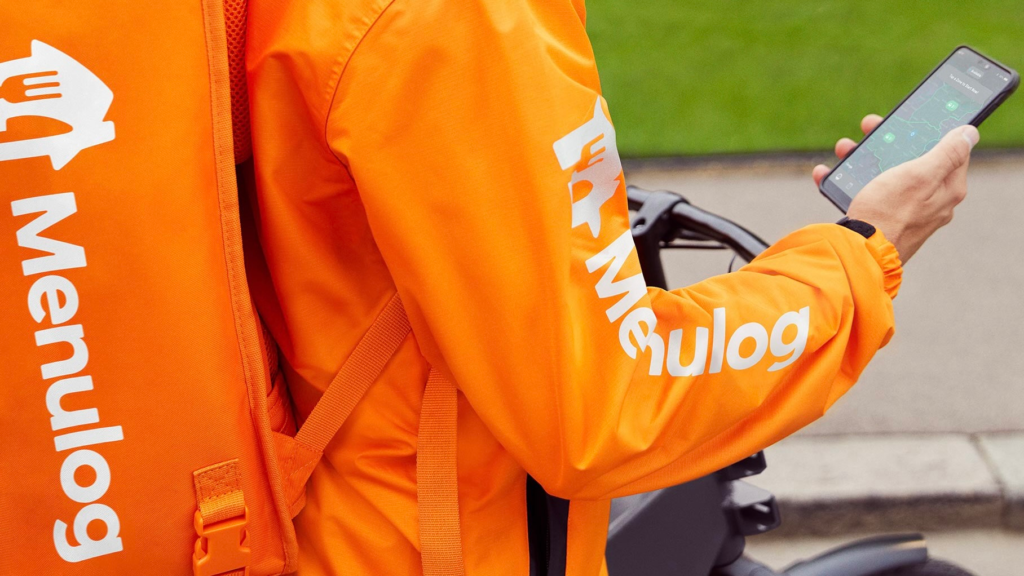
Duopoly is rarely welcomed in any free market as it is the consumer who is likely to suffer. Contractors and employees are also in a similar boat. They no longer have the leverage to negotiate terms. And the same set of main operating structure can cover newly acquired market share. There is no need to absorb staff from companies that leave the market.
There is one practice that is prominent in online food delivery and ride-haling that might not help platforms. Contractors can use multiple platforms and decide which order they are prepared to accept. I covered this is in another post on the food delivery scene in Adelaide of selecting orders. It is said that 75% of Menulog’s delivery staff were on multiple platforms. And likely accepting more lucrative delivery orders from their competitors rather than Menulog.
Presence of many small and niche platforms
Not all online food platforms in the industry register on the market share data. They are typically small and niche players. They are comfortable with their area of interest and their mission. And Australia has many such players. Their focus is to cater for the particular confined geography such as a few suburbs. And or catering to a particular sector of F&B such as Asian restaurants.
EASI is one that is focuses on Asian cuisine. FoodByUs handles home cooked food, food entrepreneurs and caterers. Too-Good- to-Go handles unsold food and meals from bakeries, supermarkets and cafes at a discounted rates and surprise packs to reduce wastage.
So, what did go wrong?
We now know holding significant market share, early market entry and having home-grown advantage do not guarantee a viable business. So, what went wrong with Menulog?
Getting their business model wrong. It ranges from a number of things starting with their attempt to buck their sector trend to treat their independent contractors as employees in 2021, raising costs while the rivals waited to gauge the Government’s appetite. Being late to move from the 2-party model to the 3-party model was another. The latter includes delivery done by the platform rather than restaurants. The new entrants came in hard on the 3-party model.
Misplaced strategy or a punt gone wrong. Menulog famously spent a fortune from 2020 to 2024 on celebrity marketing with some of world’s biggest stars, including Snoop Dogg, Christina Aguilera, Latto, Katy Perry and Jeff Goldblum. Some of their ads featured local stars like Baker Boy, Kirsten Salty, D’Arcy Spiller, Big Twisty and Bliss n Eso. No other platform in Australia came close to this sort marketing expenditure over 4 years. It ran into millions.
Customer expectations met better by competitors. The best indicators are metrics on app downloads and active users of the apps monitored by industry watchers such as Sensor Tower. Uber Eats and DoorDash was surging ahead.
Detrimental market conduct making the news is never good. Brandjacking by registering the domain names of restaurants and food outlets and creating misleading websites to confuse customers. And using Adwords arbitrage where customers looking for a particular restaurant to place orders, ends up clicking a paid link with the restaurant’s name, and directed to Menulog’s portal. Both these practices have a direct and costly impact on the very people Menulog depends on – restaurants and food outlets, their partners. This led to collective activism damaging the brand.
Factors that help with gaining market share
First is to invest and keep innovating the digital anchor application and website to provides first class UI and UX. Maintaining the app delivered experience is key. The app is the main link for customers and merchants.
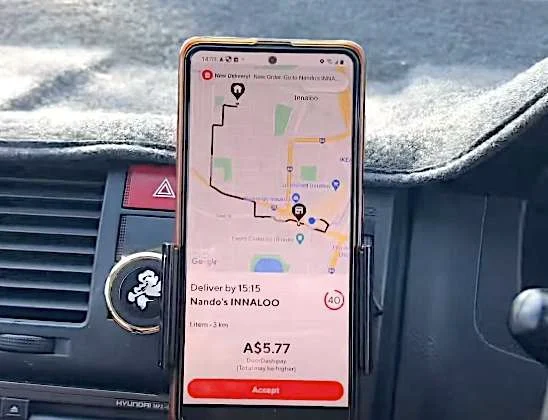
Second is having depth in data analytics that feed powerful algorithms to help customers and merchants to make the right choices and for the delivery partners to readily accept the orders that work for them.
Thirdly, keeping the very entities that platforms depend on such as restaurants, cafes and eateries sweet by effective engagement. Painless, affordable and quick on-boarding to sales insights, identifying popular and profitable dishes.
Rolling out timely incentive, teasers and promotional programs to match competitors or to raise sales for their portfolio of food outlets that will also benefit them.
If a better business model does not work, retain the industry core model to compete on an equal footing. Lastly avoiding negative publicity by poor market conduct, predatory behavior and poor service.
Menulog – an academic case study
Menulog journey from start to its demise would make for an excellent case study in any Business School.
Firstly because of its unusual case. The first 10 years of stellar and double-digit growth followed by 10 years of slow decline and losses. It began life in Sydney and had home ground advantage.
In May 2015, Just Eat Plc, acquired Menulog Australia and New Zealand for AUD 855M. At that time its year-on-year growth for 3 months ending in March 2015 was an impressive 96% plus 80% market share.
At that time, the hefty price tag caught everyone’s attention. The sale to an MNC however was lauded for it recognised Australia’s ability to fully develop and nurture an impressive tech start-up to scale.
In both the Australian and New Zealand markets it was the undisputed leader with 5,500 restaurants with 1.4M active customers. 10 years since the acquisition Menulog no longer exist. Its story highlights the challenges of staying competitive in a highly demanding industry within thin margins, even for companies that seem to have every advantage.