
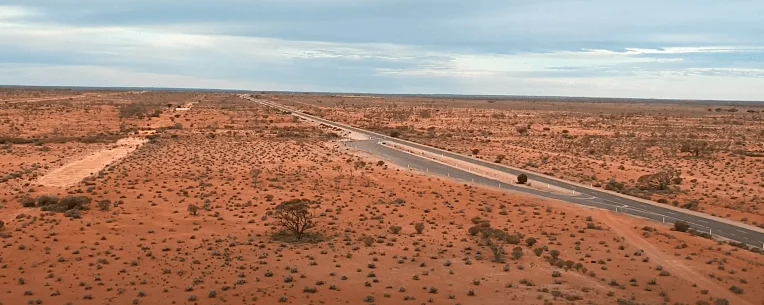
Australia’s Outback is a land of myth and legend. A vast, untamed wilderness that stretches across the heart of the continent. Covering a staggering 5.6 million square kilometers, the Outback occupies nearly 70% of Australia’s landmass. Dwarfing many countries and captivating the imagination of adventurers and dreamers alike.
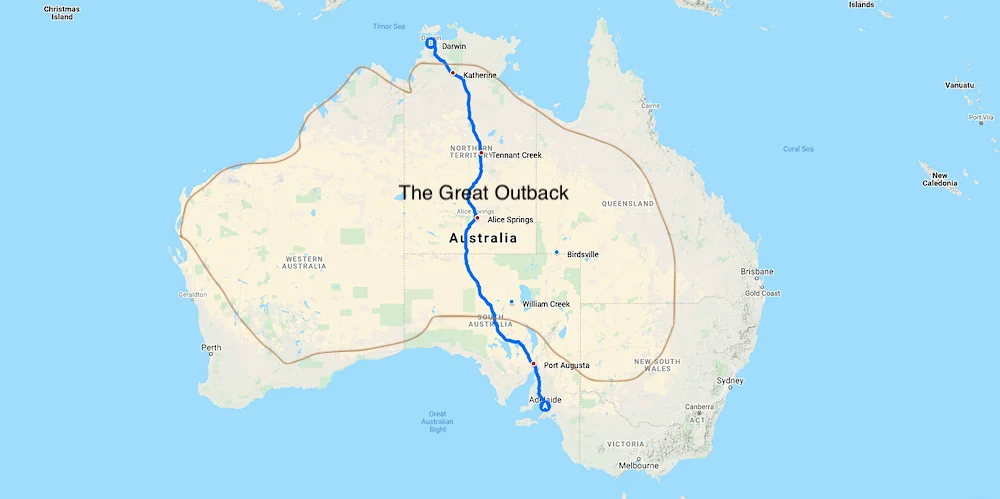
But what city stands as the true threshold to this immense and mysterious land? Adelaide, the capital of South Australia. Long been regarded as the primary gateway to the Great Outback from the start of the country till now.
Understanding the Outback’s Immensity
To grasp why Adelaide holds this title, it’s essential to appreciate the Outback’s sheer scale and geography. The Outback is not just a single region but a collective term for the remote, arid interior of Australia. Stretching from the bushlands beyond the cities to the very center of the continent.
While most Australian states have some access to the Outback, only South Australia, with Adelaide at its helm, has historically served as the main entry point to this vast expanse.
It should be noted that all states have long stretches of their borders facing the Outback. The exception are Tasmania, being an island, and Victoria, whose northern border barely grazes the Outback.
Queensland and New South Wales do provide entry to the eastern fringes, while Western Australia dominates the west. But their entry are dirt roads. The Northern Territory, despite hosting iconic Outback towns like Alice Springs and Katherine, has always depended heavily on the southern states. Particularly Adelaide, for supplies, infrastructure, and support.
Adelaide’s Historical Role as the Outback’s Gateway
Adelaide’s proximity to the Outback isn’t just a matter of geography—it’s a legacy built over centuries. In the 19th century, as European explorers set out to chart the unknown heart of Australia, Adelaide became the launchpad for their daring expeditions.
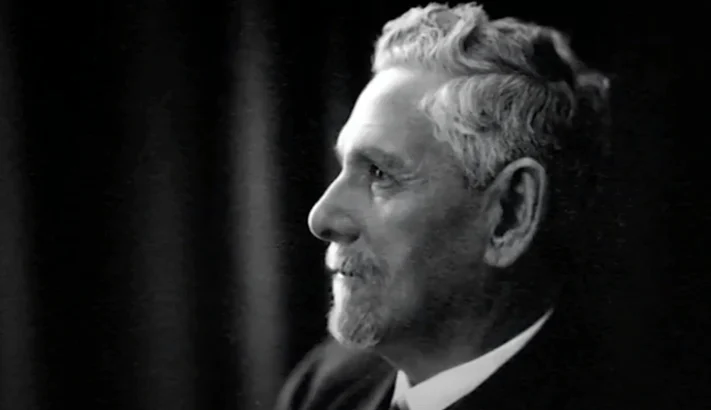
Between 1858 and the early 1870s, six major expeditions to explore the continent’s center began in Adelaide. The only significant exception, the Burke and Wills expedition of 1860. That expedition started in Melbourne and traversed the eastern side, missing the red heart of the Outback.
The completion of the Overland Telegraph Line in 1872 marked another milestone. Stretching from Darwin in the north to Port Augusta just north of Adelaide, this engineering marvel followed the routes pioneered by early explorers. It connected Australia to the rest of the world. Both physically and symbolically, and cemented Adelaide’s status as the Outback’s southern gateway.
Building Roads and Opening the Centre
As Australia’s ambitions grew, so did its need to tame and traverse the Outback. Surveyors and road builders, most notably Len Beadell, played a pivotal role. Born in New South Wales but based in Adelaide, Beadell carved out over 6,000 kilometers of roads through some of the harshest and most remote parts of the Outback during the 1950s and 60s. His routes penetrated the continent’s largest deserts, opening them up for exploration, defense, and development.
Pioneers, Pastoralists, and the Rise of the Cattle Kings
Adelaide’s strategic importance was further underscored during the Cold War era. The city served as the staging point for Australia’s nuclear, missile, and weapons testing programs, with sites like Woomera, Maralinga, and Emu Fields all accessed via Adelaide. Even today, Pine Gap near Alice Springs remains a vital intelligence facility, testament to the region’s ongoing geopolitical significance.
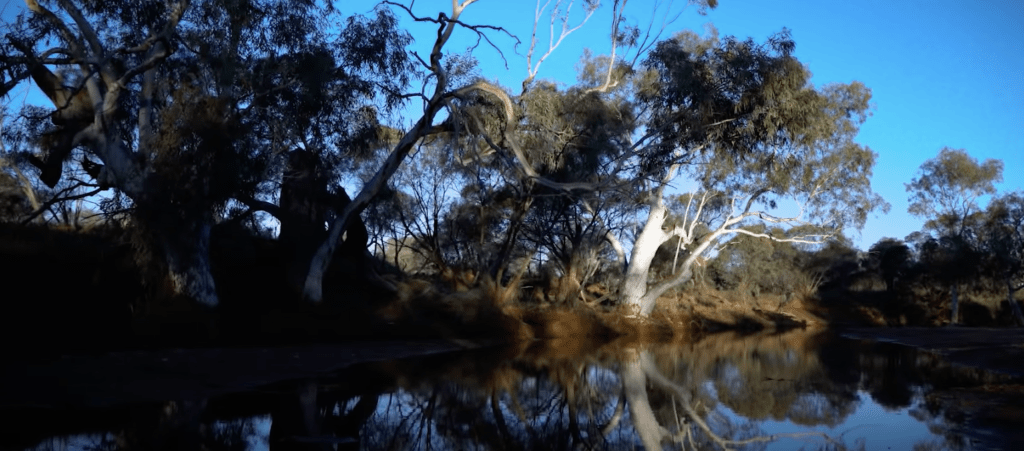
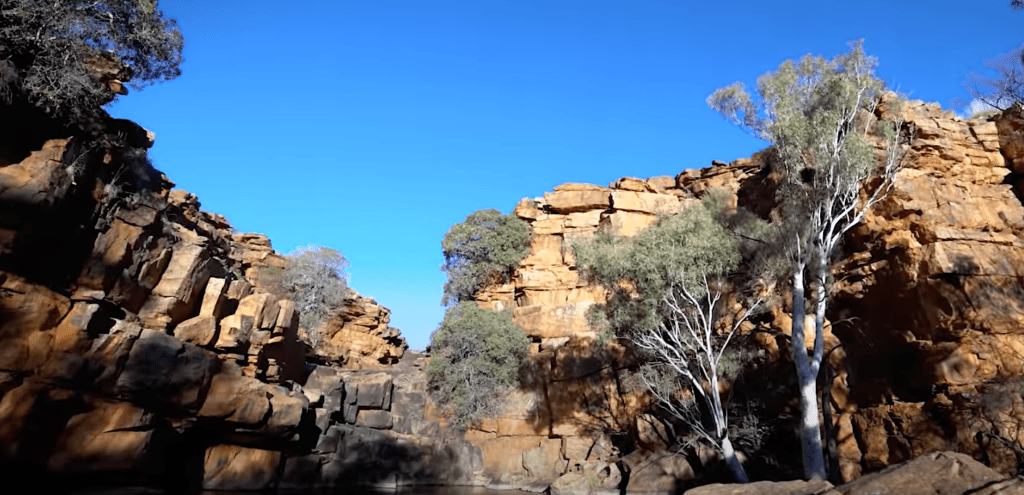
The Outback’s story is also one of human endurance and enterprise. As waves of immigrants settled along Australia’s coasts, pioneers ventured inland in search of grazing land for cattle and sheep. Many of these early pastoralists either hailed from Adelaide or relied on the city as their main supply and trading hub. While Queensland and New South Wales played their parts, South Australia—and Adelaide in particular—dominated the development of the Outback’s pastoral industry.
Perhaps no figure embodies this legacy more than Sidney Kidman. Born in Adelaide in 1857, Kidman would go on to become the world’s largest landowner. Amassing properties across four states and building Anna Creek Station—the largest cattle station on Earth.
At its peak, Anna Creek was seven times larger than the biggest ranches in the United States, surpassing the size of entire European countries like Belgium.
For generations, Outback families have maintained close ties to Adelaide. The city has served as a second home, a place for education, respite, and connection. Children from remote stations often began their schooling via the innovative School of the Air. Receiving lessons over radio before eventually moving to Adelaide for boarding or day school. Even today, many Outback families maintain homes in the city, ensuring that Adelaide remains the social and educational heart of the Outback community.

Port Augusta: The Junction of the Outback
No discussion of Adelaide’s Outback connection is complete without mentioning Port Augusta. Located just north of Adelaide, this bustling junction is where the highways and railways of southern Australia converge before plunging into the interior. Supplies from Perth, Sydney, and Melbourne all pass through Port Augusta, making it the logistical lifeline of the Outback.
Here, massive road trains—Australia’s iconic multi-trailer trucks—are assembled and dispatched northward. Due to road regulations, the third trailer must be unhitched before heading further south, but northbound, these behemoths continue their journey, delivering everything from groceries to machinery to the remotest corners of the continent.
Tourism: Experiencing the Outback’s Magic
In recent decades, the Outback has become a magnet for tourists seeking adventure, authenticity, and awe-inspiring landscapes. South Australia, Queensland, and New South Wales all promote Outback tourism, but Adelaide remains access points for many iconic experiences.
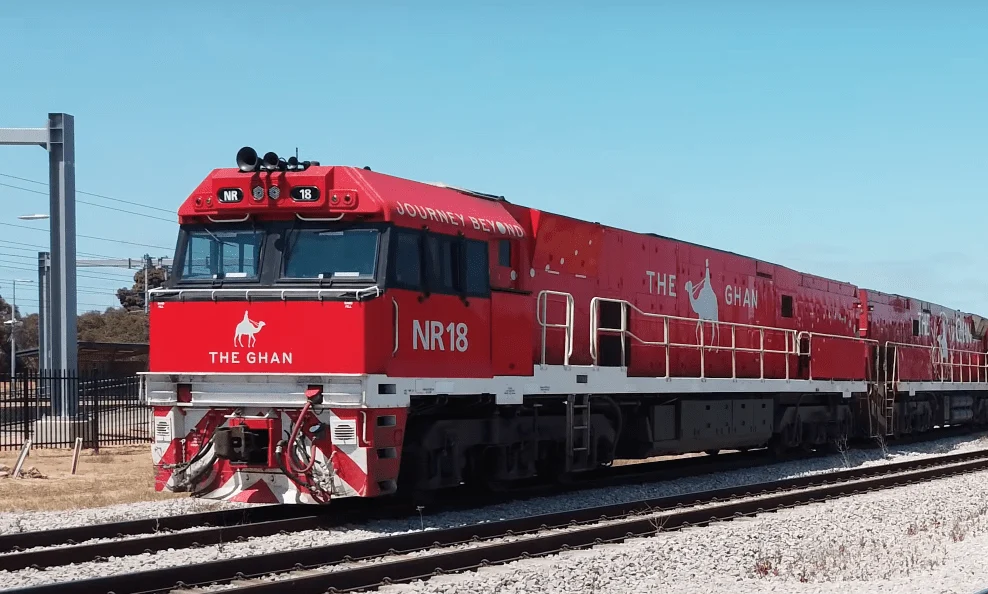
· The Ghan Train: Named in honor of the Afghan cameleers who helped open up the Outback, The Ghan is one of the world’s great train journeys. Running between Adelaide and Darwin, it offers travelers a luxurious way to witness the changing face of the Outback, with stops in Alice Springs and other legendary locations. Fares start around AUD 3,000, but for many, it’s a bucket-list experience.
· Cattle Station Experiences: Organized tours allow visitors to immerse themselves in the daily life of working cattle stations, experiencing firsthand the challenges and rewards of Outback living. These tours range from day trips to multi-day adventures, often beginning in Adelaide or other major cities.
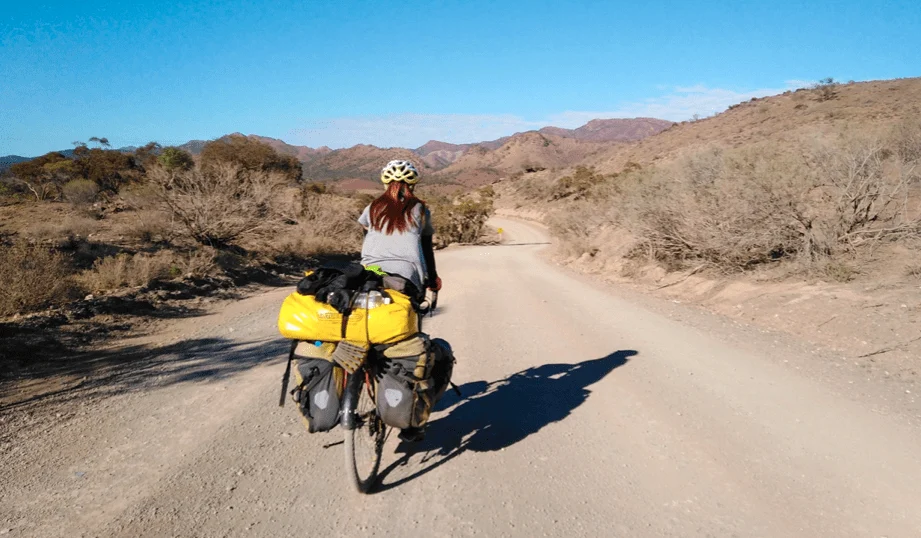
· Hardcore Adventure: For the truly intrepid, the Outback offers endless opportunities for self-guided exploration. Whether by 4WD, motorbike, bicycle, or campervan, adventurers traverse legendary routes like the Oodnadatta Track, Birdsville Track, and even the Simpson Desert. These journeys test the limits of endurance and reward travelers with a sense of achievement matched only by the grandeur of the landscape.
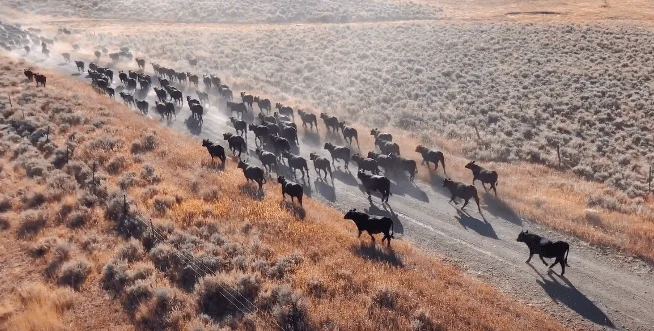
· Special Events: Unique experiences like cattle drives, where tourists join drovers on horseback for weeks at a time, combine adventure with comfort, offering a taste of Outback life without sacrificing good food or accommodation. These events attract visitors from around the world, drawn by the romance and challenge of the open range.
Adelaide’s Enduring Legacy
Adelaide’s role as the Outback’s gateway is not just historical—it remains vital today. The city continues to serve as a hub for education, logistics, and tourism, connecting the remote interior with the rest of Australia and the world. Its boarding schools and universities are filled with students from Outback families, while its shops and markets cater to the unique needs of those living far beyond the city limits[1].
Modern transportation has made the Outback more accessible than ever, with flights and highways linking Adelaide to even the most distant communities. Yet, for many travelers and adventurers, Adelaide is still where the journey truly begins.
A Modern Pilgrimage
The spirit of exploration that once drove pioneers and surveyors now inspires a new generation of adventurers.
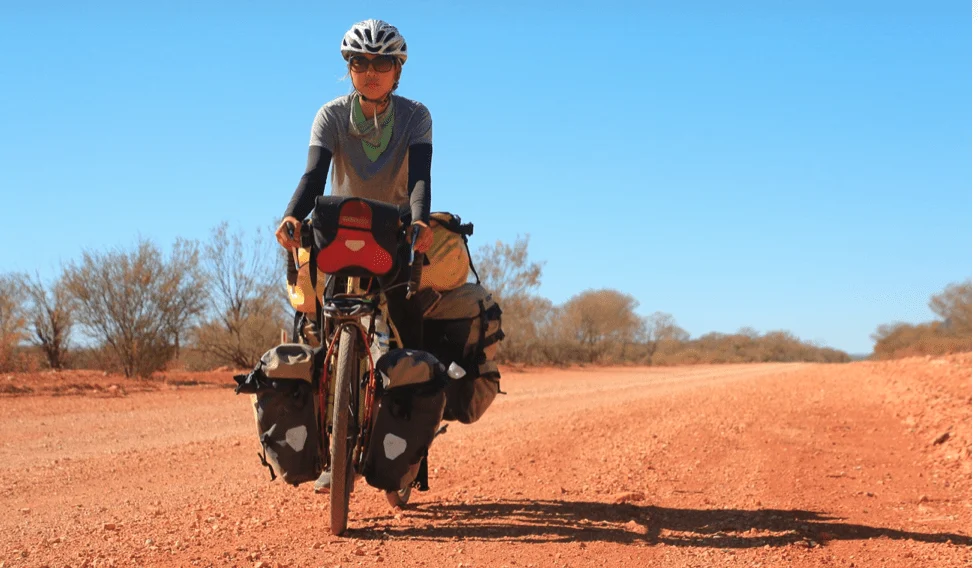
In 2020, world-touring cyclist Jin Jeong arrived in Adelaide after crossing four continents. From there, she set out into the Great Outback, following in the tire tracks of countless others who have looked to Adelaide as the starting point for their own odyssey.
Conclusion: The Heartbeat of the Outback
Adelaide’s connection to the Outback is woven into the fabric of Australia’s history and identity. From the earliest expeditions to the modern era of tourism and adventure, the city has served as the launchpad for those seeking to explore, understand, and conquer the continent’s wild heart.
Whether you’re a historian, a tourist, or a dreamer, Adelaide stands ready to welcome you at the threshold of the Great Outback—where the journey is as unforgettable as the destination itself.