
Bishkek, Kyrgyzstan: Amid Central Asia
Kyrgyzstan’s capital, Bishkek, is a city that defies expectations. I would consider it now as the best start for a Central Asian journey. A Kyrgyzstan travel trip for knowing the people and culture that was hidden for so long behind the iron curtain.
Tucked away in the rightmost corner of Central Asia, bordering China, this metropolis is rarely mentioned. Whether in glossy travel magazines or featured on popular travel shows. Yet, for the adventurous traveler, Bishkek offers a unique blend of history, culture, and natural beauty that is impossible to forget.
A City Off the Beaten Path
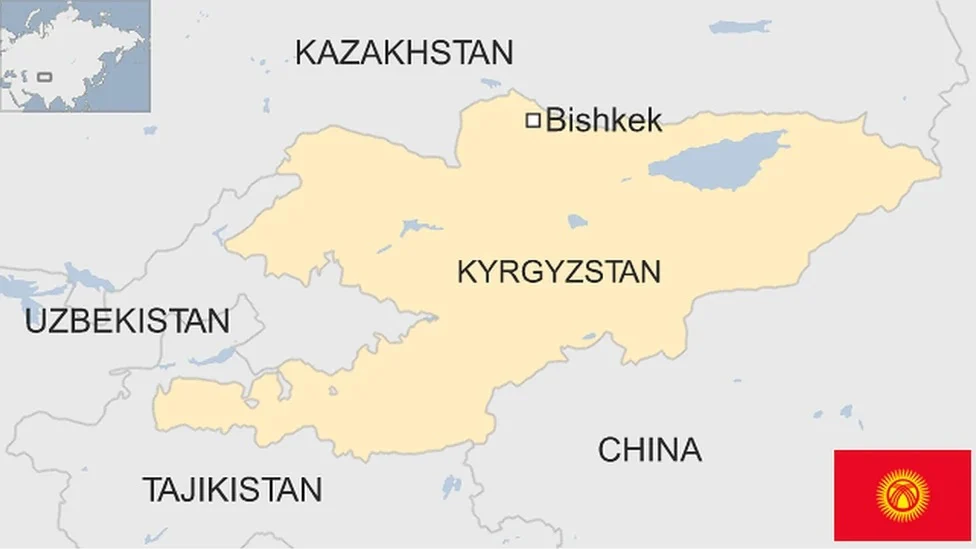
Most people would struggle to find Kyrgyzstan on a map. Until a few years ago, even I was unaware of its existence. Overshadowed by its better-known neighbors—Kazakhstan, Uzbekistan, Tajikistan, and China. Unlike countries that make headlines for conflict or disaster, Kyrgyzstan quietly sits at the crossroads of ancient trade routes, waiting to be discovered.
What makes Kyrgyzstan particularly intriguing is its geography. It is one of only 44 landlocked countries in the world. And holds the distinction of being the country furthest from any ocean or sea. None of its rivers ever reach the sea. This remoteness, combined with the country’s mountainous terrain, gives Kyrgyzstan an air of mystery and isolation that is both alluring and humbling.
Mountains, Lakes, and Untamed Beauty
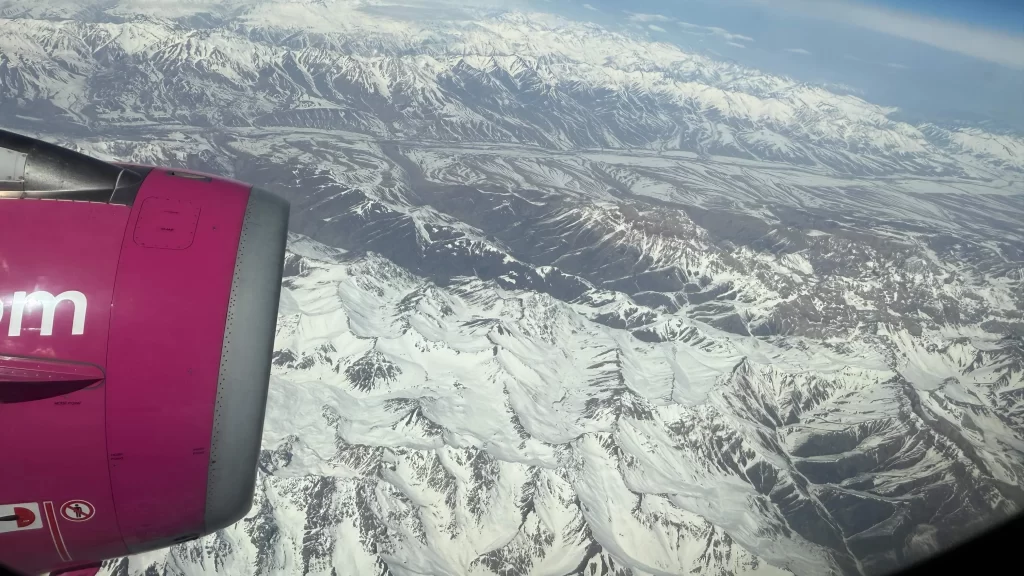
Kyrgyzstan is a land of mountains. 90% of its territory is covered by the rugged peaks and valleys of the Tian Shan and Pamir-Alai ranges. Between these towering summits lie sweeping steppes and undulating valleys, home to some of Central Asia’s most spectacular national parks.
One of the country’s crown jewels is Issyk-Kul Lake. A vast saline body of water that is the world’s second-largest mountain lake after South America’s Lake Titicaca. Sitting at 1,600 meters above sea level, Issyk-Kul rarely freezes. It is so large it’s visible on a map of the country. The lake’s deep blue waters are surrounded by snow-capped mountains, creating a scene that is nothing short of breathtaking.
Bishkek: From Fortress to Modern Capital
Bishkek itself has a fascinating history. Originally known as Pishpek, the city was a caravan stop before transforming into a fortress and later a garrison town. In the 1920s, it was renamed Frunze after a Bolshevik military leader born there. Only after Kyrgyzstan gained independence in 1991 did the city adopt its current name, Bishkek.
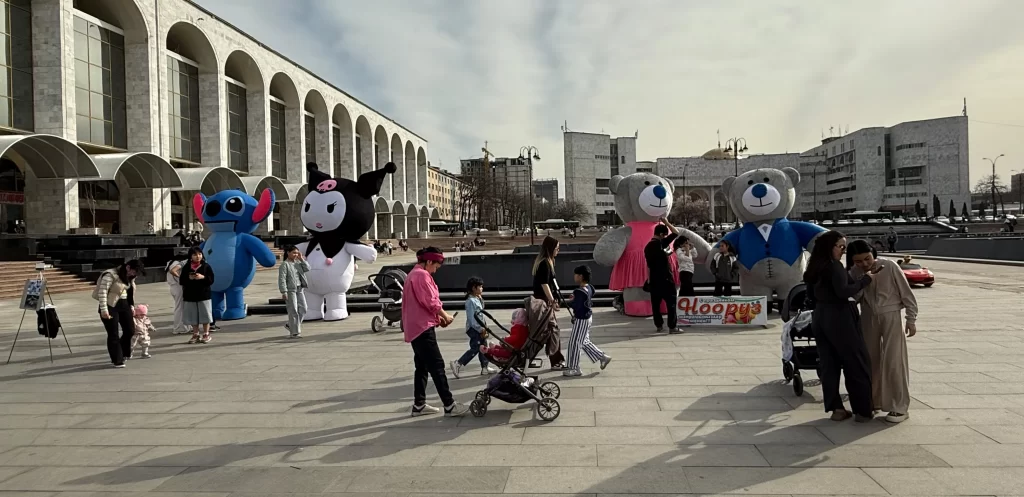
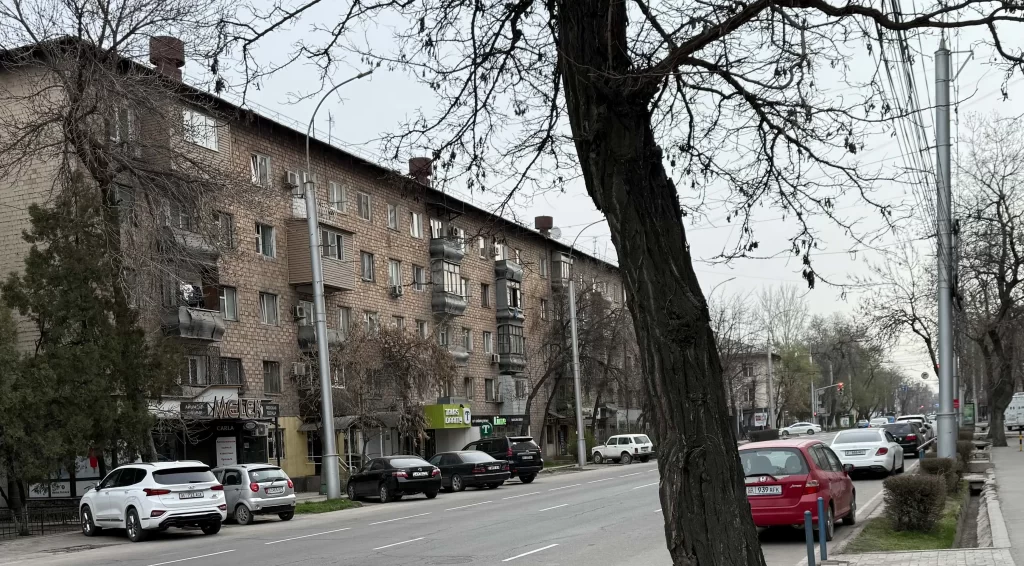
Today, Bishkek is a city that wears its history on its sleeve. Soviet-era architecture dominates the skyline, with grand monuments, statues, and low-rise apartment blocks lining the streets. The city’s centerpiece is Ala Too Square, a vast plaza where locals gather for public events and celebrations.
First Impressions: Arrival and Getting Around

Arriving at Manas International Airport, I was greeted by a friendly immigration officer who spoke English. A pleasant surprise. However, my euphoria was short-lived. Navigating the airport’s long corridors, I encountered a sim card vendor. He insisted the only available option was a 28-day plan, which turned out to be untrue. Nevertheless, I accepted, eager to book my ride to the city using Yandex Go, Central Asia’s answer to Uber.
Outside, a determined lot of taxi drivers approached me. I told them I had booked a Yandex Go ride. They warned me about the supposed dangers of young Yandex Go drivers. The claim was that the young drivers are known for being drunk and unfamiliar with the roads.
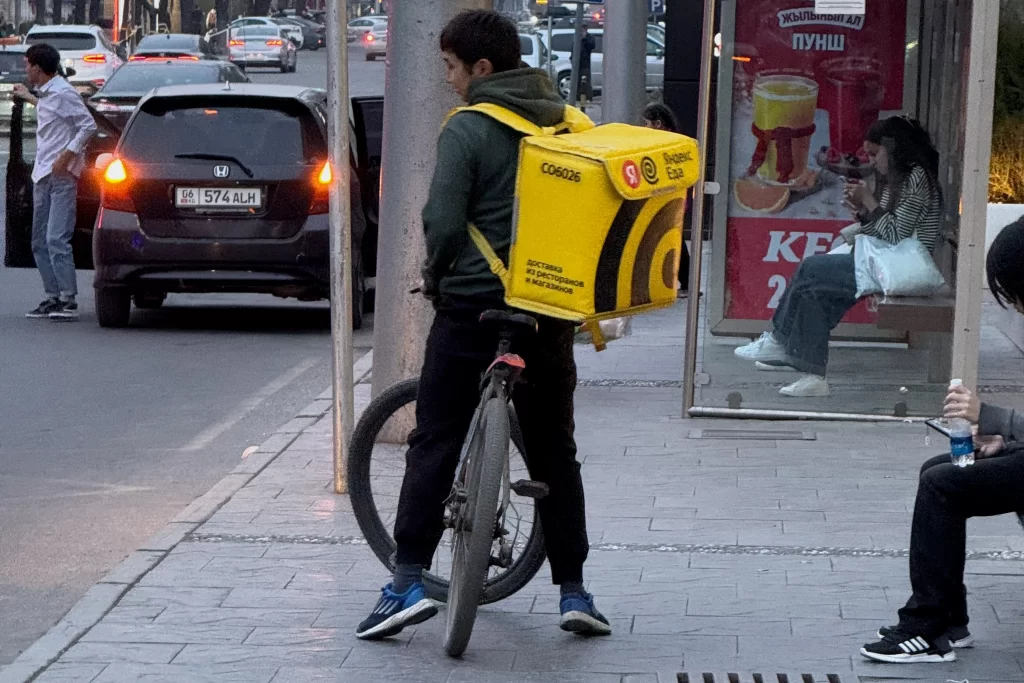
My ride came, a white Toyota Raum driven by a young man. Who delivered me safely and efficiently to my hotel for just 782 som (about AUD 14) for a 28-kilometer journey. Throughout my stay, Yandex Go proved invaluable—reliable, affordable, and a testament to the power of the gig economy. Have to thank the founders of Uber who led the gig economy with their ride model that is not everywhere, safe and convenient.

Population – Kyrgyz and Russians
Bishkek’s population has shifted dramatically over the years. In 1970, only 12% of the city’s residents were ethnic Kyrgyz; the majority were Russians and Eastern Europeans. Today, Kyrgyz make up 75% of the population, with the city now home to 1.1 million people.
Walking the streets, I noticed a vibrant mix of faces—Kyrgyz, Russians, and a growing number of Indian and Pakistani students attending local medical colleges. This diversity is reflected in the city’s languages. Russian and Kyrgyz are both widely spoken, with Russian serving as the lingua franca due to the country’s Soviet past. English, however, is rare outside of hotels and immigration, making even simple interactions an adventure.
The Challenge of Communication
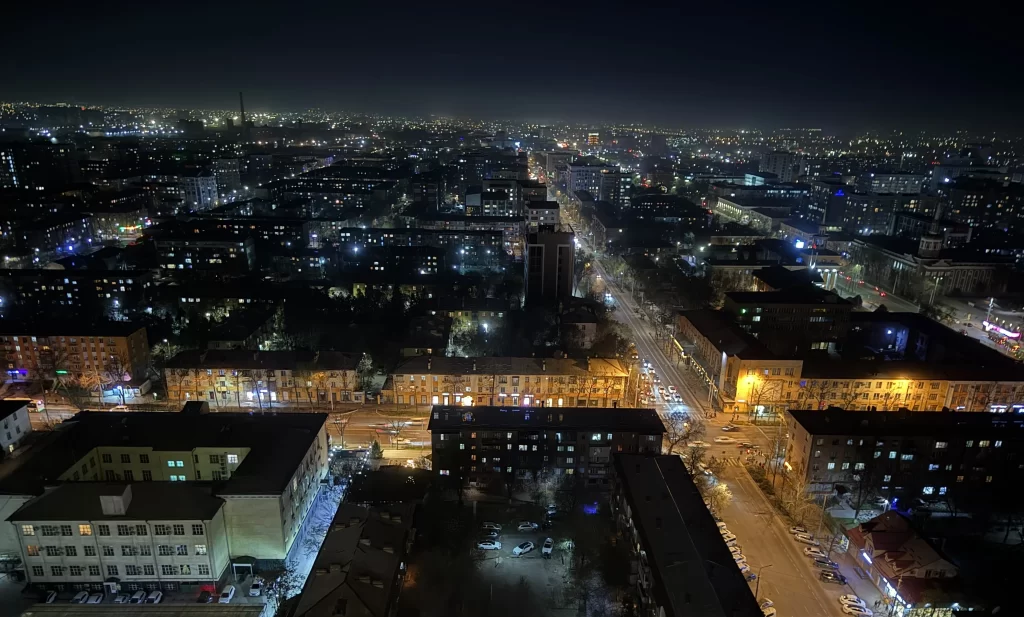
Navigating Bishkek requires patience and a sense of humor. Road signs, menus, and shopfronts are all in Cyrillic, and few locals speak English. Yet, the people are eager to help, often going out of their way to communicate despite the language barrier.
Whether it was a shop assistant struggling to explain a price or a group of shoe store employees enthusiastically helping me find the right pair, the warmth and friendliness of Bishkek’s residents shone through.
Traditions, Religion, and Modern Life
Kyrgyzstan’s culture is a tapestry woven from centuries of nomadic tradition, Turkic influences, and Soviet legacy. The Kyrgyz people share ethnic roots with groups stretching from Eastern Turkey to Western China, including Uzbeks, Kazakhs, Khazars, and Uyghurs. Horses, steppes, and livestock herding remain central to their identity.
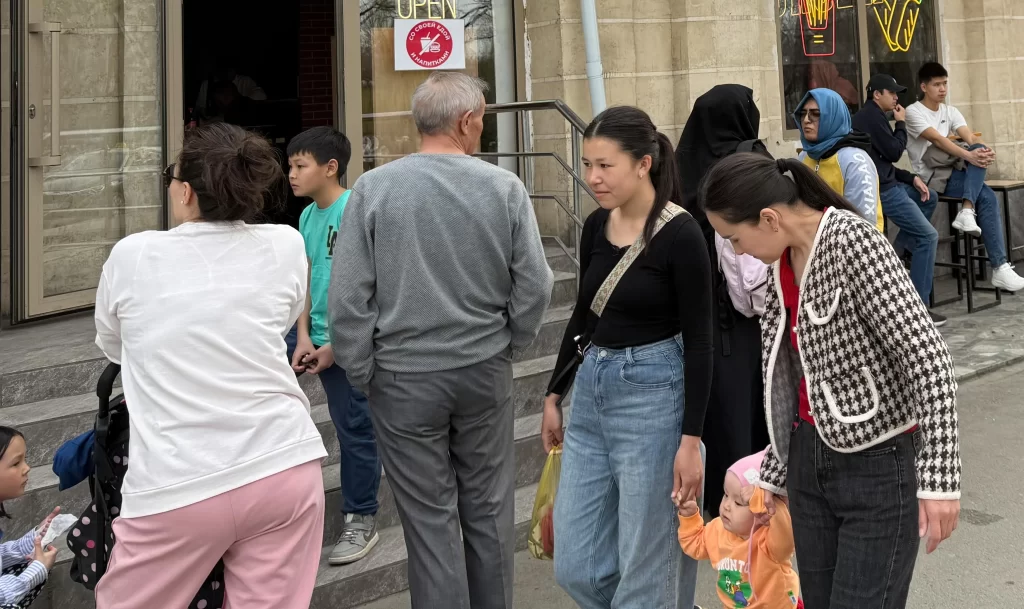
Islam, specifically the Sunni branch, is the predominant faith among Kyrgyz, while the Russian population follows Orthodox Christianity. This religious divide is mirrored in language and culture. The Russian-speaking locals often unable or unwilling to speak Kyrgyz, despite being born and raised in the country. Kyrgy is considered a difficult language to grasp.
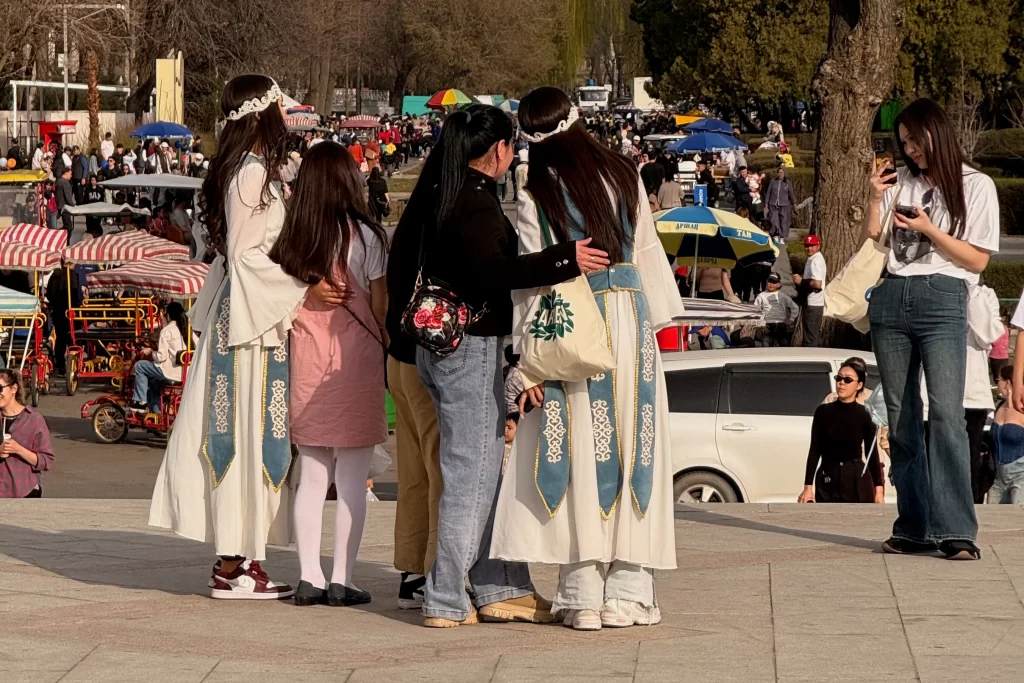
In terms of fashion, Bishkek is a study in contrasts. Young people favor trendy Western styles. Think black and white ensembles and wide-flared denim jeans. While older women often wear hijabs or traditional head coverings. Public displays of affection are rare, but there is no sense of judgment toward foreigners who might act differently.
Nightlife and City Vibes
Bishkek’s nightlife is understated but lively. Traffic thins out after dark, and locals flock to restaurants and clubs for dining and entertainment. At one venue, I watched a large Russian group celebrate a birthday, with older ladies dancing to Russian tunes. Later, the dance floor filled with well-dressed young Kyrgyz. Dancing in groups rather than as couples, a reflection of the city’s conservative social norms.
Youth, Work, and Family
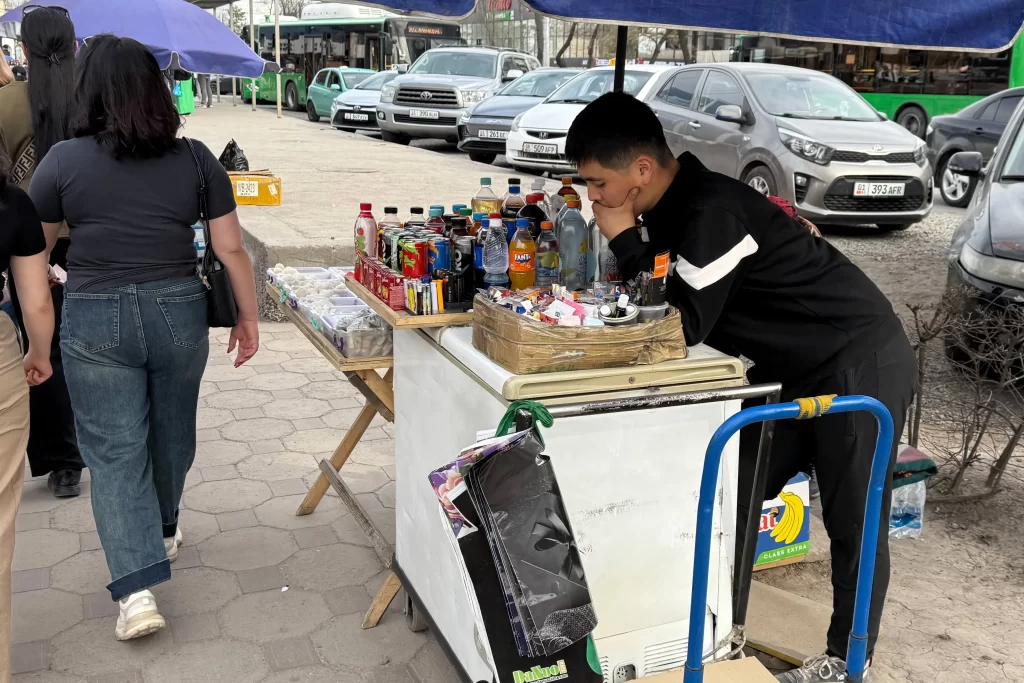
One striking feature of Bishkek is its youthful energy. Most retail and food outlets are staffed by people under 30. Many of whom are students working to support their families. It’s common to see three generations, parents, children, and grandparents—out together, a rarity in many parts of the world.
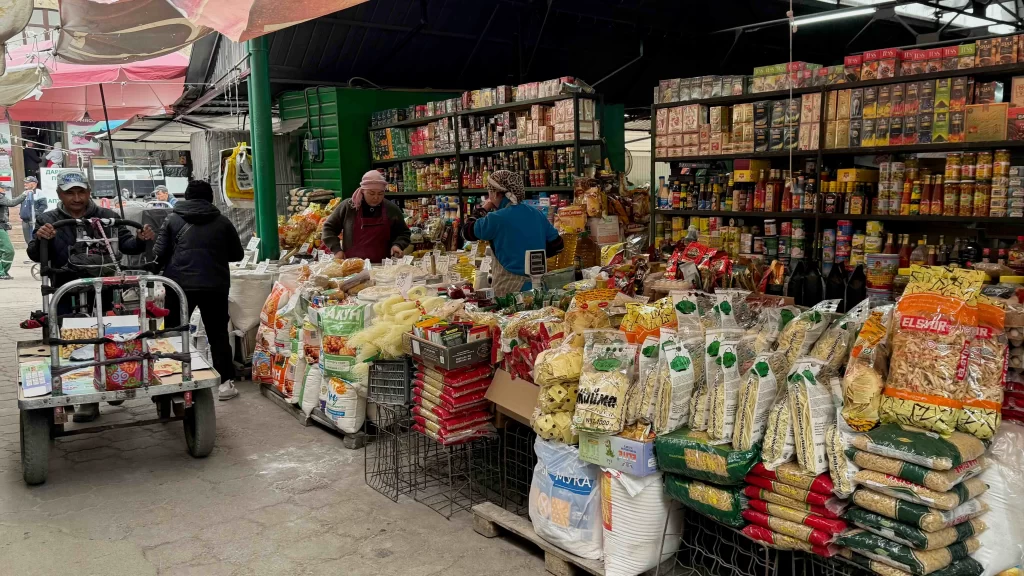
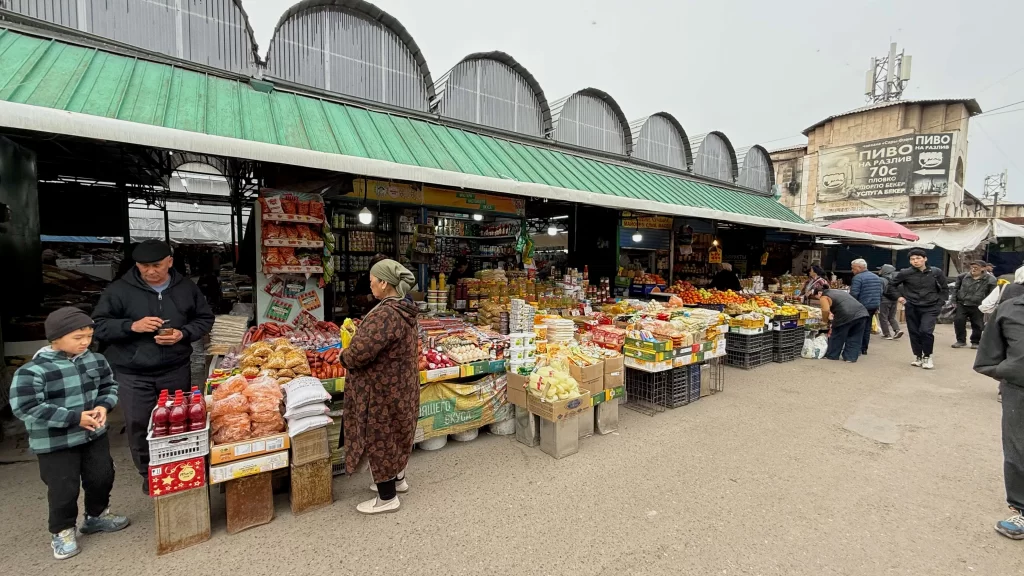
The city’s main market, Osh Bazaar, stands in contrast, with stalls run by older women selling everything from fresh produce to shoes. This blend of youth and tradition gives Bishkek a dynamic yet grounded feel.
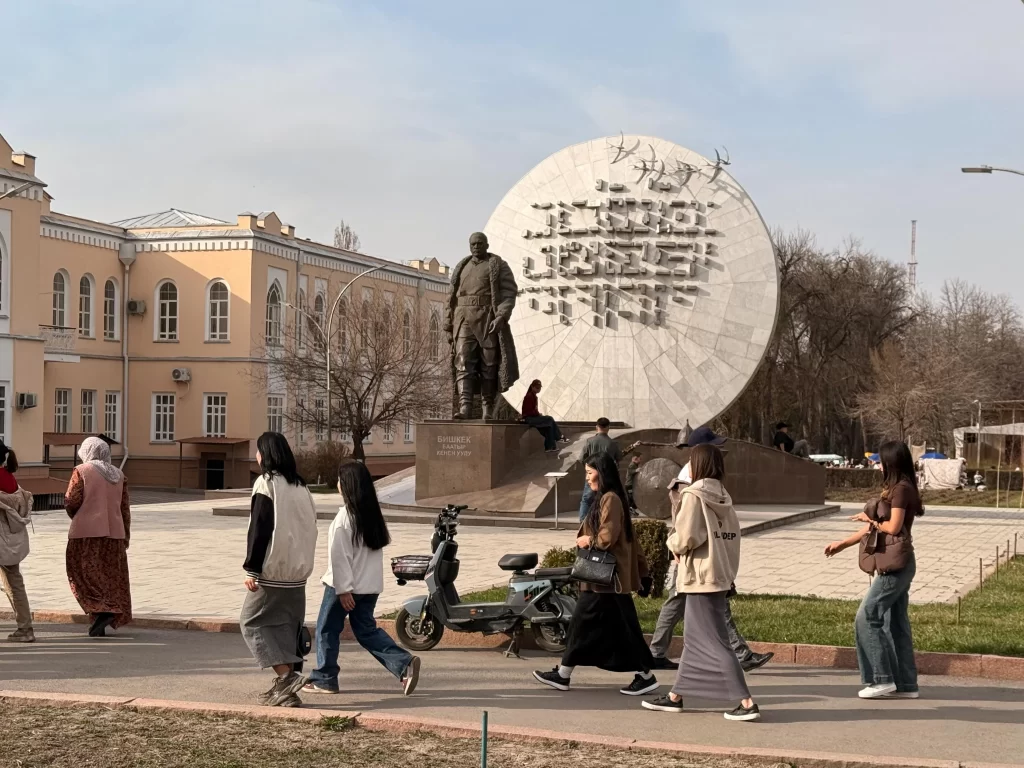
Cityscape: Soviet Relics and Modern Malls
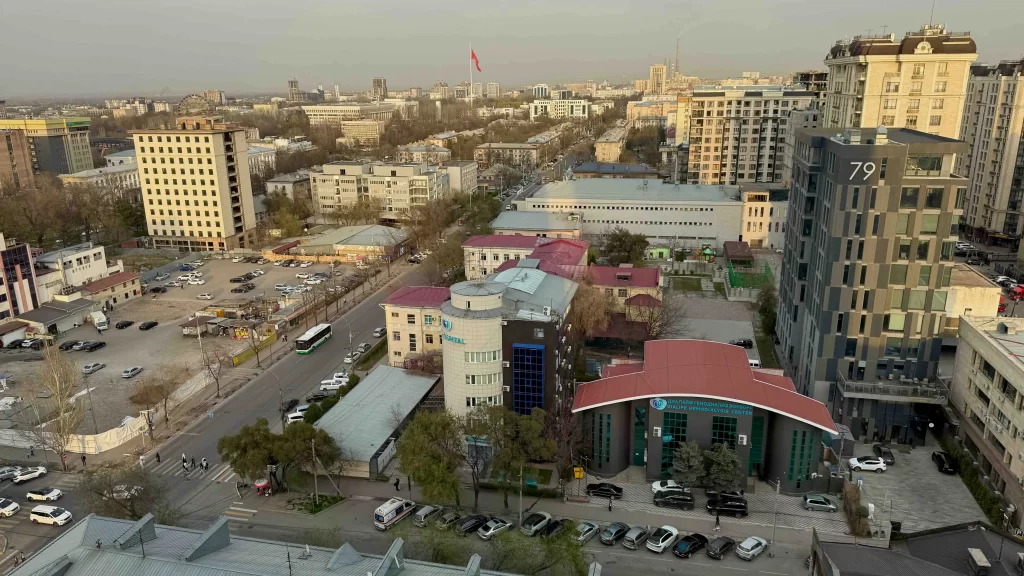
Chuy Avenue, Bishkek’s main thoroughfare, is lined with Soviet-era buildings, parks, and plazas. The city’s skyline is punctuated by a towering flagpole and a sea of low-rise buildings. A necessity in this earthquake-prone region. Snow-capped mountains form a dramatic backdrop, though the city itself is remarkably flat.
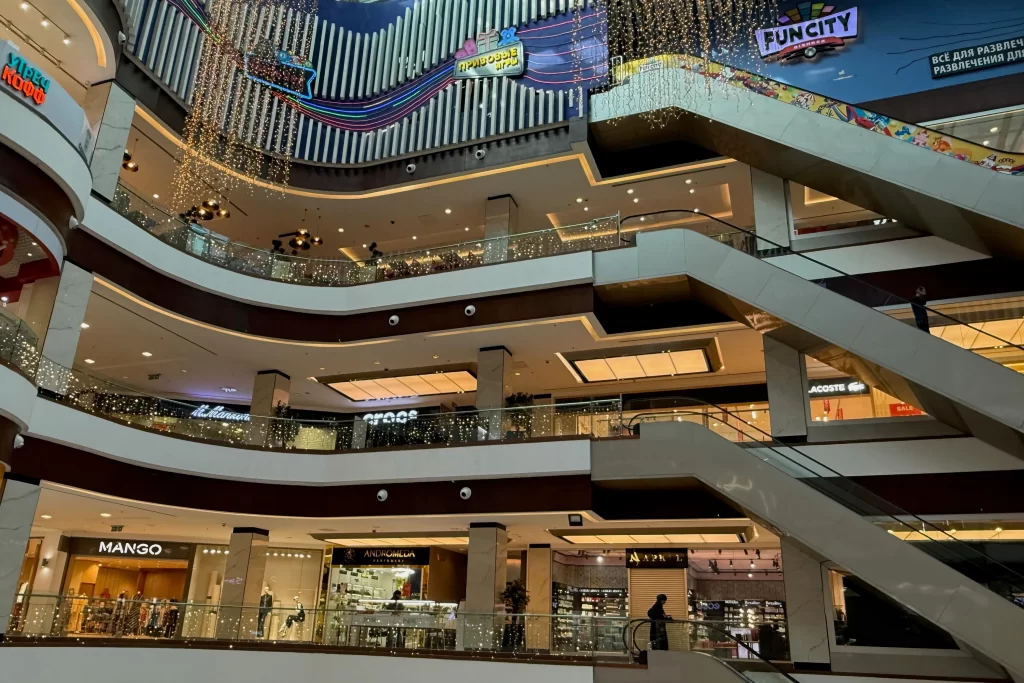
Modern shopping malls like Bishkek Park Mall offer all the amenities of a Western city, from banks and currency exchanges to food courts and supermarkets. Despite its remote location, Bishkek feels surprisingly connected to the wider world.
Getting Around: Buses, Taxis, and Yandex Go
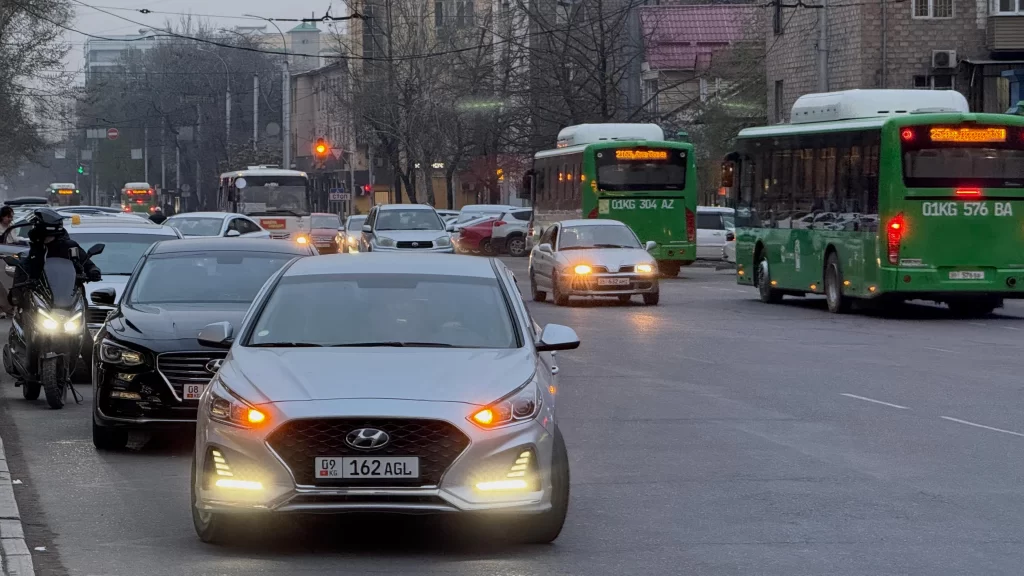
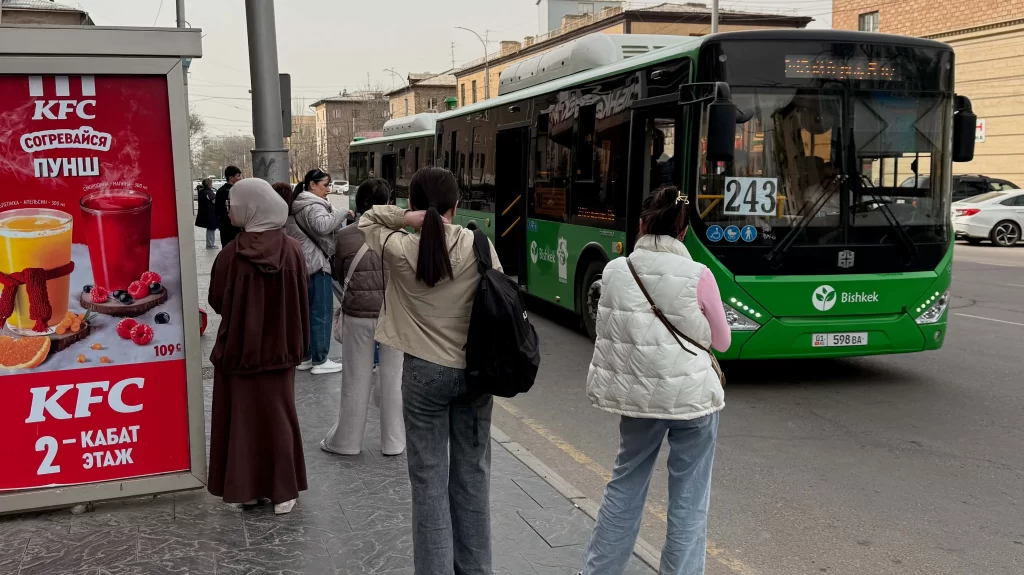
Bishkek’s public transport system is impressive. Modern buses from China and Turkey crisscross the city, offering frequent and affordable service (about AUD 0.40 per ride). Payment is cashless, with options for VISA cards and a prepaid tap card called Tulpar. Compared to many wealthier countries, Bishkek’s system is efficient and user-friendly.
Taxis, on the other hand, are less reliable—often old and poorly maintained. It’s no wonder that Yandex Go has become the preferred choice for locals and visitors alike.
Cuisine: A Taste of the Steppes
Food is central to Kyrgyz culture, and Bishkek’s culinary scene is a reflection of its nomadic heritage. Bread and meat dominate the menu, with horse meat, fermented milk, and cheese products as staples.
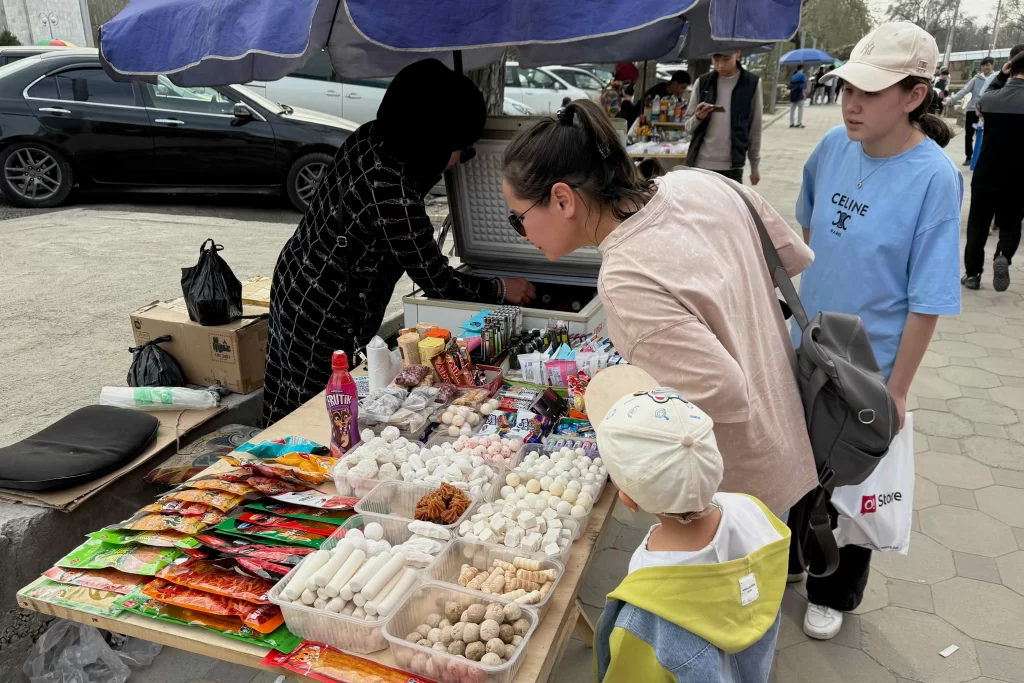
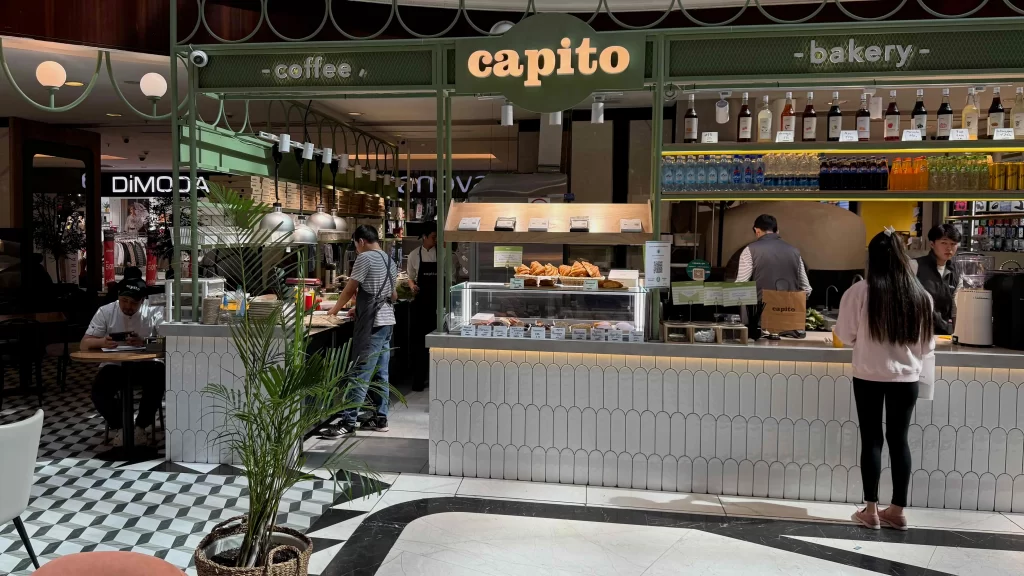
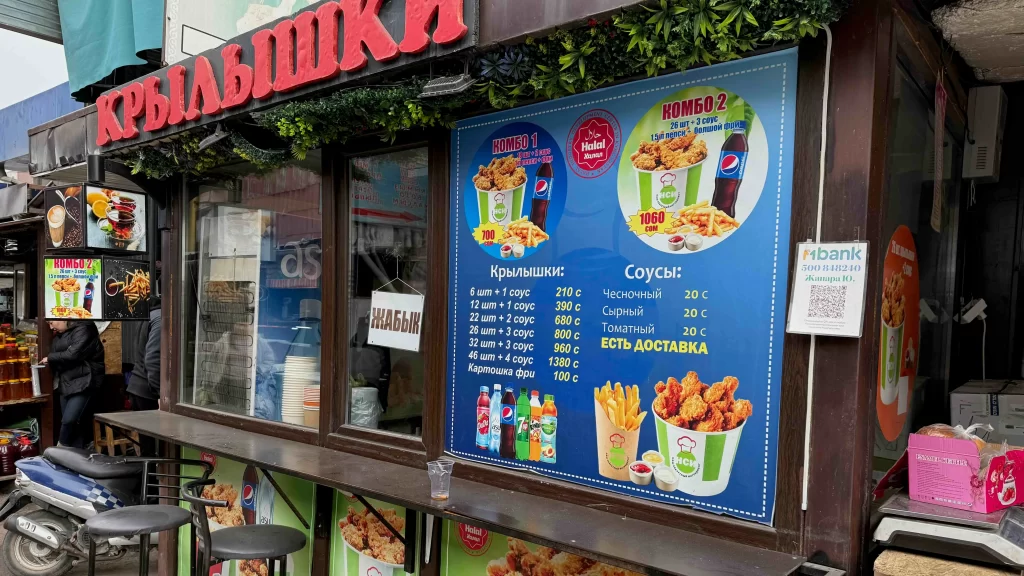
Western fast food chains like KFC and Burger King are present but are sparse. Local eateries offer hearty, affordable meals, whether in high-end restaurants or humble street stalls.
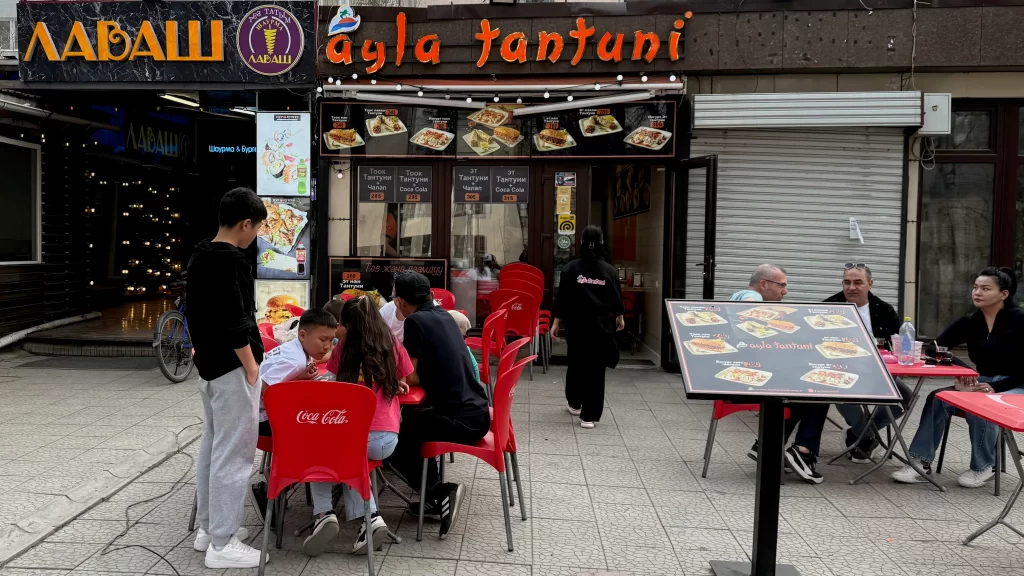
One of the city’s quirks is that food is incredibly cheap. A gourmet sandwich in the fanciest mall costs just AUD 1.30, while a lavish breakfast buffet at a five-star hotel is only AUD 35. Even a top-tier cheeseburger in a mall food court—juicy, flavorful, and served with plastic gloves—costs less than AUD 10.
Soviet Legacy and Economic Challenges
Kyrgyzstan’s relationship with its Soviet past is complex. Many locals look back on the Soviet era with nostalgia—not for its ideology, but for the stability and economic security it provided.
Under the Soviet system, Kyrgyzstan’s factories and farms were integrated into a vast, centrally planned economy. When the Soviet Union collapsed, these industries lost their markets, leading to widespread unemployment and economic decline.
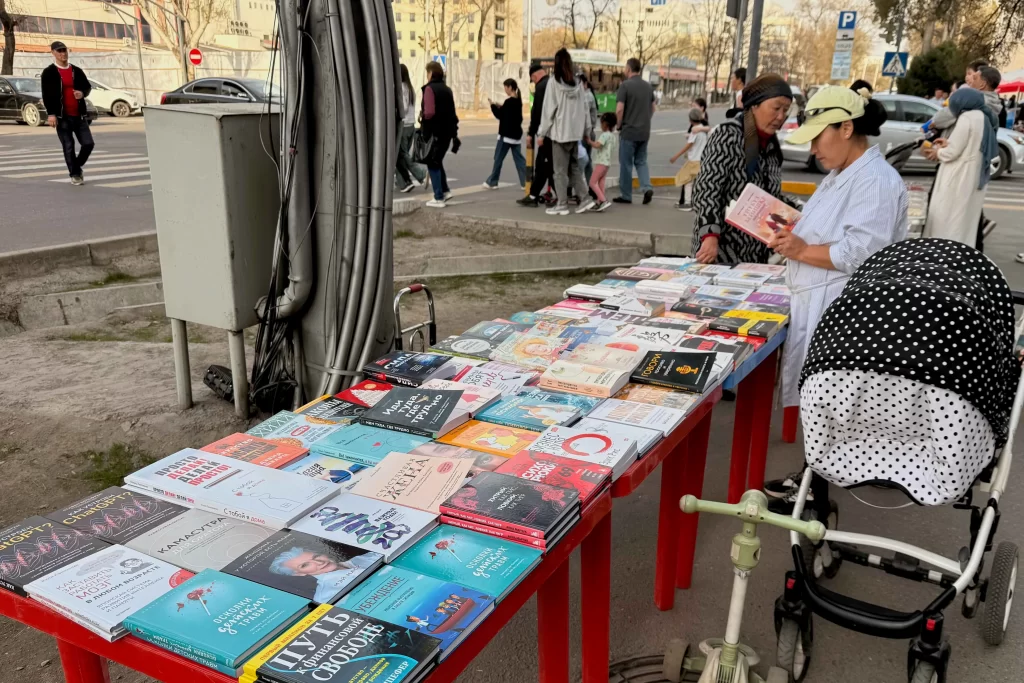
Today, agriculture and mining remain the backbone of the economy, supplemented by remittances from Kyrgyz working abroad, especially in Moscow. The country’s geographic isolation and lack of natural resources have made economic recovery challenging.
A Glimpse of the Future
Despite these challenges, signs of progress are everywhere. Local entrepreneurs are opening new businesses, modern cars fill the streets, and Turkish investment is helping to build infrastructure like malls and mosques. The country’s stunning national parks, wildlife trails, and glaciers have the potential to attract tourists year-round, offering hope for a brighter future.

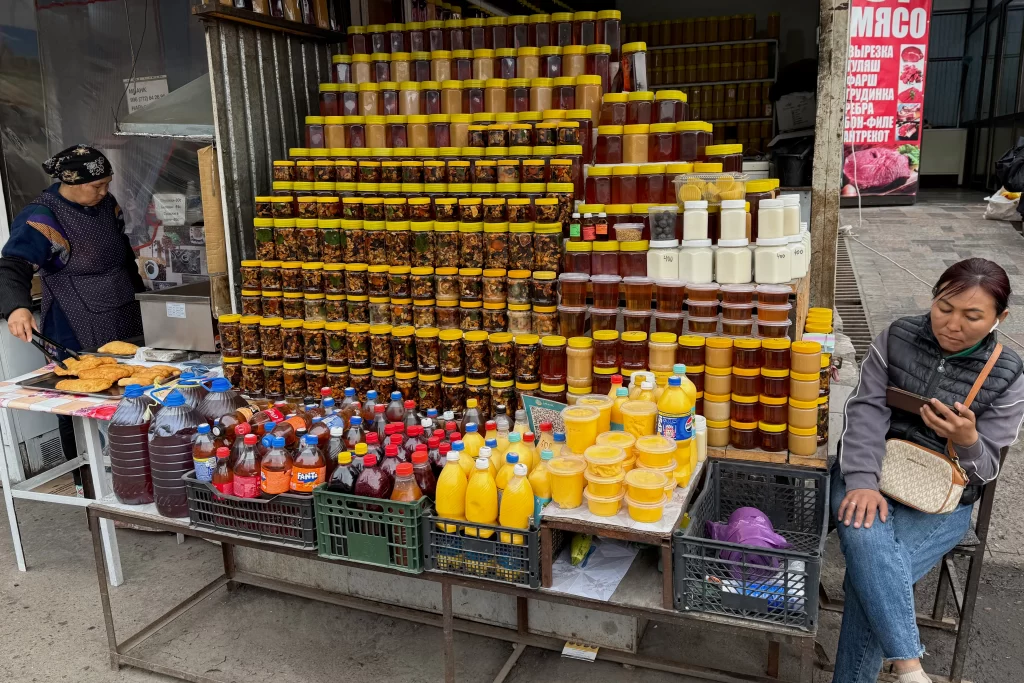
If Kyrgyzstan can harness its youthful energy, entrepreneurial spirit, and natural beauty, there is every reason to believe that this hidden gem of Central Asia will one day take its place on the world’s travel map.
For now, Bishkek remains a city of contrasts—remote yet welcoming, traditional yet modern, and above all, unforgettable. The Kyrgyz people deserve nothing less than a future as vibrant and resilient as their homeland.