
The Unexpected Joys of Travel: Discovering Jamaican Curry Goat at Notting Hill Carnival
Travel is full of surprises. Even the most carefully planned journeys can lead to unexpected discoveries—new flavors, vibrant cultures, and memorable experiences that linger long after the trip ends.
One such surprise awaited me at London’s iconic Notting Hill Carnival: Jamaican curry goat, a dish that would forever change the way I view both Caribbean cuisine and the magic of travel itself.
A Family’s First Carnival
Our story begins in the 1990s, when my young family and I visited London. We stumbled upon a Kiwi fruit stand—run by a New Zealand government agency—offering free samples. Eager to try something new, we tasted the fruit, enjoyed it, and asked for more. The stand was just one of many lining the streets, all waiting for the festivities to begin.
Soon, the air filled with the sounds and colors of the Notting Hill Carnival. This annual celebration is a vibrant showcase of West Indian culture, drawing crowds from all backgrounds. For us, it was a first: steel bands played in full glory, dancers in dazzling costumes filled the streets, and the energy was infectious. The Carnival was more than an event—it was a joyful immersion into a world of music, dance, and community.
A Photographer’s Return
Years later, I returned to London with a mission: to capture the Carnival through my camera lens. Armed with a backpack and gear, I staked out a prime spot at a T-junction along the parade route.
The streets buzzed with anticipation as food stalls set up shop and people slowly filled the sidewalks. I watched, fascinated, as the scene unfolded—people-watching at its finest.
Curiosity soon led me to explore the food stalls, each one a family-run affair representing different Caribbean nations. Menus boasted classic dishes like jerk chicken, and each stall proudly displayed its national flag. The sense of heritage and community was palpable, with three generations working side by side to prepare for the hungry festival crowd.
A Conversation Over Phones and Food
Back at my vantage point, I struck up a conversation with a young part-time security guard who ran a phone shop in Wembley. His day job.
He shared stories of the booming demand for Blackberry and Apple phones, revealing that his real profits came from selling accessories. Our chat meandered from technology to business margins, until a tantalizing aroma wafted through the air—a rich, spicy scent that instantly captured my attention.
That aroma, I would later learn, was Jamaican curry goat.
The Allure of Curry Goat
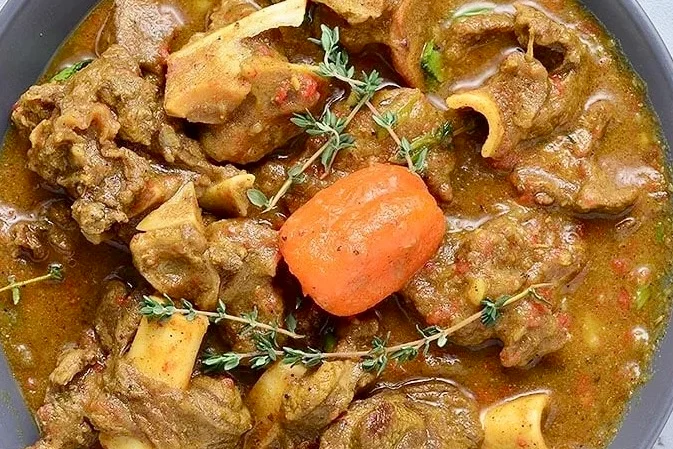
As the parade passed and my photo session ended, hunger took over. I set out to find the source of that unforgettable smell. Scanning the menus again, I noticed “Curry Goat”—a dish I might have overlooked if it had been labeled “Goat Curry,” as I was more familiar with. Intrigued, I ordered a serving from a Jamaican stall.
The dish arrived with rice and peas, the meat tender and falling off the bone. Eating it standing up, I savored each bite—the flavors were bold, the texture perfect, and the experience wholly new. It was so delicious that I found myself drawn into the world of Caribbean cuisine, eager to learn more about the origins and traditions behind this remarkable dish.
A Culinary History Rooted in Migration
Back home, Jamaican curry goat stayed on my mind. My research revealed a fascinating history: beginning in 1838, the British colonial government brought over half a million Indians to the Caribbean as indentured laborers for sugar plantations. These migrants brought their curry powders and cooking traditions, which blended with local ingredients and methods to create a unique culinary fusion.
While Trinidad and Tobago and Guyana have large Indian populations, it was Jamaica—with only about 3% Indian heritage—that made curry goat famous. Interestingly, Jamaican cuisine often prefixes the cooking method before the dish—hence “curry goat,” “jerk chicken,” and “jerk pork.”
More Than Just Curry
It’s important to note that while curry powder is an Indian import, the rest of the dish is distinctly Caribbean. The preparation of curry goat closely resembles a traditional stew, with long, slow cooking that yields tender meat—a contrast to the firmer textures of South Asian curries.
The process involves marinating the meat, frying the curry paste in oil (a nod to Southeast Asian techniques), and simmering everything together for hours.
A unique Caribbean touch is the practice of washing the meat with lemon or lime, vinegar, and water—a step taken seriously for both hygiene and, perhaps, a bit of tenderizing. Each family has its own recipe, leading to endless variations in flavor and color.
Enjoying Jamaican Curry Goat
Jamaican curry goat is as comforting as a stew, yet distinct in its spiciness and aroma. It’s typically served with rice and peas, though bread or roti can help temper the heat. My first taste, paired with brown rice and peas, remains my favorite combination.
While the best versions are likely found in Jamaica or the wider Caribbean, London’s diverse Caribbean community offers an excellent alternative. One of my most memorable meals was at a small café opposite West Croydon Station, where I discovered yet another delicious take on this classic dish. With so many family recipes and regional variations, it’s worth trying curry goat wherever you find it.
The Flavors of Caribbean Cuisine
Caribbean cuisine is as diverse as its people. Dishes vary from island to island, often sharing ingredients but differing in preparation and name.
Common staples include rice, plantains, beans, cassava, cilantro, bell peppers, chickpeas, and, most notably, scotch bonnet peppers—the fiery ingredient that gives many Caribbean dishes their signature kick.
Green seasoning, a herbaceous paste akin to Italian pesto, is another hallmark of the region. Made from a blend of garlic, peppers, cilantro, onions, scallion, thyme, basil, and rosemary, each family’s version is unique.
One distinctive trait of Caribbean cooking is the minimal use of oil. Instead, open-fire methods like smoking, grilling, and barbecuing are favored, resulting in dishes that are flavorful but never greasy. Supermarkets now stock a wide range of Caribbean marinades and sauces, though these are more for grilling than for stews and curries.
A Lasting Impression
If you ever have the chance to try Jamaican curry goat, don’t hesitate. Make sure it’s bone-in—the traditional way—and savor the flavors that tell a story of migration, adaptation, and community.
For me, this dish is a reminder that travel is not just about seeing new places, but about embracing the unexpected and letting curiosity lead the way.
The next time you find yourself at a festival, a bustling market, or a family-run food stall, take a moment to explore what’s on offer. You might just discover your own unforgettable flavor—and a story worth telling.