
Australia’s 2025 payments trends in recent years have shown to be faster, more flexible, and largely digital-first.
With wallets on phones and watches, instant bank transfers, and smarter checkouts are options. And they are becoming everyday norms from supermarkets to tradies’ invoices.
It is interesting to see what they are and if it is something that works for you.
New Payments Platform (NPP)
Under the hood, the New Payments Platform (NPP)—with PayID and PayTo—now powers real-time money movement. Across banks and fintechs, while merchants adopt tools that cut costs, speed settlement, and reduce fraud without adding friction.
- The NPP connects more than 100 Australian financial institutions. Moving around $5 billion a day with instant settlement, 24/7 availability, and richer data for reconciliation.
- For consumers, it means immediate transfers—even on weekends. For businesses it improves cash visibility and reduces reliance on banking cut-off times.
Wallet-first everyday spending
- Digital wallet payments are surging toward about AUD 200 billion in 2025. Australians choosing Apple Pay, Google Pay, and PayPal for tap-and-go and online purchases.
- Mobile wallet-linked cards have multiplied and monthly wallet transactions now number in the hundreds of millions. Reflecting how many shoppers leave plastic cards at home.
Why wallets win
- Convenience and security drive adoption. Tokenisation protects card details, biometrics speed authentication, and device binding reduces the risk from lost or stolen cards.
- Dual-network debit support allows routing via eftpos or international schemes. Giving merchants levers to manage cost while keeping tap-and-go smooth for shoppers. Something they did not have for years.
PayID in daily life
- PayID maps a phone number, email, or ABN to a bank account. So people can pay without typing BSB and account numbers. Thus reducing errors and speeding P2P transfers.
- Trades and micro-merchants often display a PayID on invoices or at the counter. They receive payment in seconds, cutting cash handling and minimizing bank transfer delays.
PayTo: modern direct debit
- PayTo lets customers authorise a payment agreement inside their banking app. Allowing a merchants to pull funds instantly with confirmation, reducing failed recurring payments.
- Gyms, childcare, and subscription services adopt PayTo to reduce churn and late fees. Customers see and manage agreements in-app for greater control.
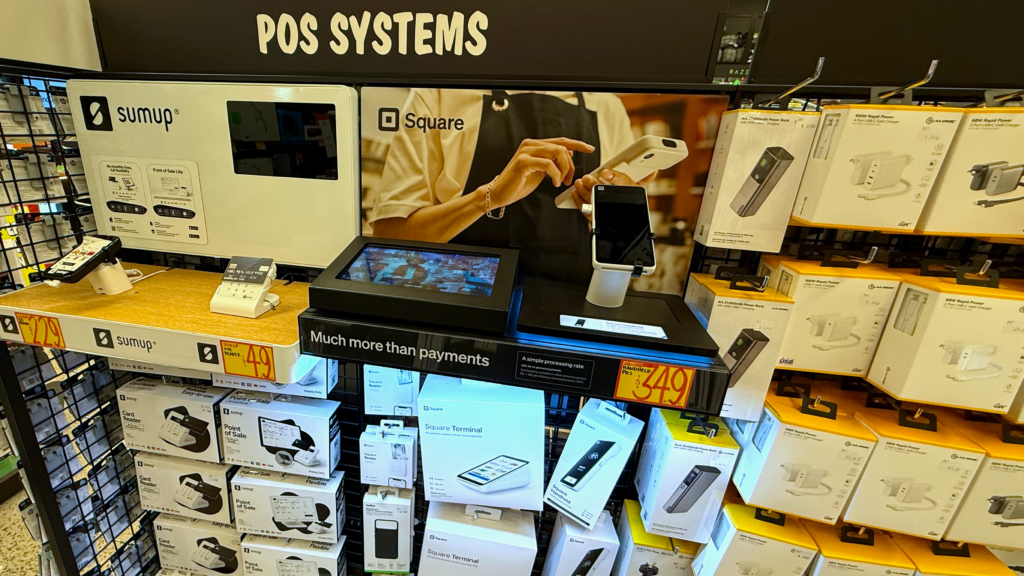
Online checkout, simplified
- One-click and Click to Pay flows use stored, tokenised credentials to cut form-filling. This reduces cart abandonment while retaining bank-grade security.
- Merchants increasingly present multiple options—wallets, cards, PayID/PayTo—so shoppers pick what’s fastest in the moment, improving conversion rates.
QR joins NFC
- QR payments grow alongside tap: eftpos eQR and wallet-enabled QR let shoppers scan to pay and receive integrated offers and loyalty in one flow.
- Smaller venues and pop-ups use QR to avoid bulky terminals; the same code can handle ordering, payment, and receipt delivery.
Cross-border and ecommerce
- Cross-border shopping is up, so merchants add local wallets, multi-currency pricing, and tax calculators to avoid surprises and improve approvals.
- Payment orchestration routes transactions dynamically to the best provider, managing costs and boosting authorisation rates for international customers.
Real-time rails replacing batch
- Australia is retiring legacy batch systems like BECS over time, making instant account-to-account payments the default for consumers and businesses.
- With real-time settlement, refunds can land at night or on weekends. Lenders can disburse funds the moment a loan is approved.
Data, fraud, and safety
- Providers layer tokenisation, device binding, and AI risk models to catch fraud. Keeping checkout smooth, especially for mobile and cross-border traffic.
- NPP’s addressing and validation features reduce misdirected payments, while richer remittance data speeds reconciliation for finance teams.
Cash keeps fading
- Surveys show the long slide of cash continues as contactless and mobile become habitual; many venues are now effectively cash-optional.
- Events and markets increasingly accept phone taps and QR, reducing the need for float management and manual counting.
What to expect next
- More choice at the terminal. Tap, QR, and PayID living side by side, with merchants nudging to lower-cost routes where it doesn’t impact experience.
- Broader PayTo rollout across sectors, replacing legacy direct debit and enabling instant bill settlement and subscription management.
How this shows up at various merchant categories
- Supermarket: A shopper taps a phone at self-checkout; loyalty applies automatically, and the receipt is emailed—no paper, no PIN for small baskets.
- Café: A table QR opens a menu; an order is paid via Apple Pay, and two friends split the bill in-app without bothering staff for a terminal.
- Gym: A new member approves a PayTo mandate in their banking app; the gym sees instant confirmation and no longer chases failed credit card payments.
- Tradie: An electrician displays a PayID on the invoice; payment lands in seconds after the job, improving cash flow without card fees.
- Online boutique: Checkout offers Apple Pay, card, and PayID; orchestration routes payments to the cheapest successful path, cutting declines and fees.
- Clinic: Reception takes a gap payment via wallet tap and schedules a PayTo mandate for recurring visits, reducing front-desk queues.
Tips for consumers
Only enable or use a payment channel that you are comfortable with. A little due diligence goes a long way. Learn to use more secure channels for bigger payments.
Always add your cards to a payment wallet such as Apple Pay, Samsung Pay and Google Pay where the phone enables additional biometrics and tokenization for added security. Your card details are also kept private and no merchants sees it.
Understand payment protection features better. Scheme cards such as Visa, Mastercard and Amex have chargeback features that protect customers. When businesses go under, cannot ship goods or perform services that had been paid for, all is not lost. All other payment methods do not have this chargeback feature. Any recovery might end up with the civil courts with legal cost involved.
When Australia’s second largest carrier Ansett collapsed in September 2001. All those who paid with scheme cards such as Visa, Mastercard etc got their money back in days. Those who paid with cheques, online payment transfers and Eftpos were placed on the creditors list with limited or no recovery. Though it is more than 2 decades ago, it remains the largest ever event where thousands of Australians suffered losses due to using payment type that does not afford protection.
Tips for small businesses
With wider payment competition, businesses now have lower cost structure to accept payments. There are now the added features such as faster or real-time settlement. Cash flow is much better.
Due diligence is important to ensure the right payment method is selected. Adequate and 24/7 support from payment and POS terminal providers to reduce disruptions due to technicals reasons..
Pointless having a cheaper payment type that is not popular with customers. So, there must be some choices and customers typically use one or two instruments. Customers who are asked to use an unpopular payment type might do it but may not return.
The future
Australia’s payment future is now wallet-first and real-time. Shoppers get speed and control. Businesses get faster cash flow, lower friction, and clearer data. NPP, PayID, and PayTo are becoming standard across counters, apps, and invoices nationwide.
The payment landscape will continue to evolve with crypto payment becoming mainstream. More caution and scrutiny are now needed as payments in real-time with little or no avenue to stop or correct a payment. Nearly all payment methods have no structured recourse like the scheme card chargeback feature.
Customer must learn to identify the best payment type to use, taking into consideration the size of the payment involved, merchant reputation and track record.