
Uzbek cuisine is similar to many dishes that you will come across in Central Asia countries and even in the South Caucasus. But like all countries there are signature dishes that are central to them culturally. Uzbekistan is no different.
The Uzbek cuisine is a warm, generous, and very filling invitation to experience the whole country. Through its food, from big cities like Tashkent and Samarkand to the desert towns of Khiva and the agricultural rich soils of Fergana Valley. It is a mix of Silk Road history, nomadic traditions, and rich farming land. Brought together in big plates of rice, meat, noodles, fresh bread, and endless cups of tea.
A Taste of the Silk Road
Uzbekistan once sat at the heart of the Silk Road. And its food still reflects this crossroads of cultures and flavours. Spices, dried fruits, and cooking ideas travelled through caravan cities like Samarkand and Bukhara. Slowly blending into a unique local cuisine. Today, when you sit down to eat in Uzbekistan, you taste a little bit of Persia, Turkey, China. Plus the Middle East, all adapted to Uzbek tastes and ingredients.
Plov: The Star of the Table
Plov (also called “osh”) is the proud national dish, and you will find it almost everywhere you go in Uzbekistan. It is a rice pilaf cooked with meat (usually lamb or beef), carrots, onions, and spices. Done in a big cauldron called a kazan. Often over an open flame.
There are said to be hundreds of versions of plov. Cities like Tashkent, Samarkand, and Bukhara each claim their own best style. From layered versions to ones where everything is fried first for a deeper flavour.
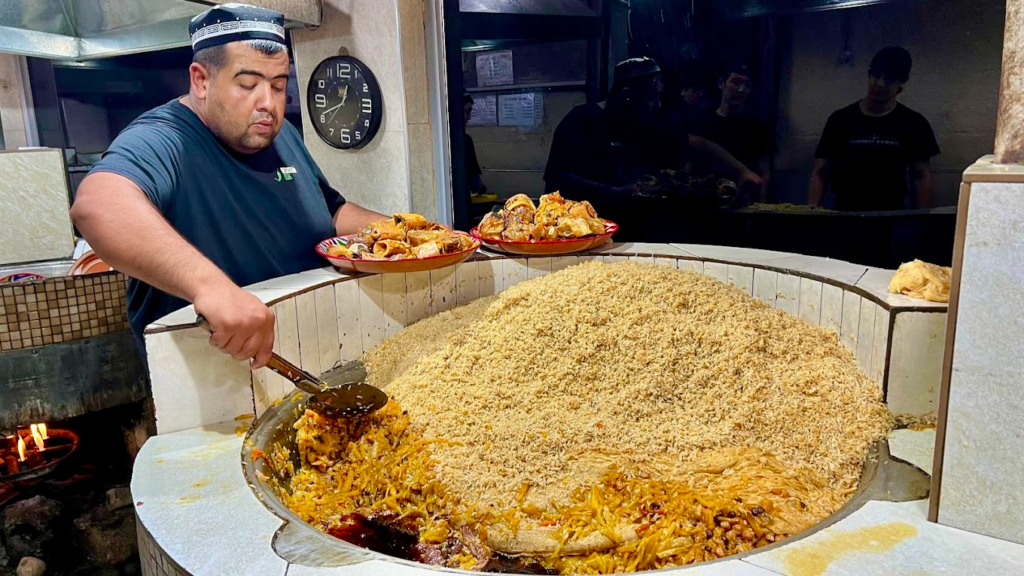
Plov is more than food; it is a social ritual served at weddings and family gatherings. Often bringing in the whole neighbourhood together. As a traveller, the best time to try it is usually lunchtime in a busy plov centre. This is when it is freshly cooked and locals line up for their daily plate.
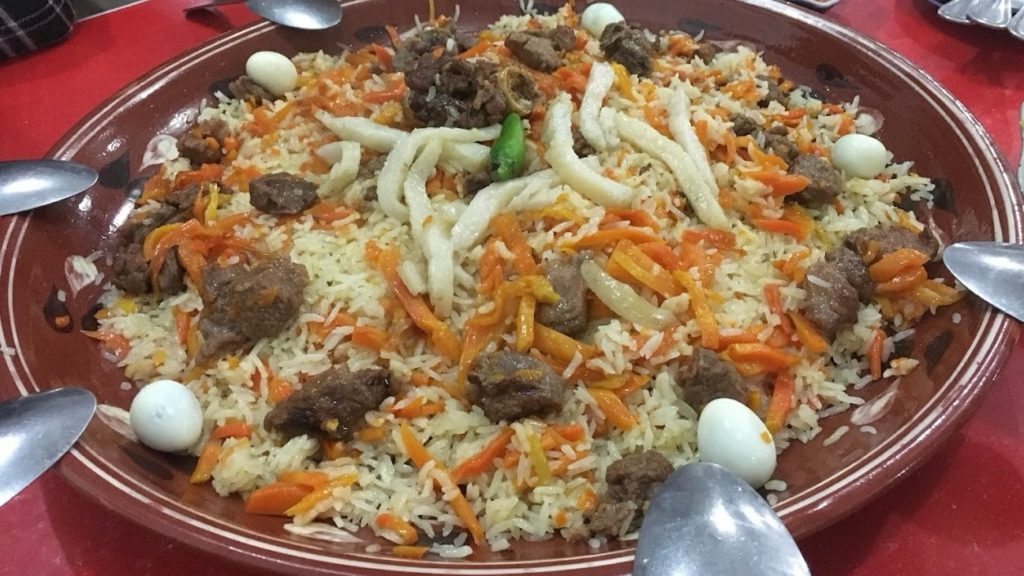
Head to the highly rated Besh Qozon Plov Center, near Tashkent TV tower and there are many others whose versions are also well regarded.
Bread and Tea: Everyday Essentials
In Uzbekistan, a meal simply feels wrong without bread and tea. The round breads, called “non” or “lepyoshka”. Baked in hot clay ovens called tandyr (note the name similarity to Tandoor in the Indian subcontinent) and often stamped with pretty patterns in the centre.
Bread is treated with deep respect: it should not be placed upside down. Old bread is rarely thrown away, which says a lot about how important it is in daily life.
Tea, especially green tea, is the main drink and a symbol of hospitality all over the country. You drink it from small bowls, not mugs. Almost every visit to a home, bazaar stall, or chaikhana (teahouse) begins with “Chai ichasizmi?”—“Will you drink tea?”. Accepting at least a little is a simple way to show respect and connect with locals.
Dumplings, Pastries, and Street Snacks
If you enjoy doughy comfort food, Uzbekistan is a very happy place. Manti are large steamed dumplings filled with minced meat and onions. Sometimes pumpkin, served with sour cream or a light sauce. Chuchvara are smaller dumplings, usually served in broth, likely the wonton cousins of the Far East, perfect on cooler days.
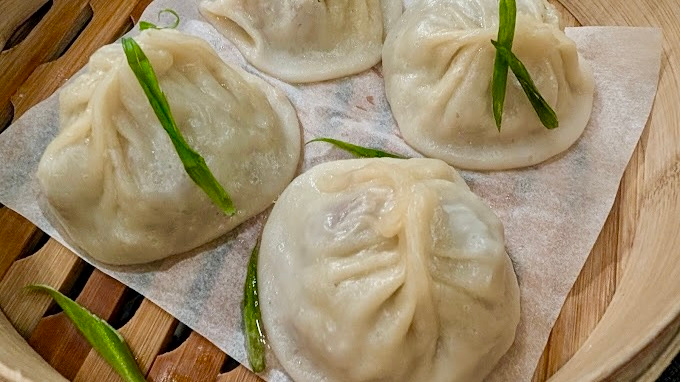
Samsa are the street stars: tandoor-baked pastries stuffed with juicy minced meat, onions, or pumpkin, with crisp, slightly smoky edges. In some regions, such as Jizzakh on the road from Tashkent to Samarkand, samsa has become a mini food brand of its own, and lunch queues outside popular stalls are a very good sign. For a snack on the move between sights, a hot samsa and a cup of tea are hard to beat.
Lagman and Noodles Across the Country
Lagman is a noodle dish that shows the link between Uzbek food and neighbouring Uyghur and Chinese cuisines. It features hand-pulled noodles. Topped with a rich sauce of meat, vegetables, and spices. It can be served either as a thick stew or as a soup.
Lagman is the first Uzbek dish I had, in a small eatery in the Middle East some years back. All I can remember is that it was opposite the Russian embassy in a narrow corner. I liked the meaty broth and noodles. I picked it from the menu as I did not expect noodles to be part of their cuisine and I was curious.
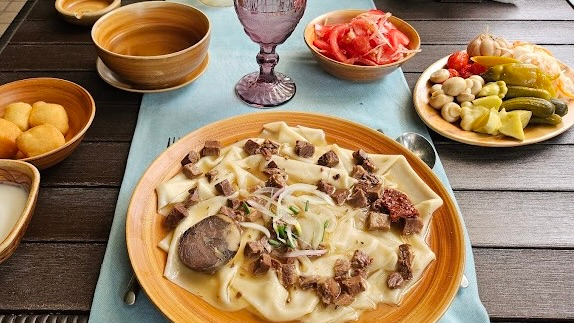
The noodles are often stretched and slapped on the table by hand. This gives them a lovely chewy texture that stands up well to the hearty sauce.
In the Khorezm region around Khiva, you might come across a colourful local twist called shivit osh. The noodles are tinted green with dill and served with a meat and vegetable stew and a tangy yogurt-based sauce. Trying lagman in different cities is a fun way to see how one idea can change slightly from region to region while still feeling familiar.
Meat from the Grill and Slow Stews
Meat is a big part of Uzbek cuisine, especially lamb and beef. Many dishes make use of open flames or slow cooking. Shashlik—skewers of marinated meat grilled over hot coal is popular all over the country. Often served with raw onion rings, vinegar, and flatbread. In the evening, smoky shashlik stalls become social hubs. Locals gathering to eat, talk, and watch the world go by.
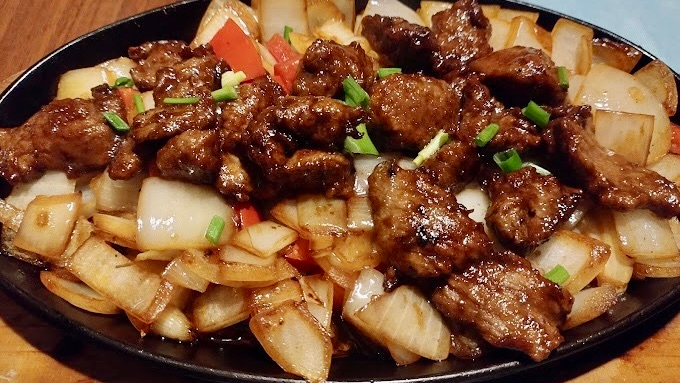
Other traditional dishes include beshbarmak, a dish of meat and wide noodles. The name means “five fingers” because it was eaten by hand. Dimlama, a slow-cooked stew of meat, potatoes, and vegetables is another. Common in home cooking and at family tables, where big shared plates encourage everyone to dig in together.
Fresh Salads, Produce, and Vegetarian Options
Uzbek meals may be hearty, but they are rarely without something fresh on the table. Achichuk, a simple salad of sliced tomatoes and onions with a light dressing. Classic side dish served next to plov and grilled meats. Other salads use cucumber, radish, herbs, and sometimes eggs or potatoes, making the table colourful and balancing the richer dishes.
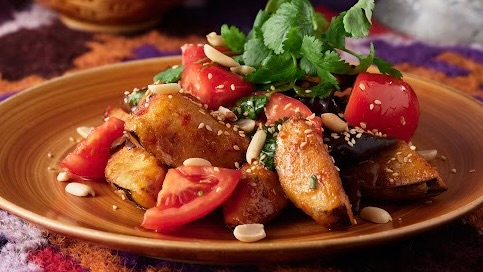
Thanks to fertile valleys and a long growing season, fruit and vegetables are excellent, especially in summer and autumn. Even travellers who do not eat meat will usually find something to enjoy. From fresh salads and vegetable grills to vegetarian versions of plov or lagman. More in touristy cities like Samarkand and Tashkent.
Sweets, Fruit, and After-Meal Rituals
Dessert in Uzbekistan is often simple but generous. Plates of fresh melon, grapes, apples, and bowls of dried apricots, raisins, and nuts. There are also sweets like halva and baklava-style pastries. But fruit and nuts are the most common everyday ending to a meal.
Meals usually begin and end with tea. Normal to linger at the table long after you are full, talking and nibbling. On something sweet, and slowly finishing your last bowl of tea. For visitors, this slow rhythm is part of the charm. Food is not just fuel, but a relaxed space to connect with people and place. This slow rhythm is something I though unusual and first noticed it first among locals in the Middle East.
Eating Like a Local Traveller
To enjoy Uzbek cuisine across the whole country, a few simple habits to follow are helpful. Accept tea when it is offered. Taking a small sip, because it is closely tied to respect and hospitality. Try the “house” version of plov, samsa, or lagman wherever you go. Because each city and even each café has its own style and favourite recipe.
Visiting bazaars like Tashkent’s Chorsu is also a must. Here you can see and taste bread, dried fruits, nuts, spices, and sometimes fresh cooked dishes. All in one lively place. Portions are usually big, so sharing plates is a smart way to try more dishes.
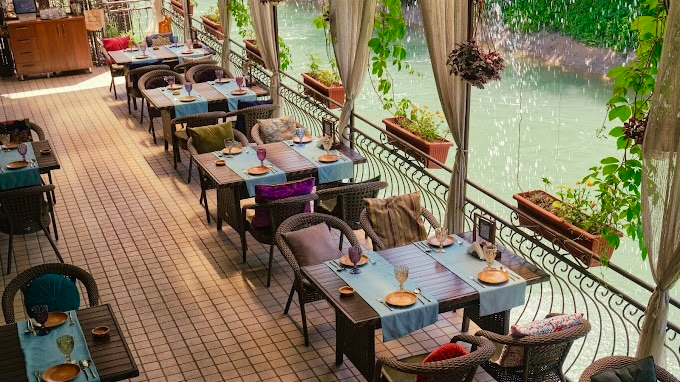
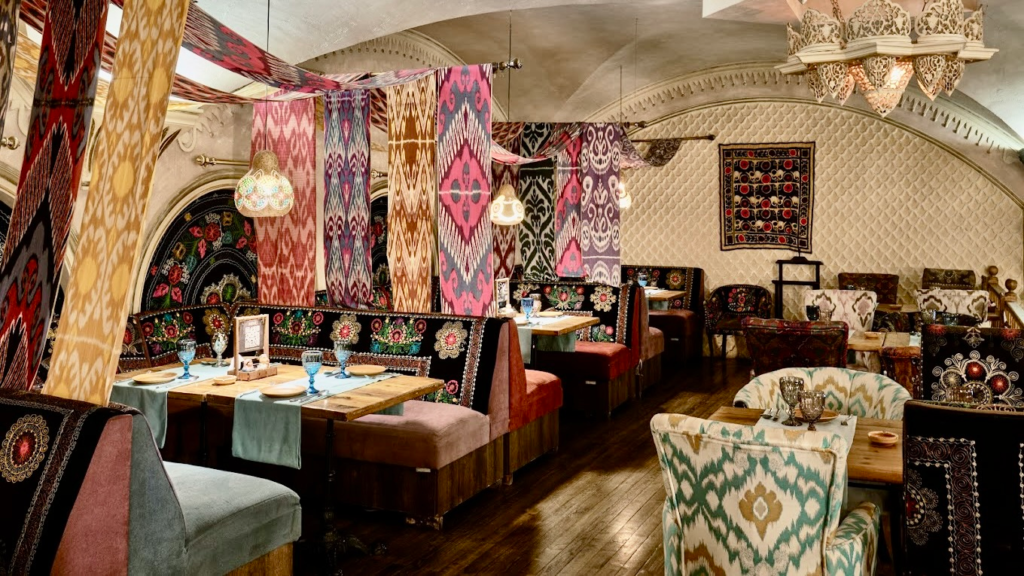
One lovely place to have a formal and completely authentic meal is at Khan Chapan at Tashkent. Get a table overlooking the river. The picture at the top of the post says it all. Good food in a lovely setting.
Why Uzbek Food Belongs on Your Itinerary
Uzbek cuisine is not trendy or fancy; it is rich, comforting and honest. Deeply tied to everyday life in cities, villages, and desert towns alike. The food tells the story of a country shaped by trade routes, farming traditions, and strong family ties.
For a food-loving traveller, Uzbekistan offers a whole-country tasting journey. Plov in Tashkent, Shivit osh in Khiva, tandoor samsa on the road to Samarkand, and late-night shashlik almost anywhere. Arrive with an open mind and an empty stomach. Let the cuisine of Uzbekistan guide you from one city to the next, one delicious plate at a time.