
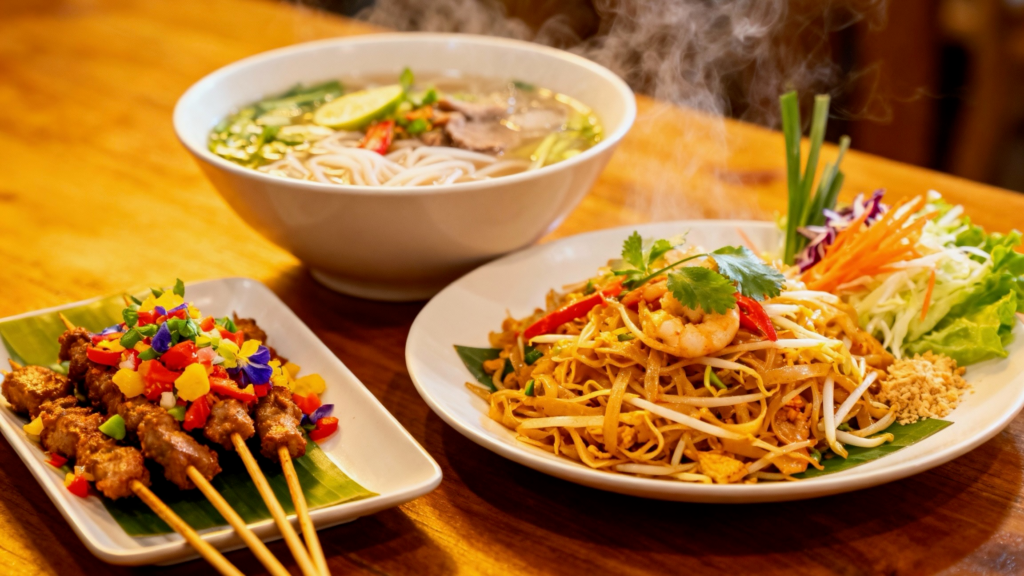
The top 3 Southeast Asian dishes should not be a surprise in this part of the World including Australia.
I polled the various Ai Chatbots, and Thailand’s Pad Thai and Vietnamese Pho were consistently the top 2. Both are noodles-based dishes.
I thought it is interesting that rice cultivation and exports are the main agricultural activities for these Southeast Asian countries with the exception of Singapore. Rice is also the main food staple for all of them for their daily meals. Yet the popular and signature dishes are mainly noodle based. Albeit both are rice-based noodles. I guess they are best described as comfort food.
All these dishes appear on menus in restaurants that serve their cuisine all over the World. The same with Australia but with one difference. The large community of Southeast Asians that have settled here. So, we get a larger presence and more choices. 25 years ago, it was Chinese in every other Australian metro suburb. The only foreign cuisine then. Not anymore.
Thailand’s Pad Thai
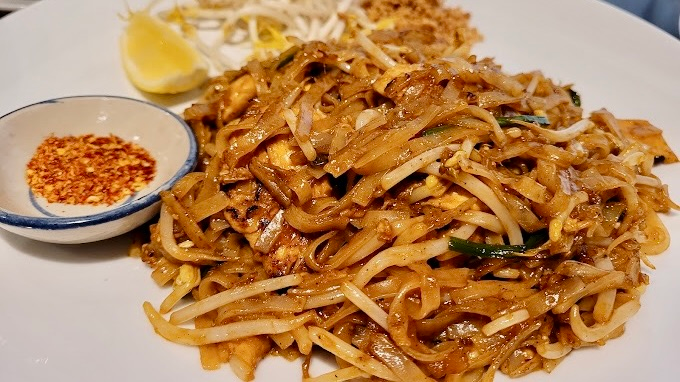
Pad Thai is probably the first dish that comes to mind when you think “Thai food.”
It’s a stir-fry of flat rice noodles, on high heat, mixed with eggs, tofu, bean sprouts, and sometimes prawns or chicken. All tossed in a bit of tangy sauce made from tamarind, fish sauce, and palm sugar. Finish it off with a squeeze of lime, a sprinkle of crushed peanuts, and a few garlic chives, and you’ve got one of the most satisfying, flavour-packed dishes out there.
What’s fascinating is how consistent Pad Thai is wherever you go. From Bangkok stalls to suburban Adelaide restaurants, the dish rarely strays from its roots. Unlike many exported Asian cuisines that become westernized, taste wise. The Thai restaurants overseas tend to stick to tradition, rarely veering into fusion territory—especially when it comes to classics like Pad Thai and the fiery Tom Yum soup.
Vietnam’s Pho
If Pad Thai is Thailand’s star, Pho is Vietnam’s answer—a steaming bowl of rice noodles in a rich, fragrant broth, usually topped with slices of beef or chicken. The magic of Pho lies in its broth, simmered for hours with bones, herbs, and spices, resulting in a flavour that’s both comforting and complex. The plain look hides the richness of the broth.
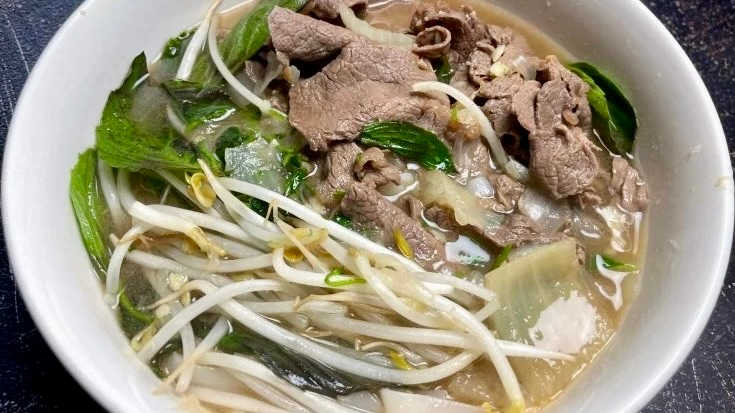
The dish was brought to Australia by Vietnamese refugees in the late 1970s and early 80s, and it quickly became a favourite, especially on cold winter nights. Pho is more than just food; it’s a taste of home for many Vietnamese families and a warming, satisfying meal for anyone who tries it.
And it’s not just Australia—Pho has gone global, from London to Los Angeles. Courtesy of refugees who were resettled in various countries. Whether it’s a local food court or a trendy inner-city eatery, you’ll find people lining up for a bowl of Pho, ready to add their own touch with fresh herbs, lime, and chillies.
A decade back, while working in London, I found Cafe East, a traditional Vietnamese cafe of all places in Surrey Quays. Looked odd in view of the surrounding demographics. Lovely and tasty pho. I was curious and found out that it too was started by resettled Vietnamese who were provided council housing close by, nearly 3 decades ago.
Satay of Malaysia and Indonesia
Satay is the street food superstar of Malaysia and Indonesia. These are skewers of marinated meat morsels—usually chicken, beef, or lamb—barbecued over charcoal fires and served with a side of peanut sauce, sliced cucumber, onions and rice cakes (ketupat).
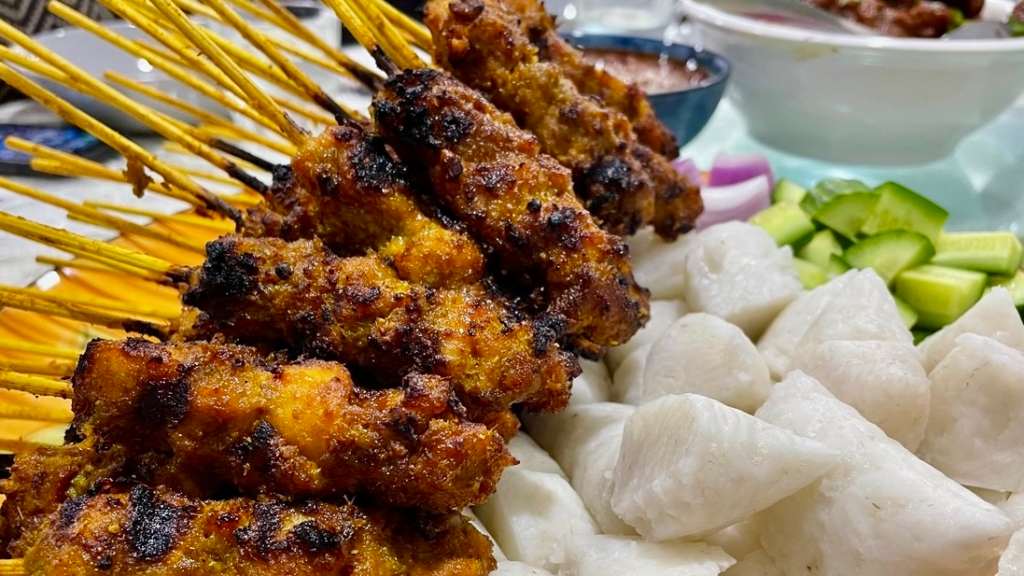
Satay is not a meal in the conventional sense. It more a treat and a celebration. You’ll find it at night markets, gatherings, and festive occasions. Hawkers tend the charcoal fires, turning the skewers to perfection while the smell of sizzling meat fills the air. Order as many sticks as you like—five to start, or enough to share with friends. Or better still get a mixed lot of chicken, lamb and beef for variety.
The secret to great Satay is in the marinade, done overnight, and the peanut sauce, which is rich, nutty, and sometimes just a little spicy. Both are often a closely guarded family recipe. It’s the perfect snack or side dish, but for many, it can be the main event.
A close runner-up for Malaysia and Indonesia is Nasi Lemak, coconut rice served with fried anchovies, fish, chicken or beef, cucumber, and a spicy sambal sauce. Nasi Lemak is Malaysia’s national dish and is just as popular as Satay.
More dishes out there
For all 3 cultures there is always sister dishes that are popular as a close second. I am also combining the Malaysia and Indonesia as a single culture due to their extensive similarities.
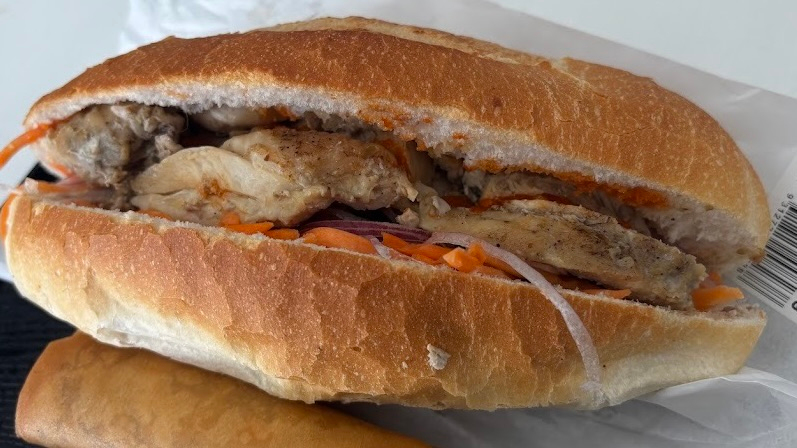
By the way, I observed something interesting during lunch times in Adelaide. Banh Mi is fast becoming popular with tradies as well as office staff. In time it will be in the same league as pies, pasties and rolls. Affordable and filling, an a bite on the go.
Honourable mentions
Southeast Asia is packed with delicious dishes, and the top 3 are just the beginning. Here are a few others worth exploring:
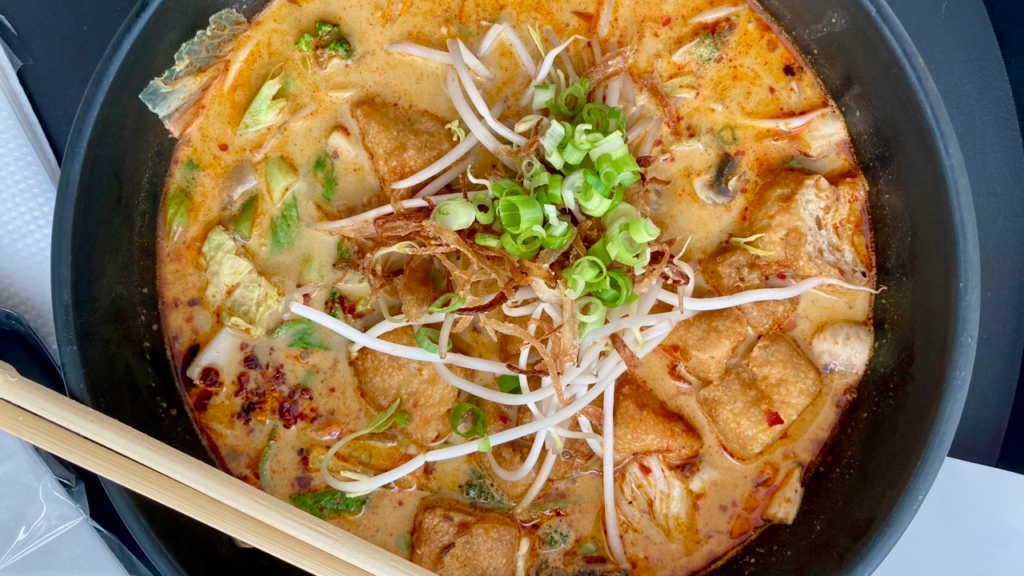
Malaysia / Singapore Laksa: Much earlier in Australia than Pho or Pad Thai. It’s a rich creamy, spicy coconut broth based on shrimp paste, with noodles, often rice vermicelli, and is topped with ingredients like chicken, shrimp, fish cakes, and beansprouts. Laksa is mainly found in food courts and small cafes. Brought over by early migrants from these 2 countries, somewhere around the 1970s. It was also common for people to mention they had a favourite Laksa spot.
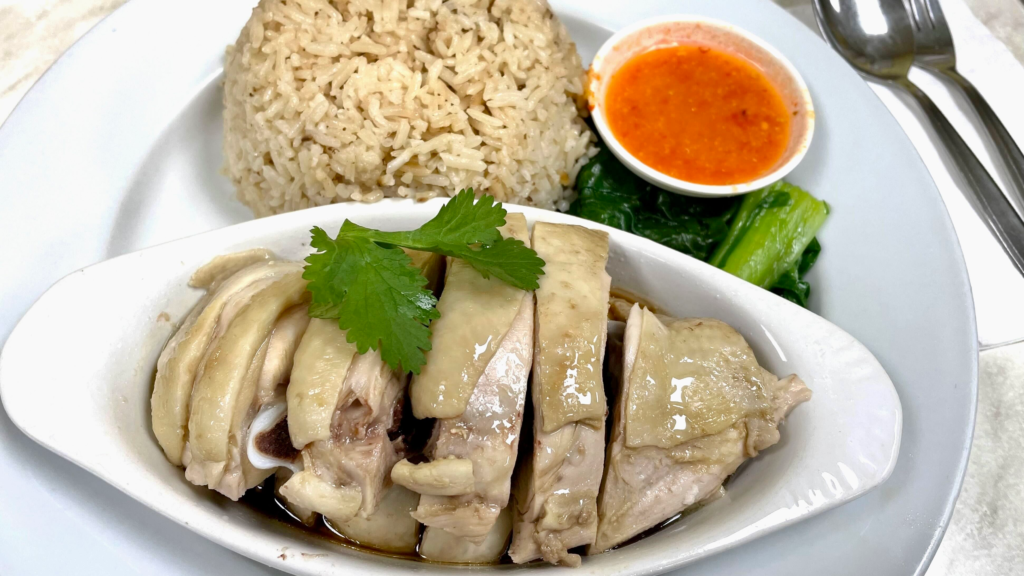
Singapore Chicken Rice: Fragrant rice cooked in chicken broth, served with poached chicken and chili sauce. It’s simple, but the flavours are anything but. Singapore’s Chicken Rice has gained a foothold in Australia and a following. The chicken is the only ranking Southeast dish that is served at room temperature. You would understand why after trying it.
Tom Yum: This Thai signature prawn soup is a must-try for anyone who loves fiery, sour, and spicy taste. It bursts with lemongrass, kaffir lime leaves, and chili. Believe me, it will hit your nose hard. Take a small cautious sip first, to get your senses going.
Nasi Lemak: The Malaysian and Indonesian classic, as mentioned, is all about creamy coconut rice and punchy sambal. The extremely fragrant rice that comes with fried anchovies, sliced cucumber with either fish, chicken or beef.
How to Enjoy These Dishes in Australia
One of the great things about living in Australia is how easy it is to try these Southeast Asian classics. Thanks to our vibrant multicultural communities, there are excellent Thai, Vietnamese, Malaysian, and Indonesian restaurants in every major city and many suburbs. Plus, with food delivery apps like Uber Eats and DoorDash, you can enjoy these dishes without even leaving the house.
With their bold flavours and global appeal, these dishes are more than just takeaways—they’re a gateway to the rich culinary traditions of Southeast Asia. Whether you’re enjoying them at home or out with friends, there’s no denying their power to delight and satisfy.