
Samarkand: The Timeless Jewel of the Silk Road
Samarkand on the Silk Road, is a city with a history stretching back 2,500 years. It stands as a living testament to the enduring allure of the Silk Road gave life to many for 15 centuries. Exploring Samarkand means peeling layers of wonderful history.
Once a vital way station and trading hub along this legendary route, Samarkand remains the most iconic city on the Silk Road. Its legacy etched into every mosaic, minaret, and bustling market.
Hope this post will serve as a Samarkand travel guide on what to see and do on a 2 or 3-day visit.
The Silk Road: A Tapestry of Cultures and Commerce
The Silk Road, spanning an astonishing 6,400 kilometers from X’ian in North Central China to the Levant at the Mediterranean Coast and Antolia in Turkey.
It was never a single road. A network of routes that wove together civilizations, ideas, and goods. Samarkand’s strategic position made it a crossroads of cultures, where traders, scholars, and conquerors from every corner of Eurasia converged.
The city’s prominence was so great that both Alexander the Great and Genghis Khan, coming from opposite ends of the continent, deemed it worthy of conquest. A clear testament to its significance in world history.
The Timurid Renaissance: Samarkand’s Golden Age
Samarkand’s golden era dawned in the late 14th century, when it became the capital of the vast Timurid Empire. Under the legendary conqueror Amir Timur—known in the West as Tamerlane.
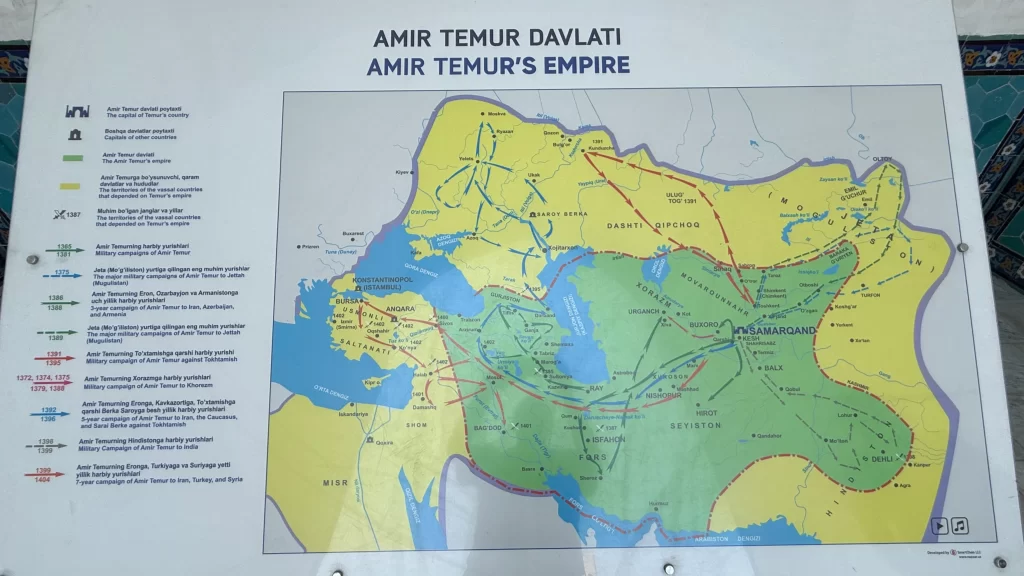
Timur, a military genius of Turco-Mongol descent, ruled an empire that stretched from Turkey to Delhi. Encompassing Central Asia, the South Caucasus, Persia, and even reaching the Levant.
Under his patronage, Samarkand blossomed not just as a seat of power, but as a center of learning and culture. The city attracted astronomers, mathematicians, poets, and artisans, becoming a beacon of intellectual and artistic achievement.
A Living Crossroads of Civilization
Today, Samarkand is Uzbekistan’s third-largest city, nestled in the country’s southeast near the Tajikistan border. With a population exceeding half a million, it is one of Central Asia’s oldest continuously inhabited cities.
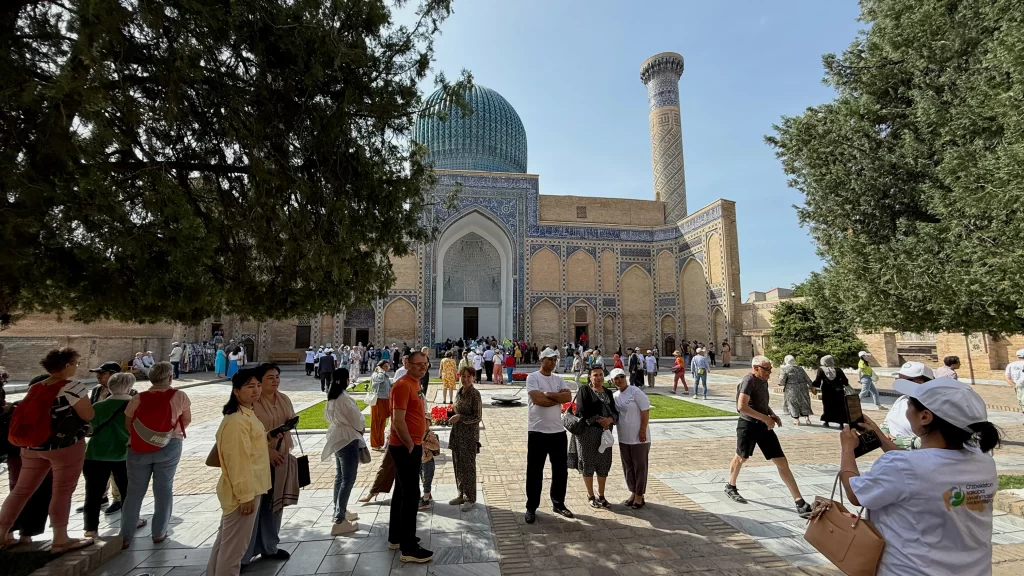
UNESCO has rightfully recognized Samarkand as a World Heritage Site, dubbing it the “Crossroads of Cultures.” Here, Hellenic, Turkic-Mongol, and Persian influences mingle, and the city’s history spans from Zoroastrianism to Islam, reflecting a rich and layered past.
The Silk Road’s Enduring Mystique
The very name “Silk Road” conjures images of camel caravans laden with precious silks, teas, dyes, perfumes, and porcelain from the East, exchanged for dates, saffron, sandalwood, gold, wine, honey, horses, and camels from the West.
Traders rarely traversed the entire route; instead, goods changed hands at key cities like Samarkand, each transaction weaving another thread into the fabric of global commerce.
The Silk Road’s remote, often harsh terrain—mountainous, with scorching summers and frigid winters—only adds to its legendary status. Even today, no modern road traces its full length, leaving it shrouded in mystery and romance.
A Modern Pilgrimage: The Draw of Samarkand
For many, the Silk Road is a distant legend, but for the intrepid traveler, Samarkand offers a tangible connection to that storied past. My own fascination with the Silk Road began in childhood, fueled by tales of adventure and discovery.
Decades later, as the former Soviet republics opened to the world, images of Samarkand’s dazzling blue-tiled monuments reignited that old curiosity. The city’s architectural splendor—its madrasahs, mosques, and mausoleums—beckoned with promises of history and beauty.
Arrival in Samarkand: First Impressions
Touching down at Samarkand International Airport on a bright Friday morning, I was immediately struck by the city’s blend of modern hospitality and ancient charm. The airport, though not at the nation’s capital, caters to a growing influx of tourists.

Practical advice for travelers: bring US dollars or euros, as they are widely accepted and can be exchanged for the local currency, the Uzbek som. My first transaction—100 euros—yielded a thick wad of notes totaling 1.2 million som, a reminder of the city’s affordability.
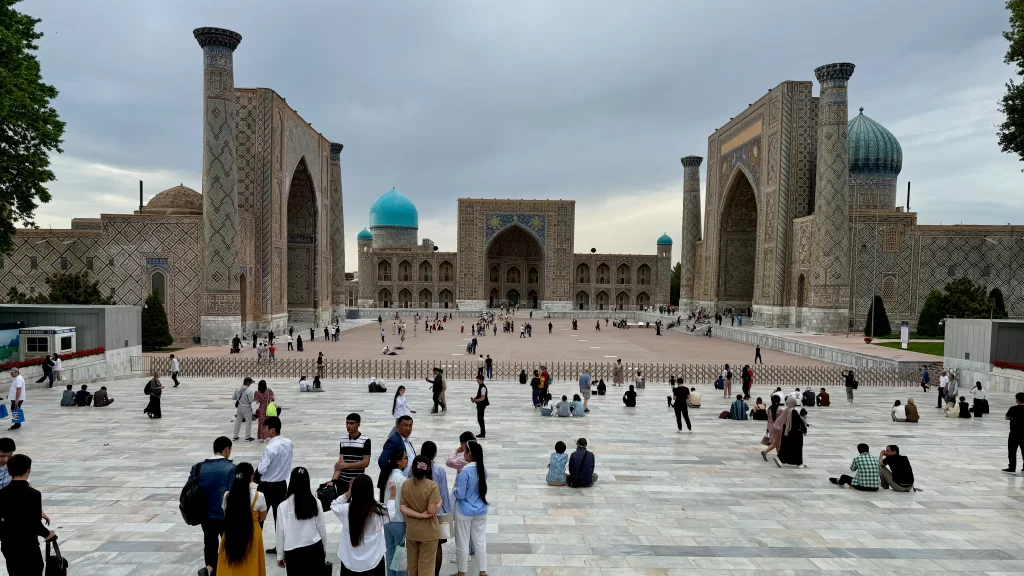
A quick Yandex ride whisked me from the airport to my hotel, conveniently located next to Registan Square. The hotel, modest yet comfortable, offered a terrace with panoramic views of the square’s majestic monuments. Payment in cash was the norm, as card acceptance remains limited in many establishments.
Immersed in History: The Heart of Samarkand
Staying so close to Registan Square, I felt transported to another era. My room overlooked the ancient walls and minarets, evoking the spirit of literary giants like Somerset Maugham and Rudyard Kipling, who found inspiration in exotic locales. Here, history was not just a backdrop—it was a living presence, visible from every window.
Exploring the City: Walkable Wonders
Samarkand’s main attractions are conveniently clustered within walking distance, making it easy to explore the city’s treasures in a single day. While tourists are plentiful, the city never feels overcrowded.
Most visitors hail from Uzbekistan and neighboring countries, with a sprinkling of Russians, Western Europeans, and the occasional American or Chinese tour group. English is rarely spoken, so a spirit of adventure—and a willingness to communicate through gestures—enhances the experience.
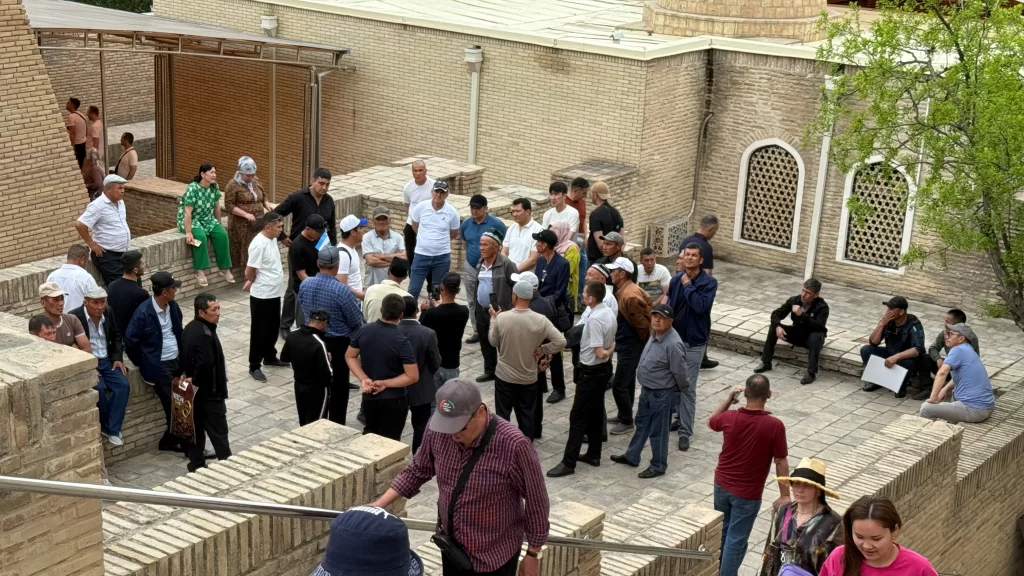
Entry to the city’s monuments is affordable, with tickets priced between 50,000 and 65,000 som. Some ticket offices accept credit cards, but cash is still king. The demographic skewed older, with many Uzbek tourists eager to reconnect with their heritage and the legacy of their forebears.
The Architectural Splendor of Samarkand
Samarkand’s monuments are nothing short of breathtaking, each a masterpiece of design and craftsmanship. The city’s four main sites are:
- Registan Square: The crown jewel, featuring three grand madrasahs—Ulug Beg, Sher-Dor, and Tilya-Kori—adorned with intricate tilework and soaring minarets.
- Bibi-Khanym Mosque: Once among the largest mosques in the Islamic world, its imposing scale and vibrant bazaar next door evoke the city’s former glory.
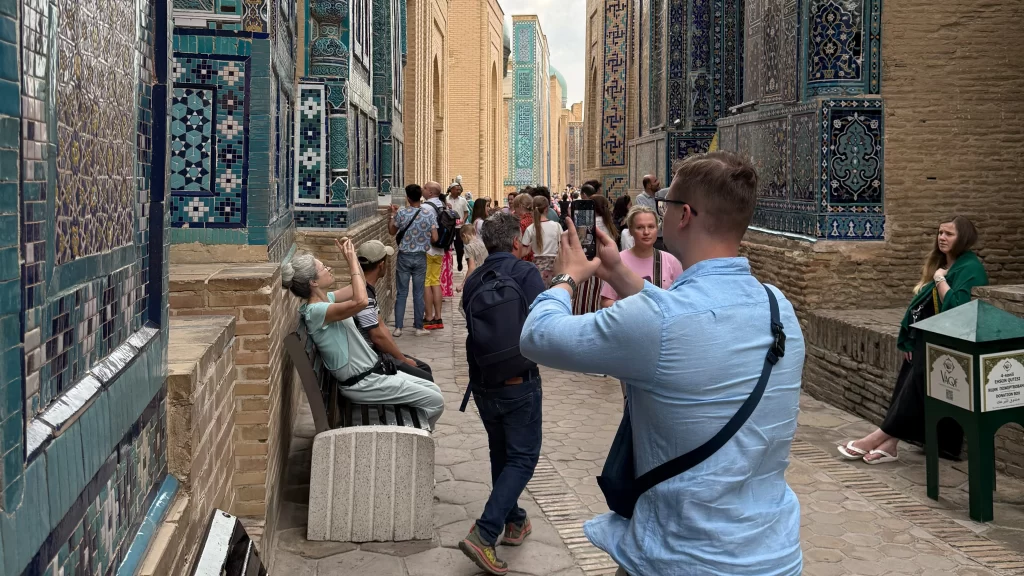
- Shah-i-Zinda Necropolis: A narrow alley lined with exquisitely decorated mausoleums, the resting place of royalty and revered religious figures.
- Amir Temur Square: Home to the mausoleum of Timur himself, as well as his relatives and spiritual mentors.
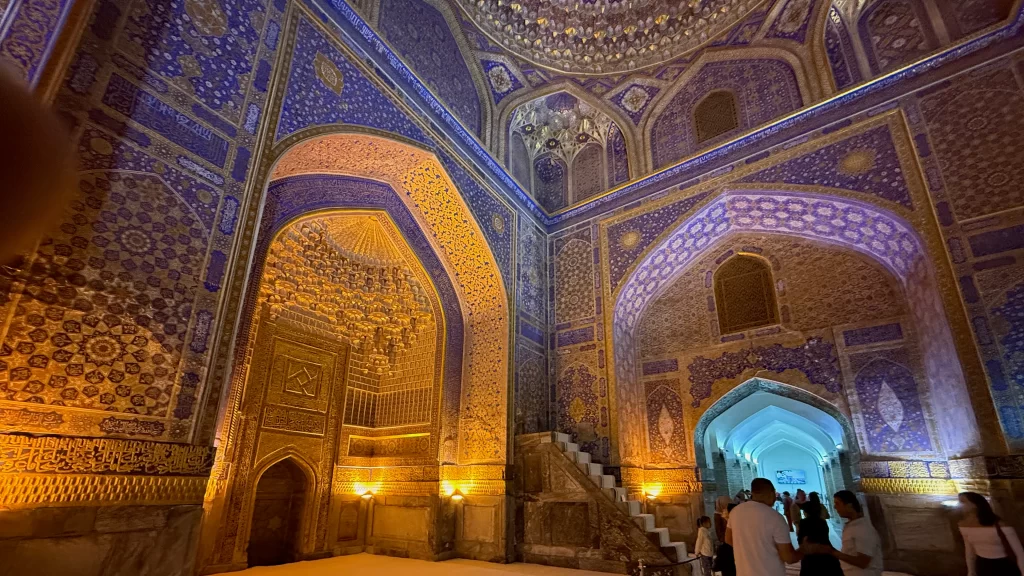
Registan Square and the Mausoleum of Amir Temur attract the largest crowds, a testament to the enduring fascination with Samarkand’s imperial past. To fully appreciate the monuments’ beauty, visit twice—once by day to admire the details, and again at night, when the structures are illuminated in a magical glow. The necropolis, with its tranquil atmosphere, is best experienced in daylight.
The Artistry of the Timurid Era
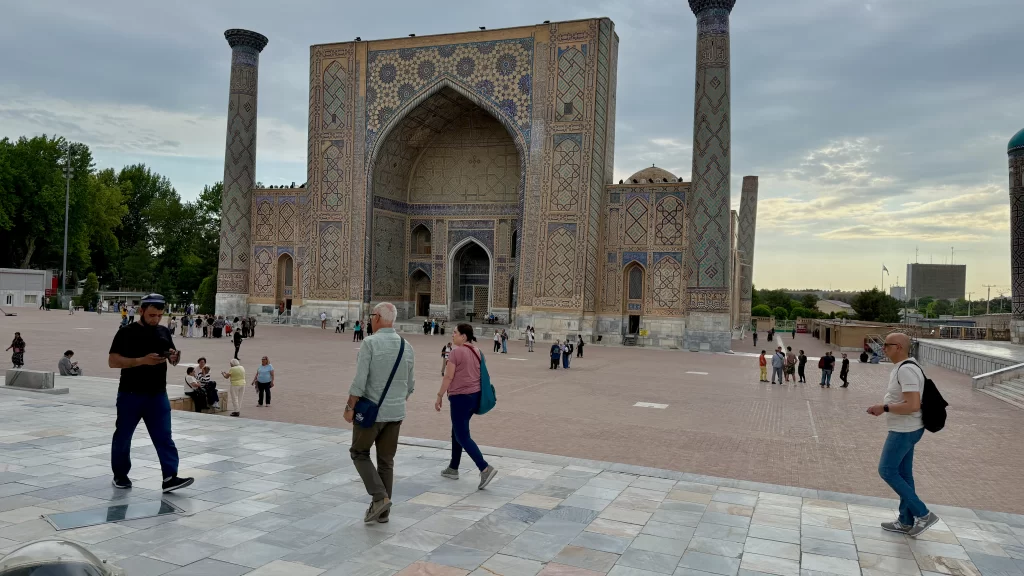
The monuments of Samarkand are marvels of art and engineering, many dating back six centuries. Persian influence is evident in the designs, and historical records mention the contributions of Chinese craftsmen alongside local artisans.
The buildings are constructed of mortared brick, their surfaces adorned with vibrant blue tiles. Turquoise domes shimmer in the sunlight, while minarets rise skyward. Some with a subtle tilt, a reminder of the city’s ancient origins[1].
Inside the madrasahs, ornate ceilings and alcoves showcase the skill of generations of craftsmen. The Tilya-Kori Madrasah, in particular, dazzles with its gilded interior, a testament to the city’s wealth and artistic ambition.
A City of Contrasts and Continuity
Samarkand’s unique character lies in its ability to embrace contrasts. Timur, of Mongol descent but born locally, identified as Turkic, championed Persian arts and literature, and fostered Islamic learning. The city’s madrasahs originally taught both secular and religious subjects, reflecting a cosmopolitan spirit that endures to this day.
Practical Tips for Travelers
- Currency: Bring US dollars or euros for easy exchange; expect to use cash for most transactions.
- Transport: Yandex rides are affordable and convenient.
- Accommodation: Choose a hotel near Registan Square for the best views and easy access to major sites.
- Language: English is rarely spoken, so be prepared to communicate creatively.
- Timing: Visit monuments early or late in the day to avoid harsh sunlight and crowds.
Reflections: A Journey Worth Taking
Visiting Samarkand was more than a trip—it was a journey through time. I checked off a legendary destination from my bucket list, marveled at architectural wonders, and stood in the presence of history’s great figures.
Remarkably, the entire experience was affordable: over three days, I spent just 400,000 som (about AUD 45 or USD 29) on meals, entry tickets, and daily expenses, not including flight and accommodation.
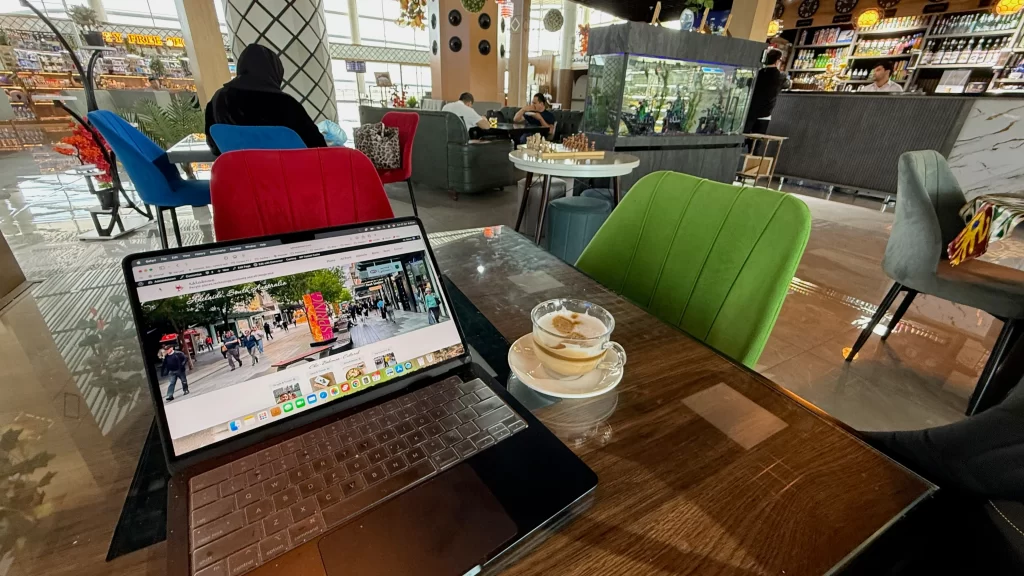
As I waited at Samarkand International Airport for my departure, I reflected on the city’s enduring magic. In a world where so much is fleeting, Samarkand remains—a crossroads of culture, a monument to human achievement, and a place where the past is always present.
Samarkand’s story is far from over. For those who seek adventure, beauty, and a deeper understanding of a distinct heritage, this ancient city on the Silk Road awaits, ready to inspire the next generation of travellers and dreamers.