
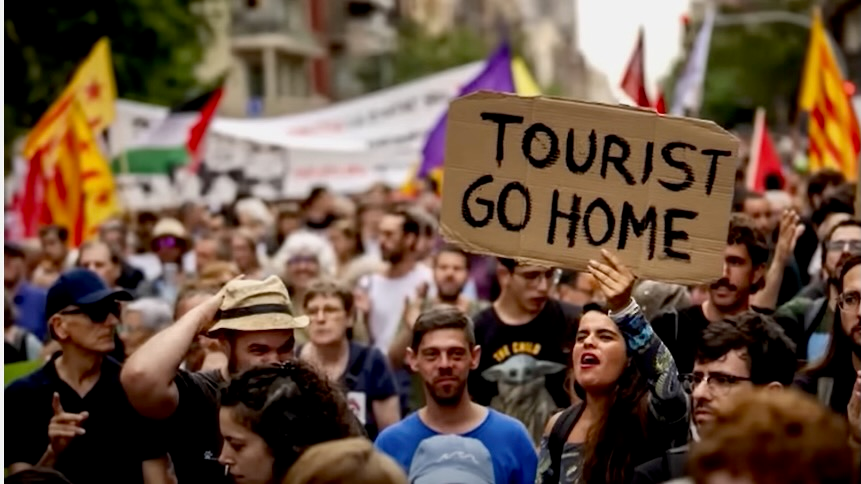
Overtourism has been slowly creeping up in many iconic and popular tourist destinations, and it has gone beyond the pale.
In 2025 we seen in the media, locals taking to the streets in protest. Others have resorted to blocking roads to popular tourist locations in city centers and even disrupting businesses that cater to tourists. Police presence had to be called in to avoid disorder.
Not just the overwhelming numbers. It’s the impact which range from locals priced out in their own neighbourhood and towns, rising property prices to poor tourist conduct.
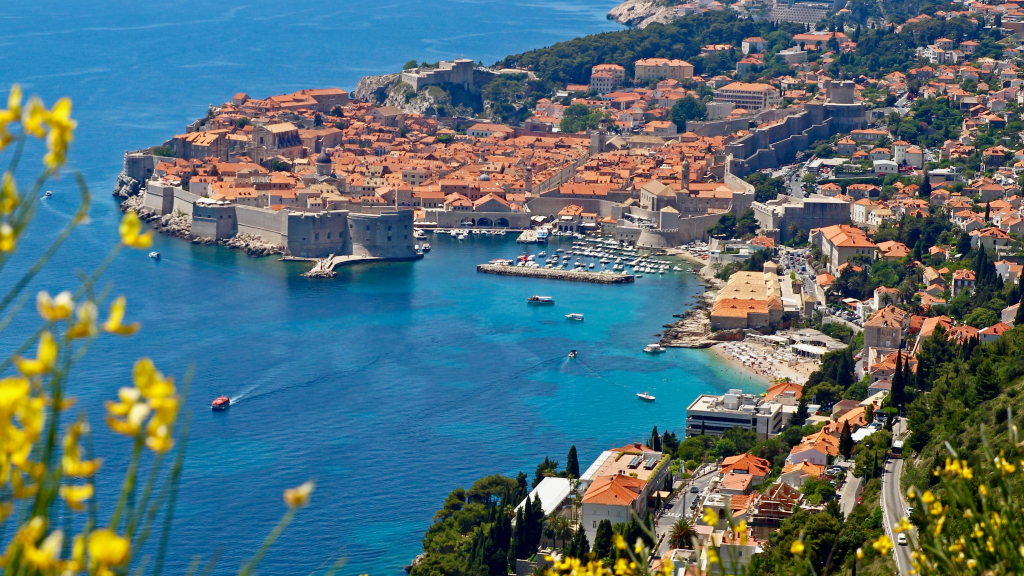
There is certainly more than a audible cry from Barcelona all the way to Bali. Badly impacted locations include Venice, Dubrovnik, Tenerife, Lisbon, Rhodes and Santorini Islands.
Spain’s Balearic Islands of Ibiza and Mallorca are particularly noted for visitors’ poor behavior and street disorder.
Poor conduct
Frequent complaints across the board are late-night noise, public drunkenness, trespassing into private spaces, dress-code violations, littering, and unsafe or disrespectful conduct in natural, religious and historic areas.
Fights among tourists for limited amenities in hotels and at beaches such as deck chairs make the news frequently.

Rise of influencers with their cameras intruding into personal space, attempting to do risky and insensitive stunts. Posing naked at sacred sites, standing at precarious positions and even challenging the weather for that viral moment. Overwhelming local resources and has hurt local feelings.
You know there is a concern when the very authorities that depend on tourism revenue act to curtail their own programs. There is also no doubt that elected officials failing to act are likely to lose their elected seats eventually.
Spain has taken some drastic measures such as limiting the number of cruise ship visits, reduce cruise terminals and moving incoming terminals away from cities. Bold and desperate moves as the infrastructure sunk cost run into the millions.
Venice imposed day visit taxes and others have adopted temporary extended closures of overused amenities to allow recovery.
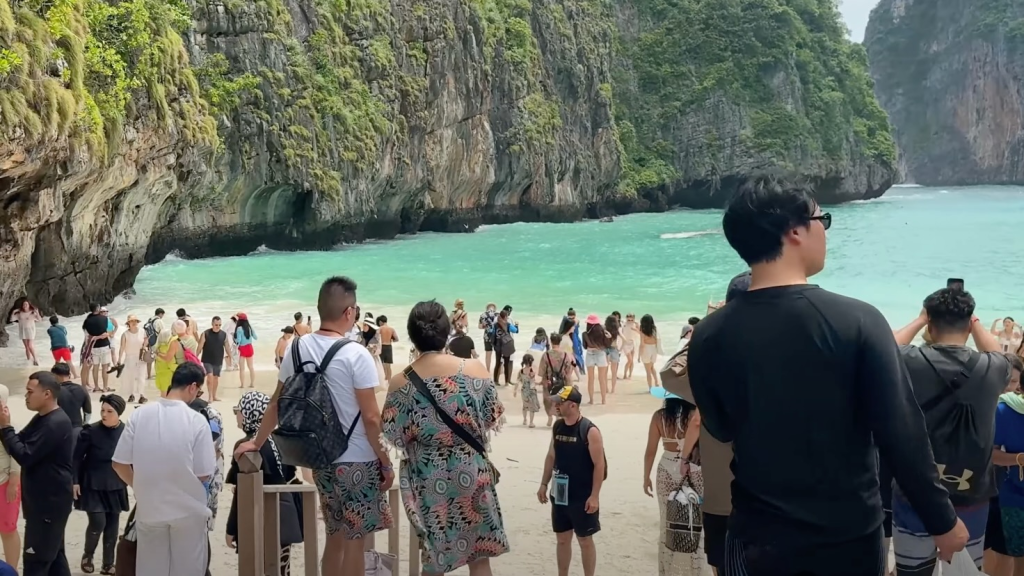
Bali Governor has asked his government to remove visa-on-arrival privileges for Russian and Ukrainian nationals due to large influx, poor behaviour and engaging in economic activities without the right visas and permits. A big call as the Island depends on tourism.
Value of tourism
Tourism has long been celebrated as one of the more powerful forces for cultural exchange, economic growth, and global connectivity.
From the beaches of Bali to the romantic streets of Paris, traveling allows people to experience new perspectives, grasp cultural nuances, savour different cuisines, and admire the extraordinary beauty of our planet.
A sense of pride when one’s country has unique natural and heritage features that attract overseas guests. The locals go out of their way to accommodate and share their country’s treasures.
More importantly for some countries especially the smaller ones, tourism is the lifeblood of their economy. A third of Maldive’s and a quarter of Seychelles’ GDP comes from direct tourism. For many Caribbean nations, its double digit of their GDP.
Nearly 4 decades ago, I recall Seychelles, one of the most beautiful locations introduced a measure that stopped backpackers and mass market tourism. They had limited assets and wanted to preserve it. It became affordable to those who could spend more than a pretty penny.
In the intervening decades however, there was a rush for countries to promote tourism as it brought in valuable foreign exchange, provided employment and help grow their economies. The possible impact not addressed, arrival numbers measured success, and countries were fighting for a share of the tourism pie.
The Rise of Overtourism
International travel was once a privilege of the wealthy. That changed dramatically in the late 20th and early 21st centuries with the rise of budget airlines, online booking platforms, mass-market cruises, and social media-driven tourism. Suddenly, millions of people could afford to flock to bucket list destinations.
What Does Overtourism Look Like?
- Resident frustration: Locals finding it difficult to shop, commute, or even afford housing in their own cities.
- Cultural disruption: Local traditions commercialized for tourist appeal, and neighborhoods transformed into short-term rental zones instead of real communities.
- Infrastructure overload: Public transport, sanitation systems, and waste management stretched beyond limits.
- Environmental strain: Beaches riddled with plastic bottles, coral reefs damaged by boat anchors and snorkelers, or hiking trails eroded by too many footsteps.
The term “overtourism” gained traction around 2017 as residents of cities like Barcelona, Venice, and Dubrovnik began protesting against excessive visitor numbers. Since then, the debate has intensified: how can the benefits of tourism be balanced with its pressures?
Marginalising local communities
In some cases, it not just the overload factor, poor and deviant behaviour of tourists. Marginalization becomes evident when large number of visitors overwhelm the destination, culture wise.
Examples are British tourists in Ibiza and Southern Europe, and many are on extended holidays. In time substantial foreign enclaves are formed. Residents lose their clout and privileges.
This can be traced to poor planning and lack of foresight by the country, town and municipal authorities. Prime tourism assets are in the hands of a few influential locals or worse in foreign hands. Rentals and prices of homes rise; cost of living increases even for essentials and eventually disenfranchisement. Second class citizens in their own county.
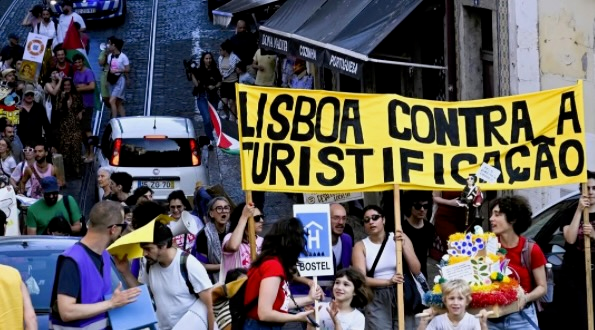
Lisbon once known for its low cost of living and quaint neighbourhoods has lost much of it. Most apartment units have become Airbnb rentals, every weekend is party night, the smell of marijuana in the air, cigarettes butts and broken beer bottles litter elevators and common areas, garbage piling from weekend parties.
Indonesia’s with its strict laws on foreign property ownership has seen it undermined in Bali, by 30-year automatic lease renewals. Even young tourists (without resident visas) have built or leased homes in popular Bali destinations such as Canggu and Seminyak.
Some long-term tourists enabled by visa-runs, rent these out to fellow tourists on Airbnb. Something unimaginable to most of us. They don’t have the right permits, pay taxes or follow basic practices that citizens are required to do. There are many YouTube videos heavily promoted by foreign tourists in Bali on building and property leasing tips as well as citing shortcuts and loopholes to get around regulations.
Tackling Overtourism: What’s Being Done?
Many destinations are experimenting with ways to balance tourism’s benefits with sustainability.
- Visitor caps: Machu Picchu and Maya Bayin Thailand have introduced strict daily limits.
- Tourist taxes: Venice and Amsterdam charge visitors extra fees to fund maintenance of infrastructure.
- Zoning regulations: Restrictions on new hotels or short-term rentals help protect housing for residents.
- Spreading tourists: Encouraging travel during off-peak seasons or into alternative neighborhoods/cities reduces pressure on iconic hotspots.
At the same time, there is growing awareness of “slow travel” and “responsible tourism,” encouraging travelers to stay longer in fewer places, minimize flights, and contribute to local communities more meaningfully.
Conclusion: Towards balance
Overtourism doesn’t mean the end of travel. Rather, it signals that the worldwide love for exploration has reached a point where we need to be more thoughtful. The same pathways that enable us to cross the globe in hours and share pictures instantly also demand responsibility in how we interact with the places we visit.
Just providing general advisories and guidelines to travelers are short-sighted, hoping to create a perception that issues are being addressed. Capacity planning, restricting to select target markets, having appropriate municipal zoning regulations, and impositions of fees and permits to hotspots are clear indication of will and resolve.
Travel should always be about discovery, connection, and respect. And with adjustments, we can ensure paradise still feels like paradise, for