
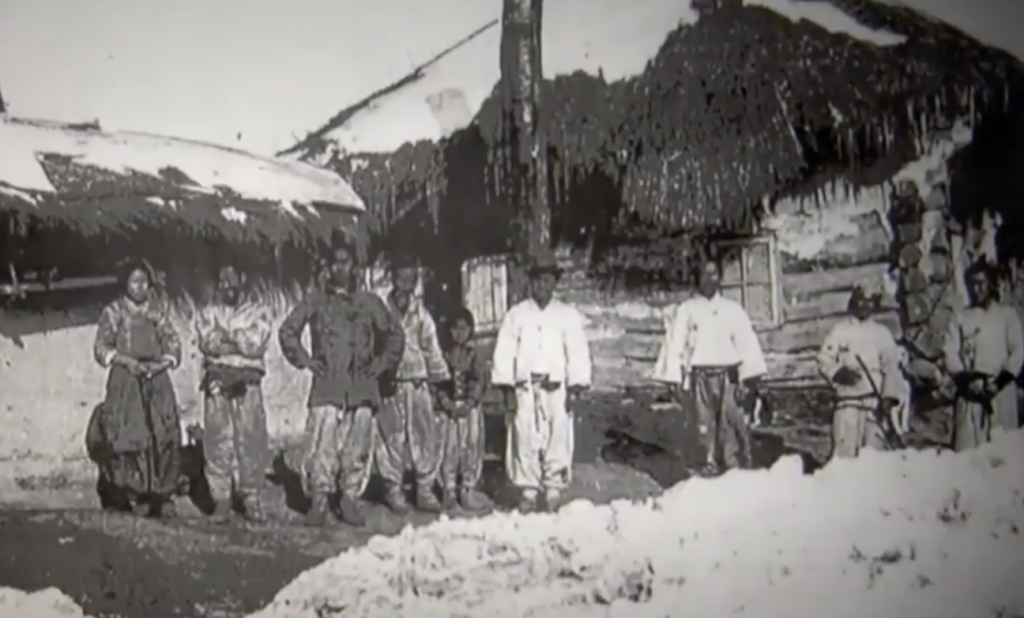
Koryo Saram means “Korean people” in an old North Korean dialect. It refers to a small group of Russian speaking ethnic Koreans who migrated to the Russian Far East between 1863 and 1937.
They now live primarily in Uzbekistan, Kazakhstan, Kyrgyzstan and parts of the former Soviet Union including Russia. They are not just ethnic Koreans but have a distinct identity.
The 4th and 5th generation in Uzbekistan, Kazakhstan and Kyrgyzstan have grown up communicating mainly in Russian or one of the Central Asian languages, with little or no knowledge of the Korean language. Post 1991, with the break-up of the Soviet Union, many Koryo Saram have also relocated to countries beyond Central Asia.
This post was prompted by a late summer evening in July 2025, as I walked near Arbat Street in Almaty, Kazakhstan.
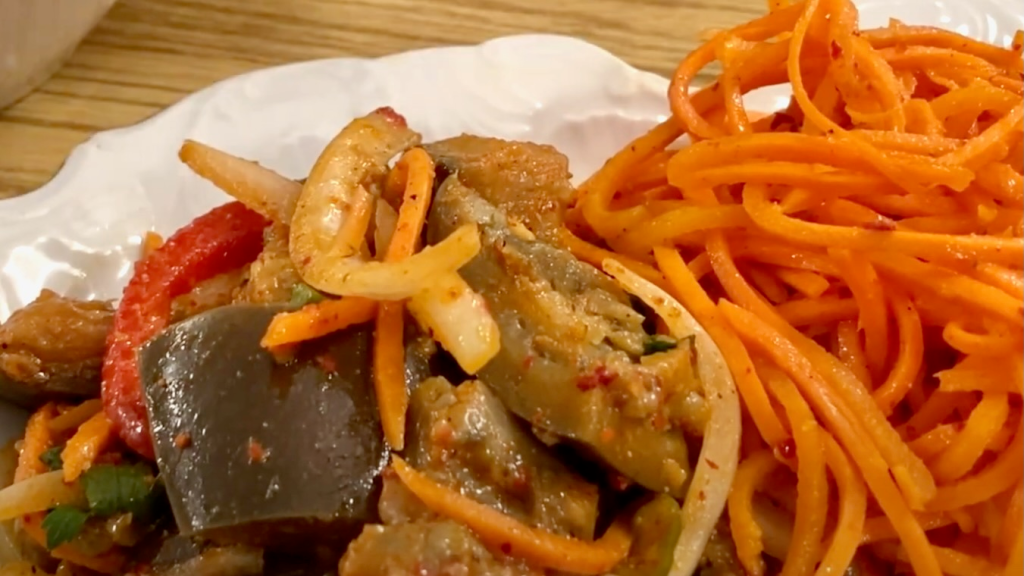
Several Korean restaurants appeared in close proximity —a unusual sight that caught my attention. Pickled carrot salad or Morkovcha in Russian was the start of the puzzle. I knew there was going to be a story.
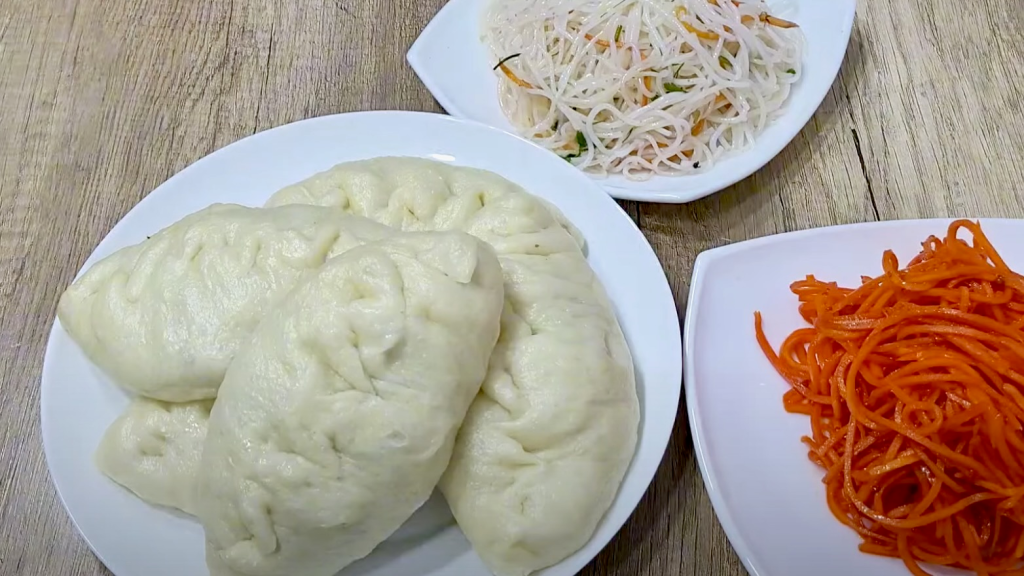
The story turned out to be deeply compelling and marked by tragedy and remarkable resilience.
The journey to Siberia begins
The migration to the Russian Far East began as early as 1863, when the first Korean families departed northern Korea for Siberia. A journey in search of improved living conditions and a new start.
Most of these initial settlers were farmers and peasants hoping to escape harsh landowners back in Korea. In the new land, they became farmers and fishermen.
In the years that followed, more Koreans made the journey for various reasons, including famine and seeking refuge from Japanese occupation. With the Qing dynasty closing Chinese borders, migrating North became the only route of escape.
For the next 80 years, Koreans continued moving north into the Russian Far East. They came mostly from northern and coastal regions of Korea in particular the province of Hamgyong, which borders Russia. They focused on rice farming and it became one of the legacies of this group.
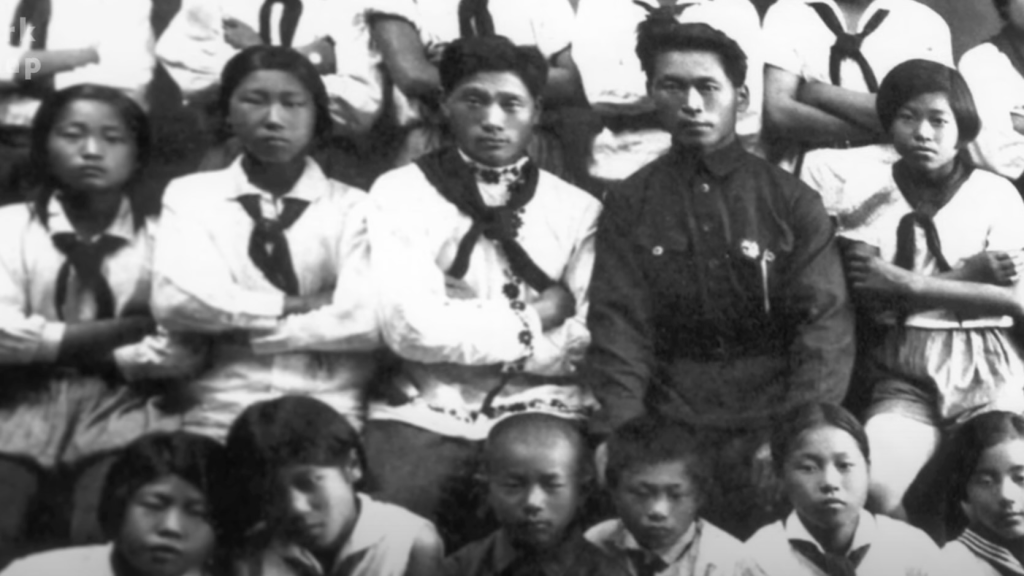
Early settlers formed the first Korean village, Tizen Hee, in the Primorsky region. By 1869, Korean emigrants made up 20% of the population near Novukorut Bay. By 1917, around 90,000 Koreans lived in Primorsky, up from 9,000 at the end of the 19th century.
Russian censuses varied: the 1902 census recorded 312,541 Koreans in the Russian Far East. While the 1937 census counted 168,259 Koreans in the Soviet Union. By this time, Korean neighborhoods and farms were well-established in the Far East.
Japanese aggression and Russian fear
After losing the Russo-Japanese War in 1904, Russia grew wary of Japan’s wider ambition. With Japan’s annexation of Korea in 1910 and Manchuria in 1931, the Russians became anxious of ethnic Koreans within their borders.
The possibility of Japanese collaboration and subversion became a concern. In 1937, Stalin ordered the mass deportation of the Korean diaspora, viewing them as potential spies.
Koreans within Russian territory were relocated inland, to Kazakhstan and Uzbekistan. On July 17, 1937, a decree started the forced removal. Korean Russians were loaded onto trucks, then packed into livestock train wagons for their journey to Central Asia, a journey that scarred them for life.
Stalin didn’t target Koreans alone. Similar forced relocation affected other ethnicities as well. Jews, Ukrainians, Poles, Crimean Tatars, Chechens, Armenians, and half a million Volga Germans, many of whom perished in labor camps.
Forced deportation
About 172,000 Russian Koreans were sent 6,400km away on a month long journey and abandoned on the steppes of Uzbekistan and Kazakhstan . Some nomadic locals offered shelter in their yurts, while others survived by digging holes in the ground for shelter.
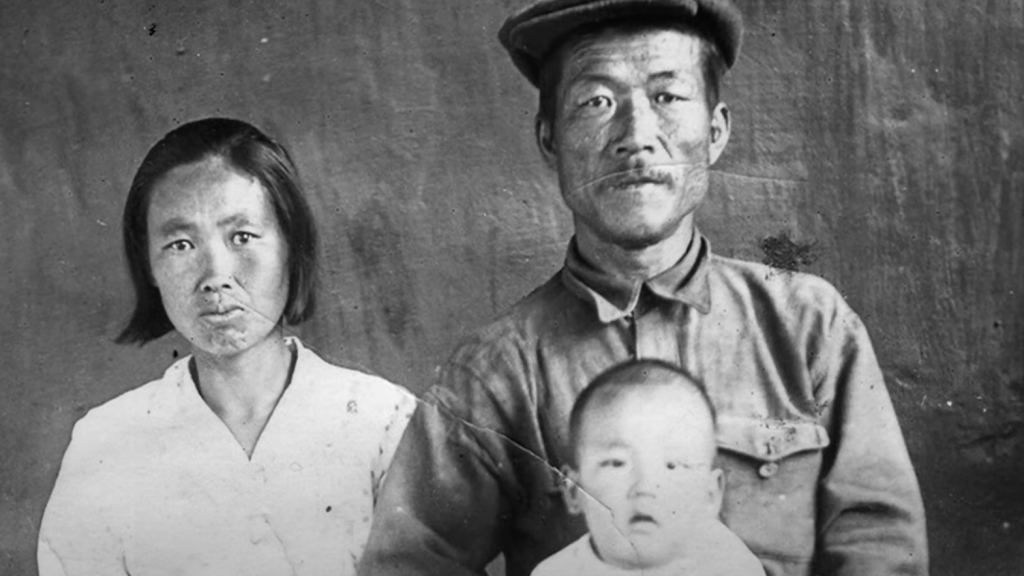
Approximately 40,000 died en route or within 2 years of arrival. Mainly due to exposure, malnutrition, and illness. Those who died on the journey were left unburied beside the train tracks. To the Koreans, these unburied bodies meant wandering souls and the “ghost trains” became their cross to bear. This trauma deeply affected the first two generations.
Assimilation prior to deportation
Prior to the forced deportation, from 1863 to 1937, over 74 years, ethnic Koreans in Russia did not remain isolated. Many assimilated, adopting Russian first names while keeping Korean surnames. It’s interesting that till today, the first name given to a child is Russian. This alone has become the Koryo Saram cultural signature.
Some joined the Communist Party including moving up the Party hierarchy and attending major political events such as the Soviet Congress in Moscow. By then, the Russian Far East had become home to them, no longer Korea but their culture held.
There is an unusual dimension to their culture. Its preservation was not based on language or religion like most cultures. It was based on important calendar events from Korea of their ancestors. The first birthday of a child to funeral practices. They hung on to these when they first moved to Russia, then Central Asia and places around the World where the diaspora gathers.
New and different life on the Steppes
Those left on the steppes and away from local settlements began to farm the land. By the end of the 3rd year, irrigation canals had been dug, water flowed into the rice field as their lives became more secured and better. In Kazakhstan it was the steppes that they converted to rice fields. InUzbekistan it was swamplands outside of Tashkent.
The first Korean collective farms or kolkhozes started operating, built around the very same rice fields the deportees farmed and lived on. The harvest however had to be handed over to the State.
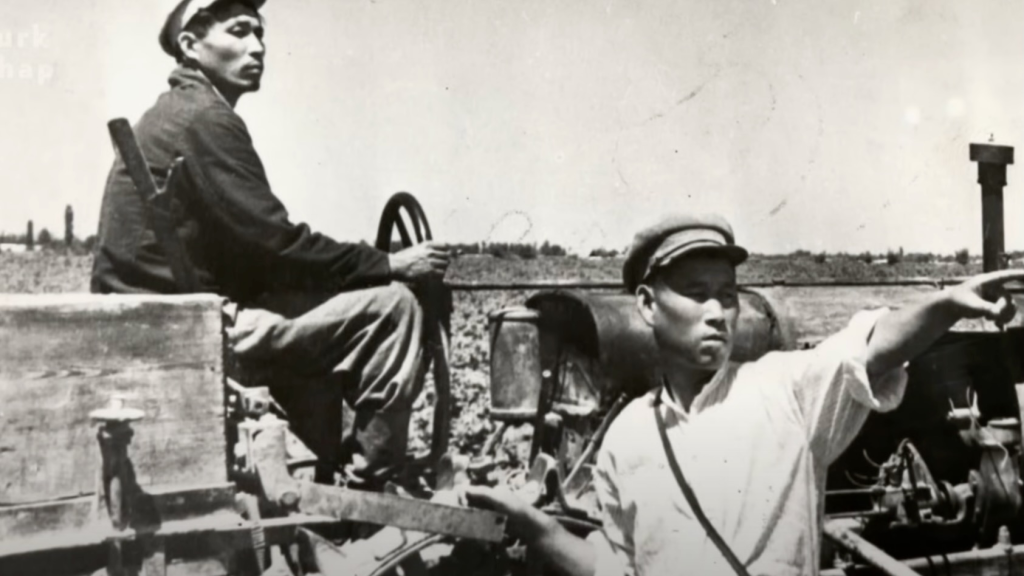
The Soviet communist system had one advantage. It treated all as equals and not just the native slavic Russians. Those that did well were rewarded and their academically inclined children went on to universities and many became engineers and scientists. Taking on jobs in state corporations.
The original homeland
When Soviet Union broke up 1991 and the former republics became independent, travel restriction began to be lifted. The Koryo Saram deportees and the first generation who were born in Uzbekistan and Kazakstan were keen to see their former homeland. There was a twist however.
It was not Korea but the likes of Vladivostok and towns in the Russian Far East. They only knew of life in these places and they told stories of their childhood to their children. The children too were keen to see the places where their parents grew up. Korea was not in the picture.
The 3rd, 4th and subsequent generation however had no links to the Russian Far East. Their parents were all born in Central Asia. They however were keen to see Korea in view of their ethnicity. It was an understandable and a remarkable turn of events.
Allegiance and loyalties
The Koryo Saram have a unique burden unlike any other ethnic diaspora. Ethnic diasporas are found all over the World. The main reasons for leaving are economic and persecution, for want of a better life and later conflict displacement.
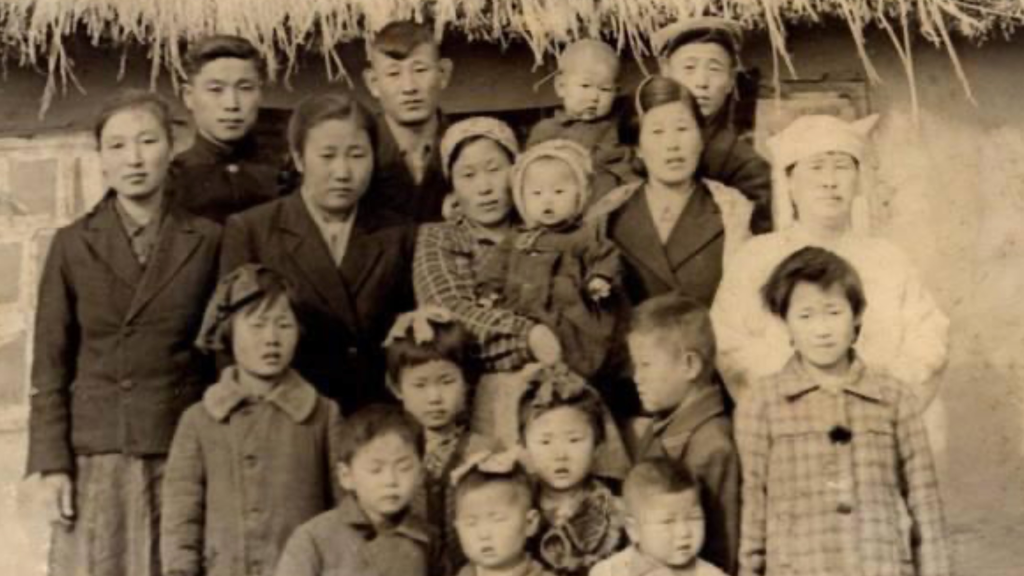
No matter the reason, they head to a new land, ready to adapt and assimilate. The first generation born there, would be immersed in the having gone to school, mixed with their classmates and followed social events and practices of the adopted country. They became citizens.
For the Koryo Saram, they had done exactly that and has become Russified while living in the Russian Far East. Russia became their adopted country and for next generations onwards, it was the only country and homeland they knew.
1937 changed all that. 74 years washed away to a large extent. Uzbekistan and Kazakhstan where they were forced to land had entirely different cultures, languages and religion. It was not core Russia. The only consolation is the common and the official language, Russian.
For the next 54 years, up to the break-up of the Soviet Union, the Russian language became the slip stream for the Koryo Saram to ride on. That slipstream evaporated in 1991 when these countries became independent. The former Soviet Republics favoured their own natives and language, many among the Koryo Saram lost their jobs and their status.
Koryo Saram in South Korea
From 1991, some are keen to relocate to the home of their forefathers. This unfortunately did not turn out well. And continues to be a sad issue for the Koryo Saram.The South Korean Government classifies them as foreigners. They are referred to as Koryoins in Korea.
In 2001, the Korean courts made a constitutional landmark ruling to allow residency for foreign born ethnic Koreans residency. In 2007, H2 visa allowed Koryo Saram to work in Korea. These visas are for 5 years and allowed employment in designated sectors. Sectors facing labour shortages such as factories and farms. Jobs that the locals did not want. In 2014, another change in regulations allowed them to bring their families on visas.
The single biggest challenge is the inability to speak and write the Korean language. Many with tertiary and technical qualification are unable to secure appropriate career levels and are working in factories, farms and doing menial tasks.
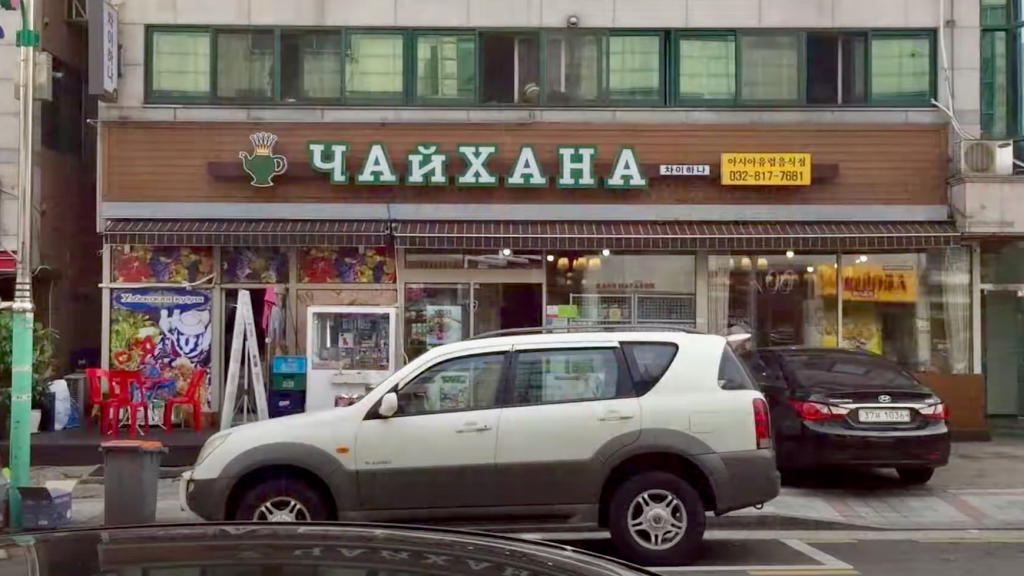
There is also a sense of marginalisation with both the Koryo Saram and the local Koreans contributing to it. The Koryo Saram in Korea find comfort and acceptance among themselves that they have created Russian speaking ghetto like communities in Korea such as in Hamdak Village in Inchoeon, Taetkol Village in Ansan and Koryoin Village in Gwangj. This however led to native Koreans moving out.
Naturalisation
Despite their ethnicity, they are not even second class citizens in the country of their forefathers. Remember they are still on visas. They still hold on to their Uzbekistan, Kazakhstan, Kyrgyzstan and Russian passports. The naturalisation process is a separate and challenging process.
I found it remarkable that the South Korean Government did not have a fast track language lessons, assimilation and naturalisation programs for their blood kin. I took this as a second tragedy to befall the Koryo Saram. The Korean Government were concerned about the large numbers of ethnic Koreans living in China. The concern with numbers and local sentiments and opening the gates without some control.
One particular concern is the requirement for children on dependency visas whose parents hold H2 visas to leave Korea when they reach age 19. It does not matter if these children were born or had been in Korea since a young age, went to school and grew up in Korea and speak the language.
It is interesting that post 1991, many had gone on to the United States and had acquired citizenship. They and their children have become naturalised in a country they have no prior history. A new home and more secured and certain future.